Tofersen’s development is progressing in fits and starts. That was evident at the U.S. FDA’s March 22 meeting of the Peripheral and Central Nervous System Drugs Advisory Committee, which unanimously agreed Biogen Inc.’s failed phase III study predicted a clinical benefit in treating amyotophic lateral sclerosis (ALS) that includes the rare superoxide dismutase 1 component.
Biohaven Ltd. has acquired global rights, excluding China regions, from Hangzhou Highlightll Pharmaceutical Co. Ltd. for TLL-041, now designated BHV-8000, an oral, brain-penetrant, highly selective, dual TYK2/JAK1 inhibitor, for neurological disorders.
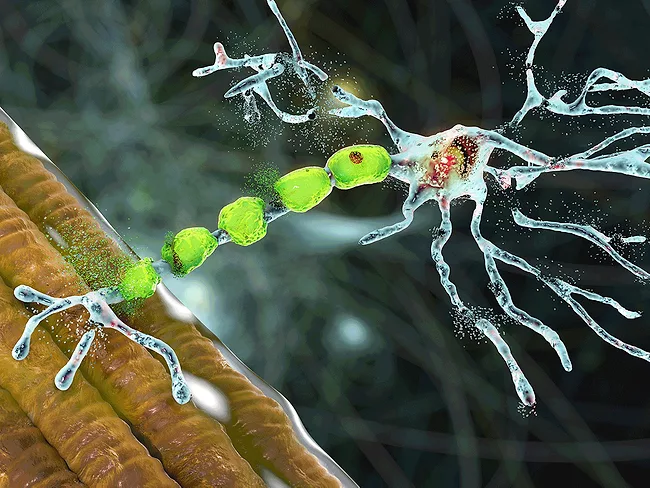
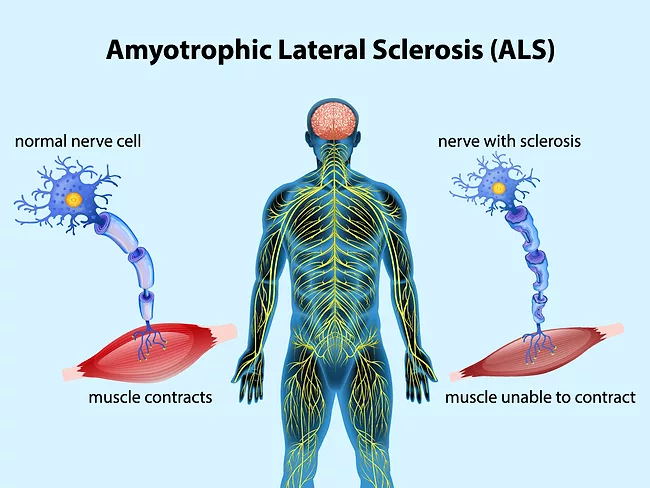
Amyotrophic lateral sclerosis (ALS) is a fatal neurodegenerative disease characterized by failure of motor neurons that lead to paralysis. To date, no treatment exists for ALS that focuses on improving neuromuscular transmission, which would improve quality of life for ALS patients.
Despite a failed phase III study, the U.S. FDA suggests in briefing documents that tofersen (BIIB-067) is effective for treating the rare, genetic disease superoxide dismutase 1 amyotrophic lateral sclerosis (ALS). The intrathecally injected therapy is being developing by Biogen Inc. and Ionis Pharmaceuticals Inc. and is at the heart of a March 22 meeting of the agency’s Peripheral and Central Nervous System Drugs Advisory Committee (adcom).
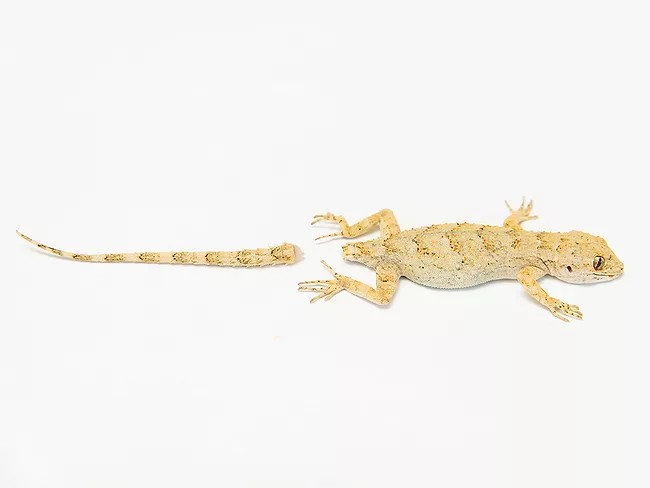
Losing the tail to survive. In neurons, the lizard’s strategy, losing the axon to be safe, could prevent cell death. Scientists at Harvard Medical School have observed that certain toxins activated axon loss to prevent damage and survive. This mechanism was mediated by the Gasdermin-E (GSDME) protein, which destroyed the mitochondria in the axons and eliminated the affected nerve projection before the cell died. The inhibition of GSDME prevented the loss of neurons and delayed the progression of amyotrophic lateral sclerosis (ALS) in mice models.
Oryzon Genomics SA has nominated ORY-4001, a selective histone deacetylase 6 (HDAC6) inhibitor, as a clinical development candidate for the treatment of certain neurological diseases, including Charcot-Marie-Tooth (CMT), amyotrophic lateral sclerosis (ALS) and others.
Quralis Inc. raised $88 million in series B round to fund clinical development of its two lead programs in amyotrophic lateral sclerosis (ALS) and to take forward earlier-stage pipeline projects in ALS and frontotemporal dementia.