LONDON – “I really believe we can start using the word cure,” said the pioneer of chimeric antigen receptor T-cell (CAR T) therapy Carl June, as he revealed two leukemia patients he treated in a phase I trial have now been in remission for 10 years. Both patients with chronic lymphocytic leukemia achieved complete remission shortly after treatment in 2010. The genetic modification has remained detectable in their CAR T cells for more than 10 years of follow-up, June said, describing details of the case studies published in Nature Feb. 2.
Australian researchers have developed a new single-cell expressed barcoding strategy termed SPLINTR (Single-cell Profiling and LINeage TRacing), to investigate the key basic nongenetic transcriptional processes underlying malignant clonal fitness in mouse models of leukemia.
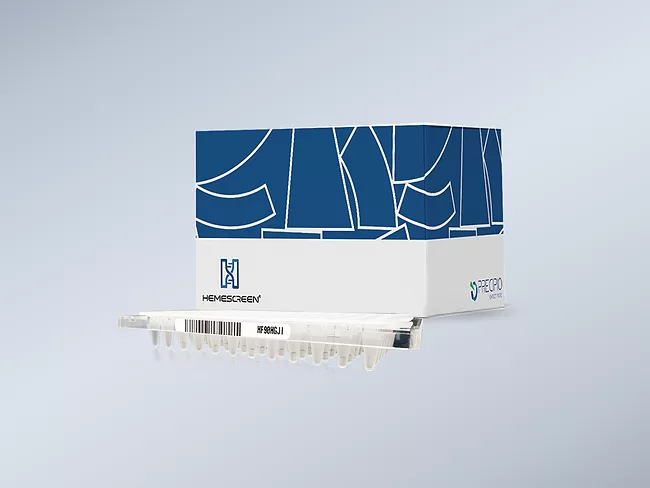
Precipio Inc. reported the launch of its Hemescreen anemia panel, part of a suite of diagnostic tests that run on the Hemescreen physician office laboratory (POL) testing system. The new panel is intended to help physicians tackle a difficult challenge – deciphering anemias of unknown cause.
Adverse events and criteria for determining remission in an otherwise positive early study by Syndax Pharmaceuticals Inc. with oral menin inhibitor SNDX-5613 apparently gave Wall Street pause, and shares (NASDAQ:SNDX) closed at $13.42, down $5.96, or 31%.
A U.S. study has shown for the first time that enhancing signals from the nociceptive nervous system could provide new approaches to improve the collection of hematopoietic stem cells (HSCs) for treating cancers of the blood and bone marrow.
A multi-institutional team of researchers has discovered that acute lymphoblastic leukemia cells metabolically adapt to the cerebrospinal fluid-filled CNS microenvironment upon migration from the bone marrow with alterations in fatty acid synthetic pathways.
Velosbio Inc., a San Diego-based company developing cancer therapies targeting receptor tyrosine kinase-like orphan receptor 1 (ROR1), has raised $137 million in series B financing to support development of its lead antibody-drug conjugate (ADC), VLS-101, and continued expansion of its pipeline.
The results from a study comparing San Diego-based Bionano Genomics Inc.’s Saphyr to traditional cytogenetic methods for the clinical analysis of leukemia genomes revealed that the system was 100% concordant with the standard of care for the detection of somatic chromosomal abnormalities.
ORLANDO, Fla. – New phase I/II data from Autolus Therapeutics plc announced at the American Society of Hematology’s (ASH) annual conference show that AUTO-3, the first bicistronic CAR T targeting CD19 and CD22 followed by an anti-PD1, was well-tolerated in a phase I/II study.
HONG KONG – Canadian company Pascal Biosciences Inc., headquartered in Vancouver, and South Korean biotech Y-biologics Inc., based in Daejeon, have signed a research collaboration agreement for the discovery and development of bispecific antibodies for the treatment of leukemia.