“Our window of opportunity is closing. If we fail to develop a national coordinated response, based in science, I fear the pandemic will get far worse and be prolonged, causing unprecedented illness and fatalities,” Rick Bright, former director of the Biomedical Advanced Research and Development Authority, said today as he testified at a House subcommittee hearing on the U.S. response to COVID-19.
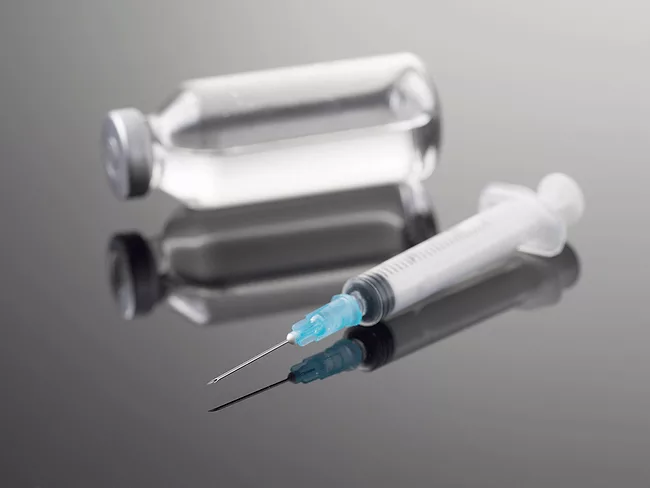
In the rush to develop a COVID-19 vaccine, integral parts of the equation are being overlooked in the U.S., according to a whistleblower complaint filed this week by Rick Bright over his removal as director of the Biomedical Advanced Research and Development Authority (BARDA). Even if millions of doses of vaccine are ready to go by January, as the NIH’s Anthony Fauci a few weeks ago said could happen, there may not be enough needles and syringes to deliver those doses.
The U.S. National Institutes of Health recently announced a competitive grant opportunity for testing for the SARS-CoV-2 virus, which has been characterized as a “Shark Tank-like” program, and NIH director Francis Collins said in a May 7 Senate hearing that one of the criteria for awards is whether supplies can be made readily available for that test, the lack of which has been a significant impediment to testing in the U.S.
Cytovale Inc., a San Francisco-based medical technology company, has snagged an additional $3.83 million in funding from the U.S. Department of Health and Human Services’ Biomedical Advanced Research and Development Authority (BARDA) to conduct a pilot study of its Rapid Sepsis Diagnostic System for patients with potential respiratory infections, including SARS-CoV-2, the novel coronavirus responsible for COVID-19. The patented technology, which can diagnose sepsis in less than 10 minutes, could speed up triaging and treatment of critically ill patients suspected of having the life-threatening condition.
The U.S. Biomedical Advanced Research and Development Authority (BARDA) commitment of up to $483 million to accelerate Moderna Inc.’s mRNA vaccine candidate, mRNA-1273, in efforts to fight coronavirus (SARS-CoV-2) would enable the company to supply millions of doses per month in 2020 and tens of millions per month in 2021 if the vaccine candidate is successful in the clinic.
Gaithersburg, Md.-based startup Hememics Biotechnologies Inc. is partnering with the U.S. Biomedical Advanced Research and Development Authority (BARDA) to develop a rapid, Bluetooth-connected, point-of-care (POC) test for COVID-19. Designed for use in both field and traditional settings, the test detects SARS-CoV-2 and related antibodies from nasal swabs and whole blood, delivering results in a minute or less.
The newest angle in the partnership between Johnson & Johnson and the U.S. federal government, part of the company’s $1 billion commitment to COVID-19 R&D, is designed to drive its lead candidate into the clinic by year-end and to increase its vaccine manufacturing worldwide.
The past week has seen a lot of movement in terms of tests to detect SARS-CoV-2, the virus that causes COVID-19. “It is notable that the diagnostics community is coming together in a way we have not seen in our 20 years covering this industry,” wrote William Blair analyst Brian Weinstein in a March 14 note. “Regulators, lab professionals, and manufacturers are all in a frenetic fury to try and get testing up and running, and we generally see a sense of ‘in it together’ playing out.”
Cytovale Inc., a San Francisco-based medical technology company, has picked up $15 million in financing to advance its technology that enables the early detection of sepsis in the emergency department. Specifically, the company raised $7.4 million in an extension of series B equity financing, co-led by existing investors Breakout Ventures and Blackhorn Ventures. Western Technology Investment also participated, providing a venture debt facility to the company.