U.S. lawmakers have been busy writing to government agencies demanding answers and explanations on a range of issues, including drug shortages, gain-of-function research and thickets of duplicative patents that extend patent protection well beyond 20 years for some prescription drugs.
The Biden administration’s budget proposal for the U.S. federal government’s 2024 fiscal year is undergoing the usual vetting in Congress, and one hearing each in the House and Senate suggest the proposal will gain little or no traction on Capitol Hill. However, supporters of the National Institutes of Health (NIH) may be cheered by the fact that one of President Biden’s own party, Rep. Rosa DeLauro (D-Conn.), blasted the proposal for offering only a 2% increase in the NIH budget, a sign that the agency will receive a substantial boost in monies yet again in FY 2024.
While Moderna Inc. CEO Stéphane Bancel was the one on the hot seat at a March 22 hearing before the U.S. Senate Health, Education, Labor and Pensions (HELP) Committee, biopharma profitability in general, and capitalism itself, came under fire as committee Chair Bernie Sanders (I-Vt.) railed about corporate greed in the sector.
While the U.S. is in an IPO drought, going public remains the only lifeline for many small life sciences companies facing a decade of development, R&D costs of $1 billion or more, and a hefty risk of failure, Susan Washer, former CEO of Applied Genetic Technologies Corp., testified in a March 9 hearing before the House Subcommittee on Capital Markets.
U.S. drug prices continue to be in the crosshairs of Congress, with the Senate Judiciary Committee once again sending five bipartisan bills targeting anticompetitive pricing tactics to the full Senate Feb. 9 with do-pass recommendations.
At a time when Chat GPT is making waves in the world of artificial intelligence (AI), new legislation is making the rounds in Washington that would allow an AI algorithm to write prescriptions for pharmaceuticals. Rep. David Schweikert (R-Ariz.) introduced H.R. 206 to the House Energy and Commerce (E&C) Committee Jan. 9, although at present the bill enjoys the backing of no other members of the House, suggesting that this legislation has a steep climb in front of it.
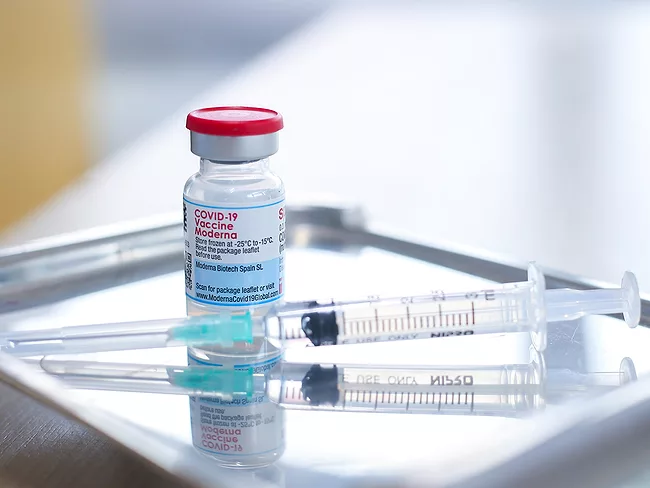
Sen. Bernie Sanders (I-Vt.), the incoming chair of the U.S. Senate Health, Education, Labor and Pensions (HELP) Committee, penned a blistering letter that takes Moderna Inc. CEO Stéphane Bancel to task over the company’s plans to more than quadruple the U.S. list price of its COVID-19 vaccine once the government’s supply is depleted.
In the wake of ongoing criticism over the U.S. FDA’s 2021 accelerated approval of Biogen Inc.’s Alzheimer’s drug, Aduhelm, the percentage of novel drugs receiving accelerated approval last year was the lowest it’s been since 2018.
Topping biopharma regulatory news in 2022 was the signing of the Inflation Reduction Act (IRA), as its provisions requiring Medicare to directly negotiate certain prescription drug prices will open the door for the first time to a degree of government price controls in the U.S., affecting the bottom line of drug companies around the world.