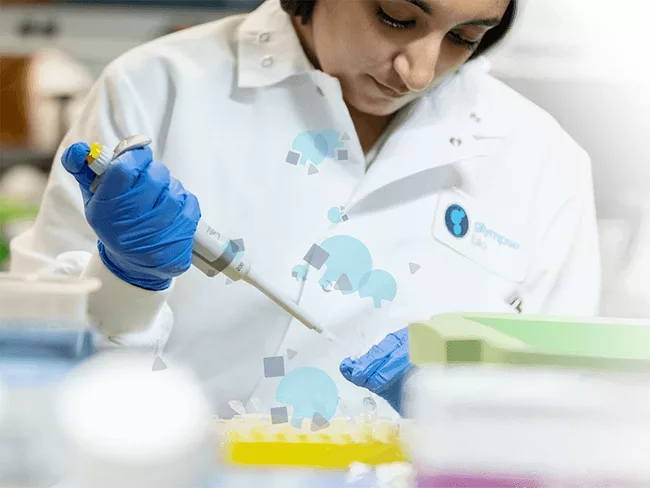
Glympse Bio Inc.’s diagnostic platform has demonstrated the ability to detect hepatocellular carcinoma (HCC) in blood, offering a non-invasive method for diagnosing the disease much earlier and more reliably than current approaches. The platform uses biosensors and machine learning to measure protease activity in plasma samples. Details of studies demonstrating the system’s accuracy in HCC will be presented at the International Liver Conference 2022 in London.
Singapore’s Agency for Science, Technology and Research (A*STAR) has inked a deal with Boehringer Ingelheim GmbH to develop and commercialize targeted cancer therapies.
Stratipath AB gained CE-IVD mark for its artificial intelligence (AI)-based software for prognostic risk stratification of breast cancers, clearing the path for introduction of the solution in the EU. Stratipath Breast analyzes digital histopathology whole slide images generated from surgically resected breast cancer tissue to identify patients with increased risk of disease progression. The system provides clearer guidance on the best treatment path for the 50% of women whose breast cancer is categorized as intermediate risk.
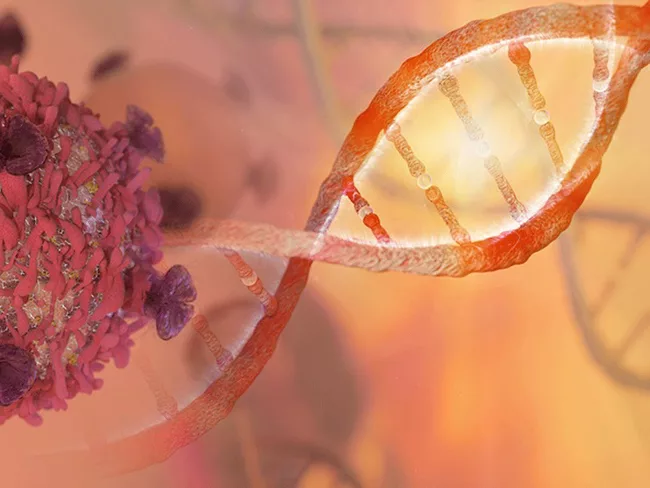
For a non-invasive cancer, ductal carcinoma in situ (DCIS) has spread rapidly—at least in research studies. Multiple companies presented results of diagnostic tests and genomic analysis that offer guidance for selecting treatment options for stage 0 breast cancer at the 2022 American Society of Clinical Oncology (ASCO) annual meeting, which concluded in Chicago on June 7. Several of these studies reliably predicted which patients can safely be selected for active surveillance without surgery, who would benefit from endocrine or radiotherapy following surgery and who would be best served by risk-reducing surgery such as double mastectomy.
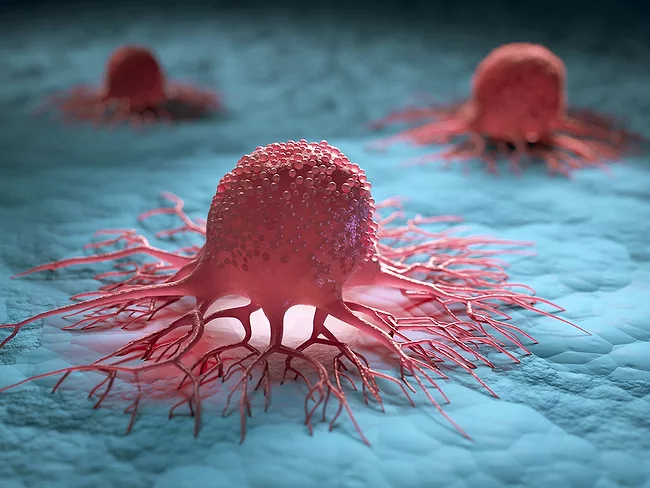
Five-year survival rates for people with metastatic colorectal cancer haven’t budged much in recent decades but new data presented at the American Society of Clinical Oncology’s annual conference pushed the boundary enough to be notable.
Grail LLC reported a new study with the U.K.’s NHS to assess the clinical utility of its Galleri multi-cancer early detection test (MCED) for reducing late-stage cancer diagnoses. Menlo Park, Calif.-headquartered Grail presented the study design during the American Society of Clinical Oncology (ASCO) meeting in Chicago. The randomized controlled trial will enroll 140,000 asymptomatic participants aged 50-77 living across England to determine if Galleri can find cancers at an early stage when they are less advanced.
Five-year survival rates for people with metastatic colorectal cancer haven’t budged much in recent decades but new data presented at the American Society of Clinical Oncology’s annual conference pushed the boundary enough to be notable.
Could Merus NV be on course to get the fourth “tumor agnostic” drug approved, a groundbreaking approach to cancer that focuses on mutations rather than location of the disease? According to a trial update revealed at the American Society of Clinical Oncology (ASCO) conference the biotech from Utrecht, the Netherlands, could join Merck & Co Inc., Bayer AG/Eli Lilly and Co. and Roche Holding AG with its early-to-mid stage candidate, zenocutuzumab.
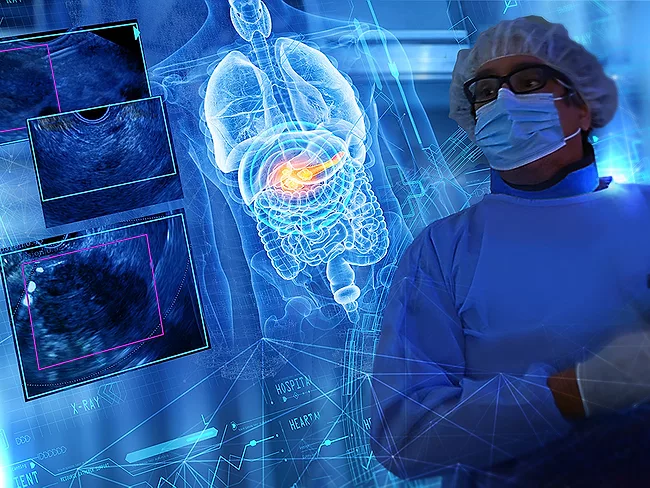
Medi-Globe GmbH, in conjunction with the Institut Hospitalo-Universitaire (IHU) in Strasbourg, France, is developing new artificial intelligence (AI) software for the detection of pancreatic disease. The Rohrdorf Germany-based company just completed a first-in-human trial of this AI tool during an endoscopic ultrasound examination performed at the Institute of Image-Guided Surgery at IHU.
A U.K. biotech is aiming to build a new pipeline around a unique drug delivery system employing a naturally occurring protein called a “nanosyringe” to overcome the technical challenges of delivering therapeutic payloads to target cells. Nanosyrinx Ltd., of Warwick, based its technology on a naturally occurring bacterial toxin mechanism, which produces tiny virus-like particles. The synthetic biology approach has allowed the company to tweak the cellular machinery of bacteria to produce these nanosyringes loaded with drugs.