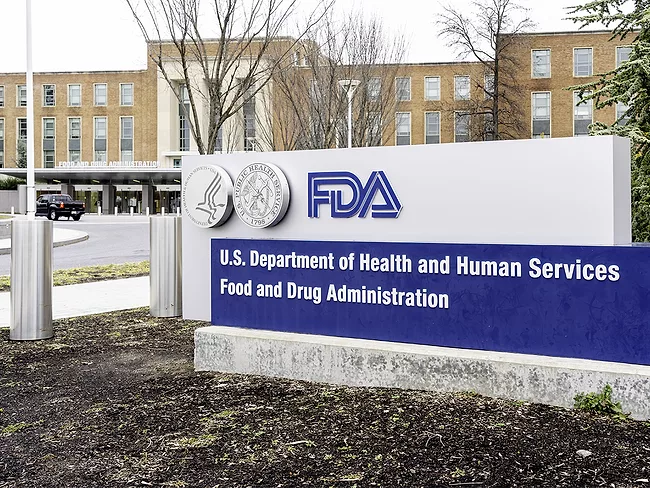
A China-based manufacturer of active pharmaceutical ingredients (API) suspended producing API for the U.S. market following an FDA inspection that found “significant deviations” from good manufacturing practices at the facility.
The demand for semaglutide, a GLP-1 drug, and other popular prescription weight-loss drugs is adding to the U.S. FDA’s regulatory load as more and more companies are offering unapproved knockoffs of the products directly to consumers. The FDA posted two warning letters Feb. 13 – to Miami-based US Chem Labs and a New-York company, Synthetix Inc. doing business as Helix Chemical Supply – citing the companies for misbranding unapproved semaglutide and tirzepatide, also a GLP-1 drug, by marketing them on the Internet, along with claims about their therapeutic benefits.
Philips Respironics Inc.’s nightmares with its Dreamstation continuous positive airway pressure (CPAP) line of products continued with a fresh warning from the U.S. FDA of reports involving thermal issues with a newer iteration of the machine, some of which cited patient injuries.
The U.S. FDA’s final guidance for clinical decision support (CDS) systems may be the subject of two citizen’s petitions requesting the agency scrap the guidance and start over, but that doesn’t mean the agency is not enforcing the terms of the guidance. Danvers, Mass.-based Abiomed Inc., took in a Sept. 19 warning letter stating that the company’s Impella Connect system qualifies as a CDS product because it provides “patient-specific medical information to detect a life-threatening condition,” an interpretation that is sure to intensify the larger debate about whether the CDS final guidance is an extra-statutory exercise in regulatory engineering.
Often when the U.S. FDA’s Office of Prescription Drug Promotion (OPDP) determines that the marketing of a drug crosses the line of misbranding, it hands the sponsor an untitled letter schooling it on how the promotional materials run afoul on safety or efficacy claims.
In a balancing act between supply and drug quality, the U.S. FDA tipped the scales on behalf of quality, slapping an import alert on Intas Pharmaceuticals Ltd. in June, followed by a July 28 warning letter requiring the India-based company to develop and implement a global corrective action and preventive action plan.
In a balancing act between supply and drug quality, the U.S. FDA tipped the scales on behalf of quality, slapping an import alert on Intas Pharmaceuticals Ltd. in June, followed by a July 28 warning letter requiring the India-based company to develop and implement a global corrective action and preventive action plan.
U.S. FDA warning letters to device makers seemed to be on pause for a couple of years, but the agency is picking up the pace with two warnings posted July 18. Outset Medical Inc., of San Jose, Calif., was previously known to be the recipient of a warning letter, but Edge Biologicals Inc. of Memphis, Tenn., took in a warning letter that is replete with repeat violations disclosed in 2015 and 2018, as well as a warning letter issued 11 years ago.
Makers of dental equipment don’t typically show up on the U.S. FDA enforcement radar screen, but the introduction of biologics and software into routine dental practice has upped the regulatory stakes. This can be seen in the June 20, 2023, warning to Vitang Technology LLC, of Tustin, Calif., which cited the company for failure to validate a change of software used in orthodontic treatment planning systems, but the FDA reinforced the notion that claiming that the agency approved or cleared the device is also a violation of the Code of Federal Regulations.
In its first untitled letter in more than a year, the U.S. FDA’s Office of Prescription Drug Promotion (OPDP) took Xeris Biopharma Holdings Inc. to task for two webpages promoting the company’s Recorlev.