PERTH, Australia – As D-Day approaches for the European Medical Device Regulations (MDR), Australia is also nearing completion of implementing its own medical device reforms, which closely mirror the EU MDR. “We had to look at aligning as close as possible with the EU system, but we’ve had to align with a moving, incomplete and delayed target, and the TGA asked us to move ahead of the EU reforms,” said John Skerritt, deputy secretary, Health Products Regulation for the Therapeutic Goods Administration (TGA), during the recent Ausmedtech virtual conference.
For almost two months, Brazil’s health care surveillance agency Anvisa, the European Medicines Agency, and the Directorate-General for Health and Food Safety have been sharing regulatory and confidential information as part of an effort to improve the safety and efficacy of drugs and medical devices.
For almost two months, Brazil’s health care surveillance agency Anvisa, the European Medicines Agency (EMA), and the Directorate-General for Health and Food Safety have been sharing regulatory and confidential information as part of an effort to improve the safety and efficacy of drugs and medical devices.
The European Commission posted a draft legislative framework for regulation of artificial intelligence, a document that spans all potential uses of such algorithms rather than just medical ones.
The European Commission posted a draft legislative framework for regulation of artificial intelligence (AI), a document that spans all potential uses of such algorithms rather than just medical ones. The text seems to suggest that all medical uses of AI will be deemed high-risk uses, but this draft is just the opening salvo in a process that will span a year, perhaps longer, before the legislation will be drafted and finalized.
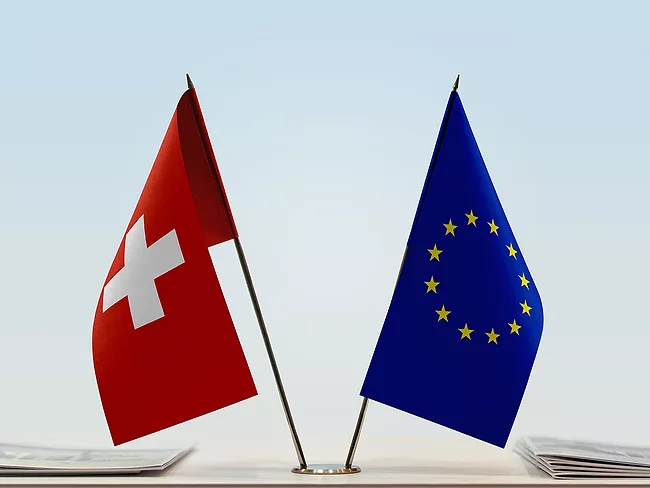
A threat is currently hanging over the Swiss medical device industry, which is heavily reliant on trade with the EU. Upcoming changes to the CE marking regime will have the effect of making the mutual recognition agreement (MRA) obsolete. This currently allows Switzerland to enjoy unrestricted access to the medical device market in the 27 member states. Up until now, this bilateral agreement has regulated trade between Switzerland and the EU.
LONDON – Getting a handle on the specificity and sensitivity of rapid COVID-19 antibody tests, how they compare to each other and how they should be applied in population screening to understand who has had the virus and how it has spread, has been a source of difficulty and dispute between manufacturers, clinicians and public health experts.
The well-known overhaul of the European Union’s (EU) med-tech regulatory system was already a massive lift before the events of 2020, but the three-year transition period begins in 90 days with a large overhang of issues. Among these is that the ISO 14971 risk management standard is not recognized in the EU, and Adrian Keene, director of EU services for North American Science Associates Inc., said on a Feb. 25 webinar that “anything manufacturers can do to smooth the pathway” for device certification and recertification “is worth considering.”
Under threat of emerging variants, the EU is taking to heart lessons learned so far in the global COVID-19 pandemic to accelerate the review of vaccines, improve data sharing from clinical trials and address the difficulties inherent in the mass production of vaccines that may contain up to 400 components.
In a task made more challenging by COVID-19, the EU and the World Health Organization are rolling out separate plans to take down cancer in Europe. The European Commission Feb. 3 announced its Europe’s Beating Cancer Plan, the first comprehensive European cancer initiative in nearly 30 years. A day later, WHO/Europe launched its United Action Against Cancer, billing it as a “pan-European cancer movement” to galvanize support and cooperation from grassroots to governments with the long-term goal of eliminating cancer as a life-threatening disease in the region.