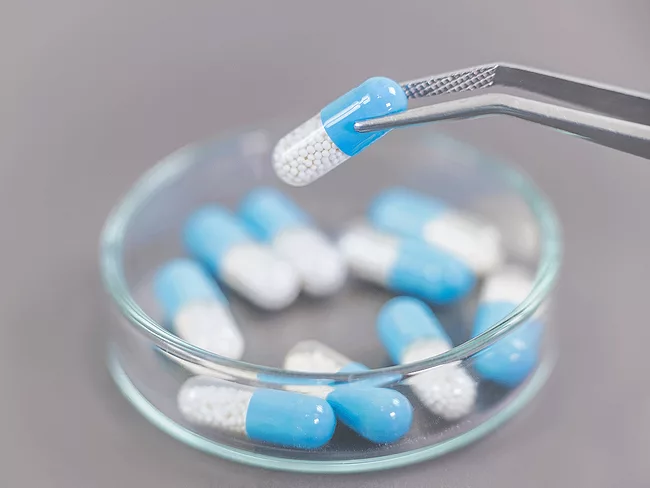
Providing faster and better access to new medicines is the driving force behind a two-year proof-of-concept pilot program the EMA plans to launch in September.
In an era of ever-increasing change in regulation of medical devices, the 2021 draft regulatory proposal by the U.K.’s Medicines and Healthcare Products Regulatory Agency (MHRA) might have seemed like an invitation to regulatory balkanization. However, MHRA said the responses to the draft proposal indicated widespread support for “international collaboration with like-minded regulators,” thus reassuring industry that their developmental devices won’t face an entirely new set of barriers to access to a market of more than 67 million.
The European Commission and the U.S. Department of Health and Human Services (HHS) recently signed an arrangement to strengthen their cooperation on preparedness and response to public health threats.
The EU’s Medical Device Coordination Group (MDCG) has advised the device industry that many manufacturers seem ill prepared for the transition to the Medical Device Regulation (MDR), which will be fully in force for all devices as of May 2024. MDCG said that that any leniency shown after that date will be granted only for devices that address an urgent public health need, potentially leaving many existing authorizations out in the cold.
Stratipath AB gained CE-IVD mark for its artificial intelligence (AI)-based software for prognostic risk stratification of breast cancers, clearing the path for introduction of the solution in the EU. Stratipath Breast analyzes digital histopathology whole slide images generated from surgically resected breast cancer tissue to identify patients with increased risk of disease progression. The system provides clearer guidance on the best treatment path for the 50% of women whose breast cancer is categorized as intermediate risk.
Facing the global threat of antimicrobial resistance (AMR), the EMA issued a final revised guideline on the evaluation of new antibiotics. In accordance with an agreement with the U.S. FDA and Japan’s Pharmaceuticals and Medical Devices Agency, the EMA’s guideline aligns as much as possible with the data requirements of those regulators so drug developers can design clinical trials that meet the evidence needs of all three agencies, the EMA said.
Facing the global threat of antimicrobial resistance (AMR), the EMA issued a final revised guideline on the evaluation of new antibiotics. In accordance with an agreement with the U.S. FDA and Japan’s Pharmaceuticals and Medical Devices Agency, the EMA’s guideline aligns as much as possible with the data requirements of those regulators so drug developers can design clinical trials that meet the evidence needs of all three agencies, the EMA said.
The mutual recognition agreement between Switzerland and the EU for medical devices lapsed in 2021, a development that was expected to add a significant amount of drag on Swiss device exports to EU nations.
When it comes to innovation, Europe has a thing or two it can learn from the U.S. according to European leaders. Speaking at the Medtech Forum meeting in Barcelona, Medtech Europe CEO Serge Bernasconi said Europe’s focus on safety issues is stifling innovation across the continent.
As the implementation date of In Vitro Diagnostic Regulation (IVDR) looms on May 26, 2022, significant uncertainty remains around the new regulatory system. Under Directive 98/79/EC around 10% of all IVDs placed on the market need notified body involvement, whereas under the IVDR this will rise to 80%-90%. Notified body shortages continue to be a major challenge for industry, with many manufacturers yet to receive certification. The situation is expected to be particularly problematic for SME manufacturers who will see most of their products blocked on the market if they don’t receive validation in time.