The U.K.’s new postmarket monitoring requirements do not represent a sea change in device makers’ responsibilities in this area, but the expansions of responsibility are nonetheless significant.
Device makers know all too well the hazards of liability where their products are concerned, but those liabilities may soon balloon dramatically in the EU. Two pieces of EU legislation are in development, including the AI Liability Directive, which may have the effect of forcing the defendant in a liability case to prove that its product was not the cause of the alleged harm.
The European Union has implemented legislation governing artificial intelligence (AI) with more on tap, but the U.S. has to date lagged in that area. However, the House of Representatives has assembled a bipartisan task force for AI, one of several developments suggesting that 2025 will be an even more AI-focused year than 2024.
The EU’s still-new regulations for medical devices and in vitro diagnostics are often seen as drivers of current or impending shortages of these products, but Oliver Eikenberg of regulatory consultancy Pure Global is unimpressed by such claims. Eikenberg said much of the drag on the EU system is engendered by device makers that are failing to get their regulatory affairs in order – a problem neither Brussels nor the notified bodies can fix.
Drug regulators around the world have a unique opportunity – and, in some cases, a legal mandate – to remove the taint of forced labor from the biopharma supply chain. But some of them, including the U.S. FDA and Japan’s PMDA, may be turning a blind eye to those responsibilities, according to a recent report from the nonprofit Centers for Advanced Defense Studies.
The saga of the EU's Medical Device Regulation (MDR) is far from over, but stakeholders were treated to another related dose of reality in a session at this year's Med Tech Conference here in Toronto. Several panelists pointed to a lack of harmonization regarding notified bodies' interpretation of the regulation, but Stryker Inc.'s Michel Marboeuf said this problem flows to some extent from a lack of harmonization among the member states' competent authorities, a condition that is likely to resist treatment in the near term.
The U.S. FDA’s draft guidance for in vitro diagnostics under a Section 564 public health declaration broke little new conceptual ground, but the Association for Molecular Pathology (AMP) urged the agency to reconsider the COVID-19 experience.
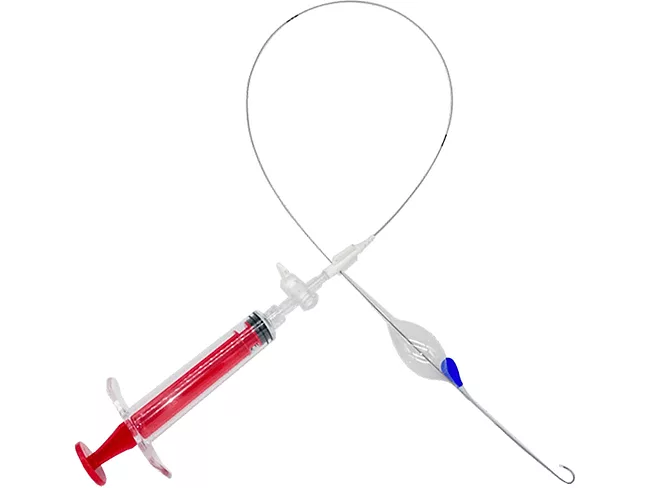
Front Line Medical Technologies Inc. recently received CE mark for its Cobra-OS, the smallest REBOA (resuscitative endovascular balloon occlusion of the aorta) device for use in emergency situations on the market. The company believes that Cobra-OS could help save the lives of patients during traumatic bleeding situations as it could buy valuable time until definitive care can be provided.
The EU has declared that it will investigate the anticompetitive practices of the People’s Republic of China where medical devices are concerned, a clear sign that device makers in the European Union succeeded in persuading Brussels that the Made in China 2025 initiative represents an intolerable form of economic adversarialism.
The EU’s proposed update of its pharmaceutical legislation will break the model of small companies acting as the vehicle for translating Europe’s rich research base for onward development by pharma, according to an analysis looking specifically at the impact the new rules would have on the biotech sector.