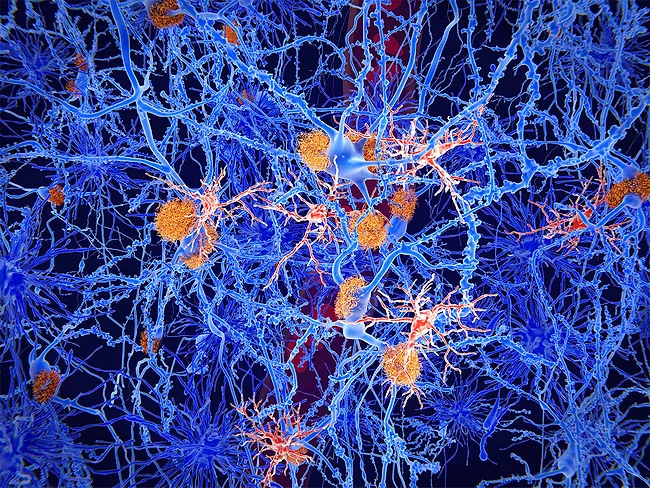
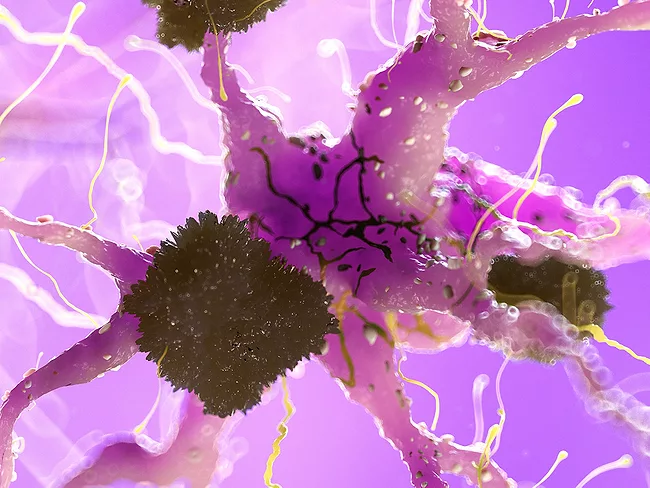
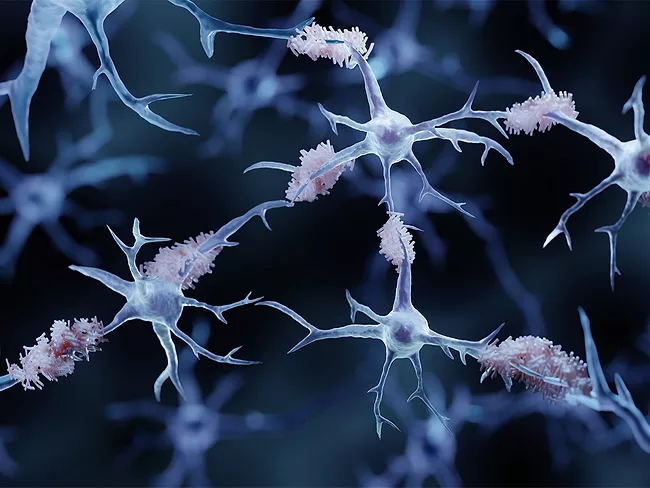
The difference between the origin of Alzheimer's disease (AD) and its symptoms is an obstacle to finding effective treatments. Scientists focused on amyloid-β (Aβ) plaques and tau aggregates to slow neurodegeneration and cognitive decline. Without identifying what causes AD, approved treatments do not provide much benefit.
A little-known tissue composed of a cluster of immune cells could offer novel insights into the development of neurological disorders. Meninges' immune system changes with age and neurodegeneration. Are they protecting the brain or fueling disease? Mapping and analyzing the so-called ectopic lymphoid structures (ELSs) in the meninges at different ages in preclinical models of neurodegenerative diseases such as Alzheimer's may help clarify whether they are good, bad, or ugly, as in the iconic film by Sergio Leone.
The difference between the origin of Alzheimer's disease (AD) and its symptoms is an obstacle to finding effective treatments. Scientists focused on amyloid-β (Aβ) plaques and tau aggregates to slow neurodegeneration and cognitive decline. Without identifying what causes AD, approved treatments do not provide much benefit. However, new findings suggest that restoring lithium levels in the brain could prevent and treat AD. Not just any lithium would work, just the forms that do not bind to Aβ.
Current treatments for Alzheimer’s disease have limited effects. While they can slow cognitive decline or alleviate symptoms, they do not reverse this complex neurodegenerative condition caused by multiple factors. Researchers from the Gladstone Institutes and the University of California, San Francisco (UCSF) have screened FDA-approved drugs in search of agents that could potentially modify the disease.
Illimis Therapeutics Inc. raised ₩58 billion (US$42 million) in a series B financing round. The funds will support development of ILM-01, its lead bispecific fusion protein candidate, into preclinical development for Alzheimer’s disease by the second half of 2025, along with the company’s neuroimmunology portfolio.
Illimis Therapeutics Inc. raised ₩58 billion (US$42 million) in a series B financing round. The funds will support development of ILM-01, its lead bispecific fusion protein candidate, into preclinical development for Alzheimer’s disease by the second half of 2025, along with the company’s neuroimmunology portfolio.
Samsung Life Science Fund made its first strategic investment of the year into C2N Diagnostics LLC, underscoring the rising potential of blood-based diagnostics in detecting and monitoring the risk of Alzheimer’s disease for the masses.
Roche AG’s disclosure in December that prasinezumab, partnered with Prothena plc, fell short of its primary phase IIb endpoint put the spotlight on microtubule binding region (MTBR)-targeting therapies in neurological disorders.
Voyager Therapeutics Inc.’s recent selection of a lead development candidate, VY-1706, for its tau silencing gene therapy program in Alzheimer’s disease brought renewed attention to the target, which continues to intrigue a substantial lineup of developers. Bellwether data rolled out this fall from UCB SA and Roche AG at the Clinical Trials in Alzheimer’s Disease meeting in Madrid.
Seoul, South Korea-based Adel Inc. raised ₩17 billion (US$12.39 million) in bridge financing to advance its pipeline of Alzheimer’s disease therapies, including its tau antibody-based ADEL-Y01 candidate, currently in a U.S.-based phase I study.