Age-related macular degeneration (AMD) is still widely seen as the most common cause of irreversible blindness in those aged 50 and older, but the U.S. NIH and two partners from the private sector believe they have a solution. The three have teamed up to develop a patch embedded with induced pluripotent stem cells that has been implanted in a patient in the U.S. for the first time, marking the commencement of a safety study that may help take a bite out of the $4.6 billion in direct medical spending on AMD each year in the U.S.
Positive data from Unity Biotechnology Inc.’s phase II study of UBX-1325, a senolytic BCL-XL inhibitor for treating diabetic macular edema, boosted the stock out of the penny range. Shares of the South San Francisco-based company’s stock (NASDAQ:UBX) rose sharply, 54% on Aug. 12, to $1.31 each.
Researchers are closer to better diagnosing and treating age-related macular degeneration (AMD) after discovering new genetic signatures of the disease by reprogramming stem cells to generate high-resolution disease models.
Researchers are closer to better diagnosing and treating age-related macular degeneration (AMD) after discovering new genetic signatures of the disease by reprogramming stem cells to generate high-resolution disease models.
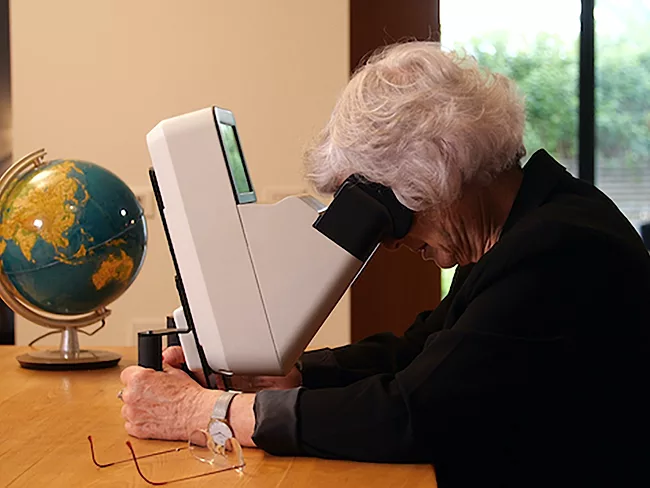
Notal Vision Inc. released two clinical reports it said prove the feasibility and efficacy of its patient-operated, home-based optical coherence tomography (OCT) device for monitoring wet age-related macular degeneration (AMD). This comes in the wake of a 2021 report that concluded patient operation of the Notal Vision Home OCT (NVHO) and its machine learning algorithm were generally on par with human experts evaluating retinal fluid and fluid volume in patients with AMD.
Samsara Vision Inc. has received FDA approval to begin a U.S.-based PMA supplement trial to assess improvements in visual acuity and safety of its smaller-incision next-generation implantable miniature telescope, called SING IMT, in people with late-stage age-related macular degeneration (AMD). The device has been available in the EU since 2020.
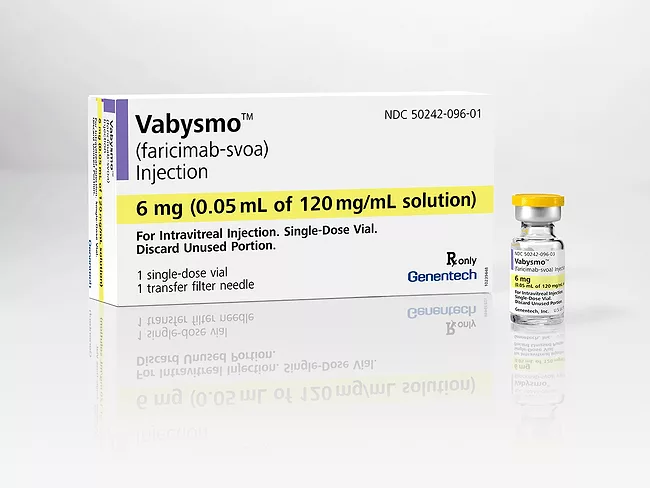
After showing power in its frequency of dosing and efficacy, Vabysmo (faricimab) has been approved by the FDA for treating wet, or neovascular, age-related macular degeneration and diabetic macular edema. The bispecific monoclonal antibody was developed by Roche Holding AG units, Chugai Pharmaceutical Co. Ltd. and Genentech Inc.
What one analyst called “fantastic external validation but, even more importantly, great for the cell therapy and regenerative medicine space” arrived in the form of Lineage Cell Therapeutics Inc.’s potential $670 million deal with Roche Holding AG. With its subsidiary, Cell Cure Neurosciences Ltd., Lineage signed an exclusive worldwide collaboration and license pact with Roche and its Genentech arm.
Tilak Healthcare SAS has received €7 million (US$8.08 million) from investors to push commercialization of its mobile game and vision monitoring platform, Odysight. The CE marked class I device is prescribed by ophthalmologists to remotely monitor age-related visual impairment and includes daily visual tests to stimulate cognitive and visual abilities. A rollout of the mobile game has already commenced in France.
Abbvie Inc. and Regenxbio Inc. have announced a partnership to develop and commercialize RGX-314, a potential one-time gene therapy for the treatment of wet age-related macular degeneration (wet AMD), diabetic retinopathy and other chronic retinal diseases. Under the terms of the agreement, Abbvie will pay Regenxbio $370 million up front, plus up to $1.38 billion in additional development, regulatory and commercial milestones. The deal gives '314 – already the most advanced gene therapy in wet AMD – another potential edge against its nearest competitor, Adverum Biotechnologies Inc.’s ADVM-022.