After a delay in November that resulted in a new PDUFA date, Apellis Pharmaceuticals Inc.’s Syfovre (pegcetacoplan injection) received U.S. FDA approval for treating geographic atrophy (GA) secondary to age-related macular degeneration. While this is the first and only FDA-approved treatment for GA, there is competition afoot from Belite Bio Inc. and Iveric Bio Inc. The intravitreal targeted C3 therapy’s Feb. 17 approval of the priority NDA came more than a week ahead of its Feb. 26 PDUFA.
Akari Therapeutics plc has advanced its preclinical development program for long-acting PAS-nomacopan for geographic atrophy (GA) secondary to dry age-related macular degeneration (AMD). The company has produced new and promising versions and progressed from lab scale to pre-GMP optimization, and is targeting an IND application to the FDA in the first half of next year.
Eyenuk Inc. is significantly extending the scope of its artificial intelligence system for the automatic analysis of retinal images, adding the diagnosis of age-related macular degeneration (AMD) and glaucoma to the EU approved uses of Eyeart AI.
Thirona BV spun out its retina division into a stand-alone business, Thirona Retina BV, focused exclusively on the eye disease market, effective Jan. 1, 2023. The development comes after the recent expansion of Retcad, Thirona’s flagship solution for eye disease screening. Thirona BV will continue to develop artificial intelligence (AI)-driven systems for precision medicine in lung disease.
Exegenesis Bio (Hangzhou Exegenesis Biotechnology Co. Ltd.) has received FDA clearance of its IND application for EXG-102-031, a recombinant adeno-associated virus (rAAV)-based gene therapy that is being studied for the treatment of neovascular age-related macular degeneration (AMD).
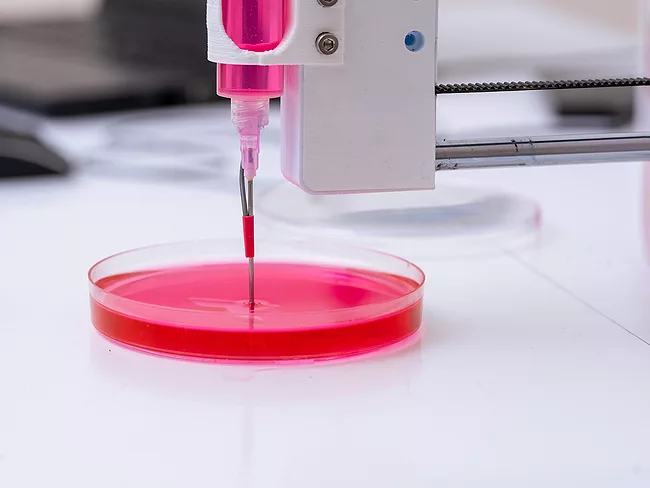
Age-related macular degeneration (AMD) is the leading cause of irreversible vision loss in persons over the age of 50. While poorly understood, AMD pathogenesis begins with structural disorganization of the outer-blood-retina-barrier (oBRB), containing retinal pigment epithelium (RPE) and associated Bruch’s membrane.
Earlysight SA is developing a novel ophthalmology device that can be used to diagnose certain degenerative eye disorders long before onset of first symptoms. Earlysight and researchers at the Swiss Federal Institute of Technology Lausanne (EPFL) have reported positive results for their first clinical trial of Cellularis in the journal Ophthalmology Science.
Aviceda Therapeutics LLC has completed IND-enabling good laboratory practice (GLP) toxicity studies of its lead ophthalmic drug candidate, AVD-104, in nonhuman primates and rabbits.
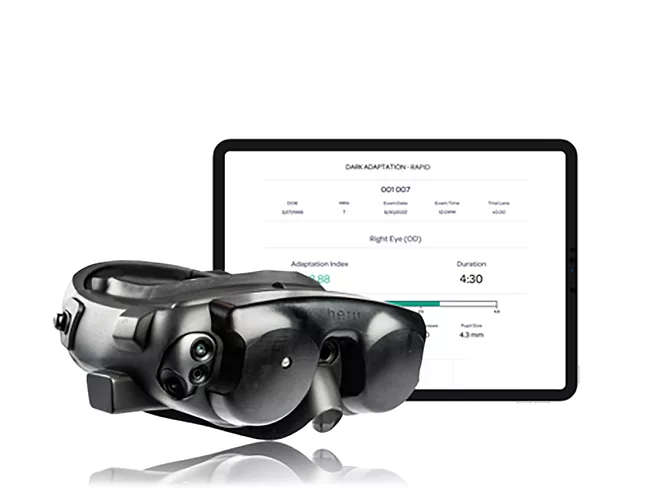
Sometimes it is a good idea to go to the dark side, particularly for individuals with undiagnosed vision impairment. Dark adaptation is one of the first aspects of vision to become impaired by age-related macular degeneration (AMD), so identifying it at early stages can preserve sight. Heru Inc. recently launched a new modality for its wearable screening platform to quickly assess dark adaptation.