How the U.S. FDA might respond became a serious question for Wall Street as Sarepta Therapeutics Inc. made known a second death due to acute liver failure with gene therapy Elevidys (delandistrogene moxeparvovec), cleared for Duchenne muscular dystrophy (DMD). Shares of Cambridge, Mass.-based Sarepta (NASDAQ:SRPT) closed June 16 at $20.94, down $15.24, or 42%, as Wall Street digested the news.
Regenxbio Inc.’s gene therapy in treating Duchenne muscular dystrophy (DMD) produced positive initial phase I/II results from its first five patients. However, the company’s stock (NASDAQ:RGNX) shuddered on June 5 as shares closed at $8.36 each, a drop of 17% on the day.
The appointment May 6 of Vinay Prasad as the head of the U.S. FDA’s Center for Biologics Evaluation and Research (CBER) “bodes poorly” for Sarepta Therapeutics Inc.’s development-stage pipeline, said Wainwright analyst Mitchell Kapoor – and Wall Street reflected as much, as the stock (NASDAQ:SRPT) ended that day down 26.6% vs. an XBI drop of 6.6% – this ahead of the after-hours earnings disclosure that pushed the Cambridge, Mass.-based firm down even farther by more than another 20%, with the XBI unchanged.
Argenx NV is now well on the way to establishing a Vyvgart (efgartigimod alfa) franchise in severe autoimmune diseases, after getting the nod from the EMA in the treatment of progressive or relapsing chronic inflammatory demyelinating polyneuropathy.
Duchenne muscular dystrophy (DMD) is a devastating genetic disorder affecting approximately 1 in 3,500-5,000 newborn males worldwide. It is characterized by progressive degeneration of skeletal, cardiac and smooth muscle, leading to early mortality. A team of researchers from the Technion Israel Institute of Technology has developed a novel approach to combat fibrosis in DMD.
Despite being known for more than 150 years, Duchenne muscular dystrophy (DMD) remains an untreatable disease affecting approximately 1 of every 3,500-5,000 males. Muscles in patients express no or inactive dystrophin, rendering them weak and less mobile.
Dyne Therapeutics Inc. is advancing novel therapeutics for people living with genetically driven neuromuscular diseases. Representatives from the company recently presented a poster showcasing preclinical and early clinical results from the development of their proprietary FORCE platform applied to Duchenne muscular dystrophy (DMD).
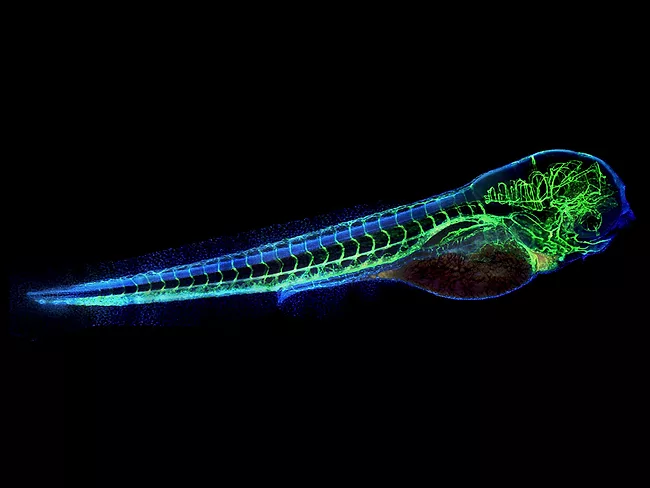
Previous studies have shown that protein expression of DOCK7 is increased in skeletal muscle biopsies from patients with Duchenne muscular dystrophy (DMD), leading researchers from the University of Alabama at Birmingham and affiliated organizations to assess the functional impact of DOCK7 on normal muscle and embryonic development of zebrafish.
Researchers from the University of Queensland recently provided details on the discovery and preclinical characterization of a new hematopoietic prostaglandin D2 synthase (HPGDS) inhibitor, CLS-189, being developed for the treatment of Duchenne muscular dystrophy (DMD).
Precision Biosciences Inc. recently presented a new gene-editing approach, PBGENE-DMD, which could allow life-long benefits to patients with Duchenne muscular dystrophy (DMD).