Alcon AG plans to acquire Ivantis Inc. for $475 million at closing, regaining a significant position in the lucrative minimally invasive glaucoma surgery (MIGS) space through the addition of the Hydrus microstent device to its ophthalmology portfolio. In addition to the up-front payment, the deal includes additional unspecified contingent payments dependent on achievement of certain milestones. The transaction is expected to close in the first quarter of 2022.
Glaukos Corp., of San Clemente, Calif., has taken another step forward in obtaining global market access for its Istent device for glaucoma with a positive coverage recommendation in Canada. Health Quality Ontario (HQO) has recommended that taxpayer dollars be used to cover the device in conjunction with cataract surgery, although the endorsement is limited to patients with mild to moderate glaucoma that is not well controlled with pressure-lowering medications.
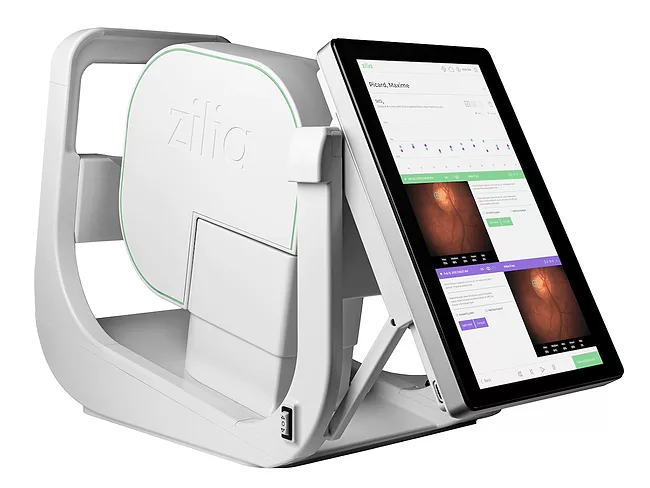
TORONTO – Zilia Inc. has raised C$4 million (US$3.16 million) in seed financing to push new ocular diagnostic technology to regulatory finish lines in the U.S., Canada and eventually Europe. Zilia co-founder and CEO Patrick Sauvageau said the Zilia Ocular is alone in measuring oxygen saturation in the eye, an important biomarker for eye diseases such as glaucoma, diabetic retinopathy and age-related macular degeneration.
After three years of litigation and nearly a decade of skirmishes, Ivantis Inc. settled with Glaukos Corp. for $60 million to be paid in two installments, with the first $30 million due by Dec. 31, 2021, and the second $30 million by Dec. 31, 2022. In addition, Irvine, Calif.-based Ivantis will pay Glaukos a 10% royalty through April 26, 2025, on sales of Ivantis’ Hydrus Microstent in the U.S. or international sales supplied out of the U.S. With just two weeks to go until their scheduled court date of Sept. 28, the companies finally saw eye-to-eye, reaching a cross-licensing agreement and hammering out a covenant to refrain from future litigation regarding the technologies involved in the Hydrus or Glaukos’s Istent, both used to treat glaucoma.
Visus Therapeutics Inc. has expanded its ophthalmic drug portfolio, in-licensing investigational therapies for glaucoma and age-related macular degeneration from Cella Therapeutics LLC, which will be developed by Finland’s Delsitech Ltd. using its extended-release depot technology.
Myra Vision Inc. has raised $17 million in series A financing and intends to use the funds to advance product development, scale infrastructure and expand its team in support of the glaucoma treatment device’s development. Its name was changed from Myra Medical Inc. along with the financing.
Heru Inc. has raised $30 million in a series A financing to support the further development of its artificial intelligence (AI)-enabled, wearable eye diagnostic and vision correction platform. D1 Capital Partners led the round, with participation from Softbank Ventures Opportunity Fund, Maurice Ferre, Frederic Moll, Krillion Ventures and a consortium of investors with expertise in developing, launching and scaling medical technologies.
Glaukos Corp. reported 12-month results from the pivotal IDE trial of its Istent Infinite trabecular micro-bypass system, showing substantial reduction in mean diurnal intraocular pressure (IOP) in patients with open-angle glaucoma uncontrolled by prior surgery or medication. The company is targeting U.S. FDA approval of the device for standalone moderate-to-severe glaucoma in late 2021.
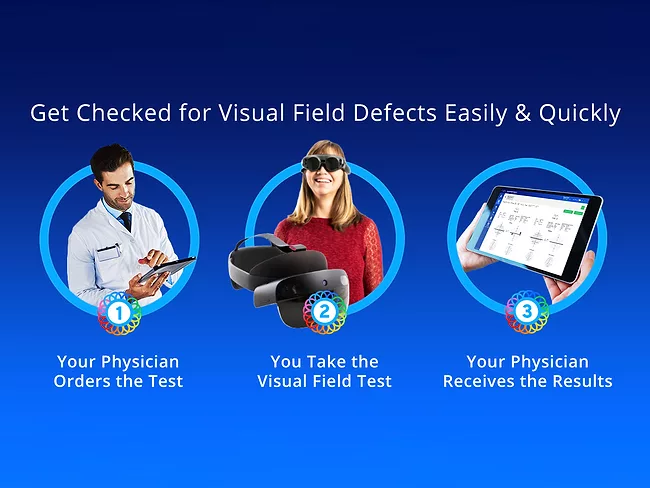
Heru Inc., a medical technology company using artificial intelligence (AI) to advance vision diagnostics and augmentation, has completed class I device registration with the U.S. FDA for its cloud-based diagnostic application for visual field exams. Heru’s software works with commercially available augmented reality or virtual reality (AR/VR) headsets to provide a subjective visual field exam, with results immediately available to clinicians through a web portal.
LONDON – Researchers at University College London (UCL) have devised a new eye test they say can predict the likelihood of developing wet age-related macular degeneration (AMD) up to three years before overt symptoms develop. The prognostic test involves injecting a fluorescent dye, via the arm, to tag stressed endothelial cells in the retina.