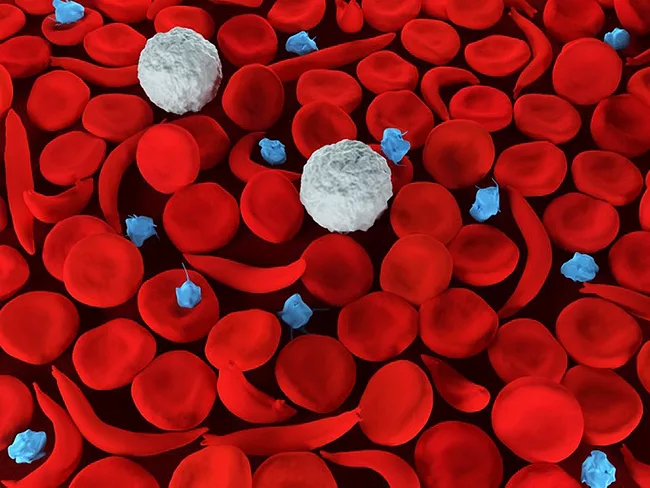
Novo Nordisk A/S reported top-line results from the phase III Hibiscus study of its pyruvate kinase-R activator, etavopivat, which was acquired through the 2022 buyout of Forma Therapeutics Holdings Inc. The results set up a potential competition for patients afflicted by sickle cell disease with fellow PKR activator mitapivat from Agios Pharmaceuticals Inc.
Epifrontier Therapeutics Inc. has been awarded a grant of up to $32 million in nondilutive funding from the Japan Agency for Medical Research and Development (AMED) to advance the clinical development of EPF-001 (RK-701), a first-in-class G9a inhibitor being developed for sickle cell disease and β-thalassemia.
Agios Pharmaceuticals Inc. is preparing to present a mixed bag of phase III Rise Up data to the U.S. FDA in hopes of “full approval” for mitapivat in sickle cell disease (SCD), which would make it its third indication in rare hematology.
Sickle cell disease (SCD) is an inherited hemoglobinopathy caused by a mutation in the gene encoding β-globin that results in hemoglobin S polymerization, red blood cell (RBC) sickling and hemolytic anemia, among others.
Using C-X-C chemokine receptor type 4 (CXCR4) antagonists as cell mobilization agents has resulted in some FDA approved agents, such as Plerixafor, for hematopoietic stem cell transplantation and neutropenia. Oral cell mobilizers could result in using them in conditions such as sickle-cell disease (SCD) and chronic neutropenia. Emory University has developed and presented data for their CXCR4 antagonist EMU-116.
On the heels of mixed phase III data from Agios Pharmaceuticals Inc. with mitapivat to treat sickle cell disease (SCD), Fulcrum Therapeutics Inc. wowed investors by way of initial results from the ongoing 20-mg dose cohort in the phase Ib Pioneer trial testing oral, once-daily fetal hemoglobin inducer pociredir.
Only a couple of years since the first sickle cell disease (SCD) gene therapies gained U.S. FDA approval, researchers are working to expand access for younger children, and to improve manufacturing and commercialization to reach patients faster.
“Our goal is that by the end of this call, you’ll share our conviction in the totality of the data.” So said Agios Pharmaceuticals Inc. CEO Brian Goff as the company reported top-line data from its 52-week Rise Up trial testing mitapivat in sickle cell disease showing the oral pyruvate kinase activator hit statistical significance on one of two primary endpoints and two of three key secondary endpoints.
Sickle cell disease (SCD) is a genetic disorder caused by a single point mutation in the β-globin gene, leading to the production of abnormal hemoglobin. Patients with SCD lacking a compatible donor for allogeneic hematopoietic stem/progenitor cell transplantation can benefit from gene therapy approaches.
There was a curate’s egg for Sanofi SA from this month’s meeting of the EMA’s Committee for Medicinal Products for Human Use, with a recommendation to approve one of the French pharma’s drugs – and the rejection of another.