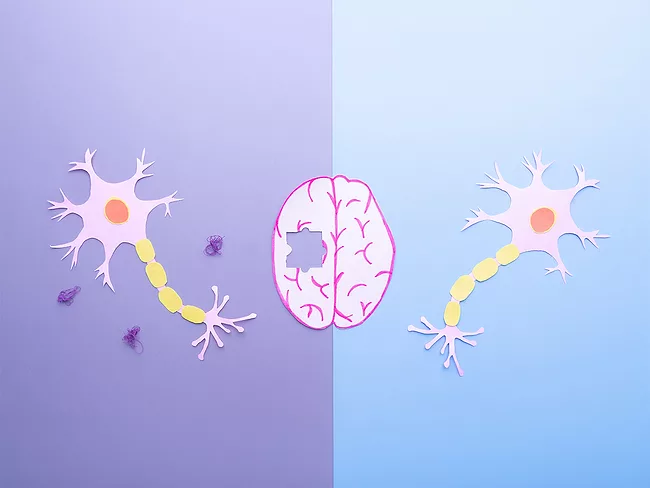
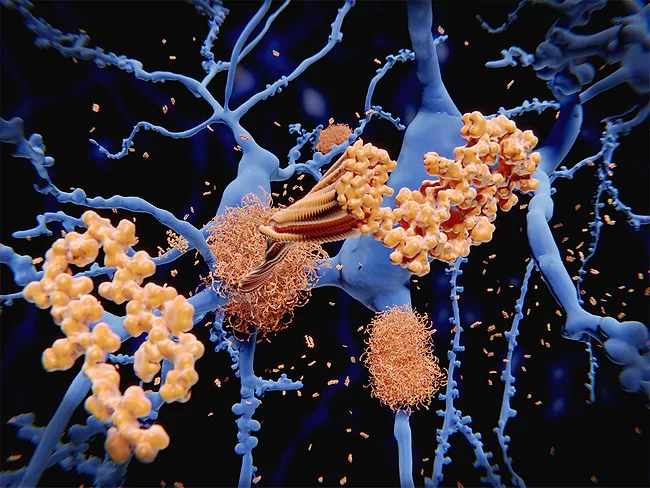
Microglia play a central role in the neuroinflammation associated with Alzheimer’s disease (AD). At the 20th International Conference on Alzheimer’s and Parkinson’s Diseases (AD/PD), scientists focused on TREM2, a microglial receptor that regulates immune responses, exploring new ways to address neuroinflammation.
The potent carboxypeptidase enzyme protective protein cathepsin A (PPCA) is known to cleave the C-terminus of amyloid-β42, responsible for aggregation and oligomer stability, and may reduce both intracellular and extracellular amyloid-β aggregates in the brain. Amlogenyx Inc. has presented data regarding their approach based on PPCA delivery through an adenoviral vector (AAV9), namely AM-805, for the potential treatment of Alzheimer’s disease (AD).
Microglia play a central role in the neuroinflammation associated with Alzheimer’s disease (AD). These cells act as the brain’s immune system and respond to damage signals such as amyloid accumulation. When the process starts, the initial microglial response can be protective. However, in later stages, this response becomes dysfunctional and contributes to disease progression. At the 20th International Conference on Alzheimer’s and Parkinson’s Diseases (AD/PD), scientists focused on TREM2, a microglial receptor that regulates immune responses, exploring new ways to address neuroinflammation.
Akeso Inc. has received clearance from China’s National Medical Products Administration (NMPA) to initiate clinical trials with AK-152 for Alzheimer’s disease.
Experts agree that the earlier Alzheimer's disease is detected, the sooner action can be taken. And so, the key to preventing deterioration is identifying the most effective early biomarkers, those that can spot the disorder and help halt its progression. Recent advances in the field have pushed a new era of early detection through blood-based biomarkers and personalized medicine strategies based on each patient’s genetic, immunological and clinical profile.
Experts agree that the earlier Alzheimer's disease is detected, the sooner action can be taken. And so, the key to preventing deterioration is identifying the most effective early biomarkers, those that can spot the disorder and help halt its progression. Recent advances in the field have pushed a new era of early detection through blood-based biomarkers and personalized medicine strategies based on each patient’s genetic, immunological and clinical profile.
Alzheon Inc.’s oral treatment for people in the early stages of Alzheimer’s disease missed its phase III primary endpoint, adding yet another therapy to a long list by many developers that can’t beat dementia. The study also received grant money, which is in increasingly short supply.
Samsung Life Science Fund made its first strategic investment of the year into C2N Diagnostics LLC, underscoring the rising potential of blood-based diagnostics in detecting and monitoring the risk of Alzheimer’s disease for the masses.
Asceneuron SA has raised $100 million in an oversubscribed series C to take its lead small molecule, ASN-51, into phase II, with aim of demonstrating it prevents the formation of tau tangles and slows the progression of Alzheimer’s disease.
After decades of trying and dozens of failed trials, amyloid targeting has paid off with the first disease-modifying agents reaching the market. But success does not mean slam dunk. Aduhelm (aducanumab, Biogen Inc.) was dogged by controversy throughout its brief tenure, and Biogen pulled the plug on it in early 2024. Leqembi (lecanemab, Biogen Inc.) has received full approval. In this second installment of a three-part series on Alzheimer’s, BioWorld looks at the nuanced view of amyloid’s role in the disease.