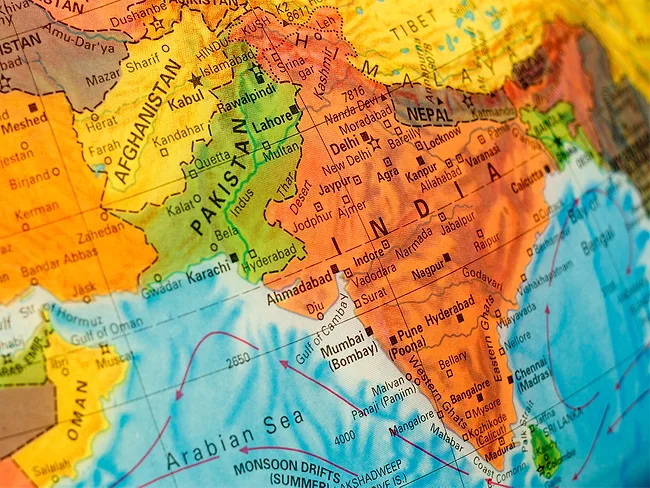
With a new medical device policy, India is laying the groundwork for a spurt in domestic manufacturing and to emerge as an innovative and globally competitive in the space, which is currently heavily reliant on imports. The new National Medical Devices Policy 2023, approved by the government at the end of April and notified in May, aims to place the Indian medical devices sector on an accelerated growth path.
China’s med-tech products exports declined in 2021 as manufacturing in other countries picked up, while med-tech imports to the country increased. In the first half of 2021, China’s med-tech exports amounted to $47.931 billion, a decrease of 23.1% year-on-year. But imports for the same period amounted to $24.392 billion, an increase of 25.2% year-on-year, according to med-tech data company Guangzhou Joinchain Big Data Technology Co. Ltd.
The med-tech industry across Latin America continues to grow, but the growth is uneven, concentrated in a handful of countries and faces significant challenges. A report released in December by the United Nations Economic Commission for Latin America and the Caribbean (ECLAC) reveals the complexity of the region's med-tech trade balance and underscores the main challenges for the industry in the region, whose performance was also impacted by the COVID-19 pandemic.
With large amounts of cash in hand from exponentially higher sales related to COVID-19, some Chinese med-tech companies are now implementing plans to continue growing in a post-pandemic world.
Health Canada is proposing amendments to the Food and Drugs Act that would provide greater oversight of the manufacture of drugs for export. Currently, facilities that manufacture or prepare drugs in Canada for use outside the country are not required to obtain a drug establishment license or to follow Canadian requirements for good manufacturing practices, and they are exempt from fees.
CAJICA, Colombia – The tiny Central American country of Costa Rica continues to cement its position as Latin America’s med-tech powerhouse after experiencing double-digit growth in exports in the first two months of the year, according to data released by Procomer, the country's exports promotion agency. “These numbers become more relevant when detailing that medical devices and precision equipment represent, for the third consecutive year, the country's main export, which had double-digit growth of 23%, thus representing 36% of the exports of the country,” the Costa Rican government said.
HONG KONG – India has been slowly easing restrictions on the export of its med-tech products, giving hope to domestic manufacturers looking to meet global demand for their output. “We are pleased to share that many of the routine IVD diagnostic kits falling under HSN code 3822 have been removed from export restrictions and a few specific items related to COVID-19 testing retained,” Rajiv Nath, the forum coordinator for the Association of Indian Medical Device Industry (AIMED), told BioWorld recently.
The impact of the COVID-19 pandemic has reached into quarters that are not historically problematic for makers of diagnostics, including China’s import and export practices for test kits. According to one caller on an FDA diagnostic town hall, export officials in China have a blacklist and a whitelist for test kits, but there is some dispute as to whether kits that are eligible for distribution in the U.S. can get off the blacklist unless that kit is specifically called out via the emergency use authorization (EUA) program.
HONG KONG – India has lifted some restrictions on the export of its medical supplies in light of the global battle against the COVID-19 novel coronavirus. Last month, Indian authorities started restricting the export of certain active pharmaceutical ingredients (APIs) and the formulations based on some specific APIs.