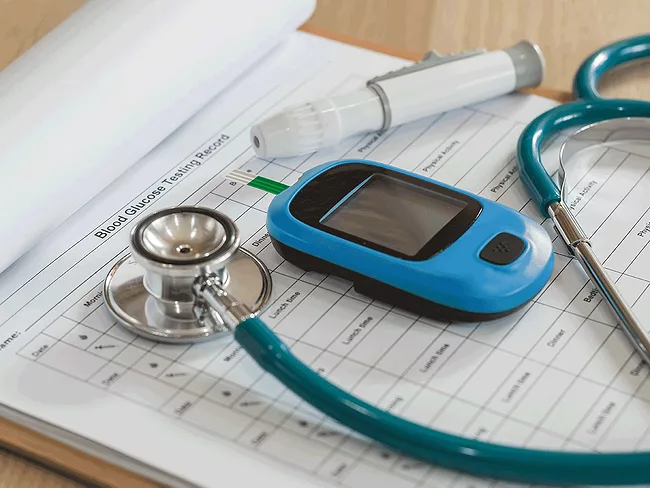
Fractyl Health Inc. reported clinical updates on the Revita real world registry in Germany which has demonstrated clinical remission from type 2 diabetes (T2D) employing a device that resurfaces the duodenal mucosa, the innermost layer of the first portion of the small intestine, and a potential root cause of T2D.
The U.K. government and the health care industry should focus more on behavioral-based approaches and preventative care in a bid to tackle health inequality, rising costs and an ageing population, Anton Derlyatka, CEO and co-founder of Sweatcoin Ltd., told BioWorld. Sweatcoin is a step-counting app that rewards users for their daily steps. The company has worked with the NHS for the last three years and is currently working on pilot programs to help tackle type 2 diabetes and cardiovascular diseases by incentivizing people to move.
Showing that much lower brand prices are possible, even in the U.S., Theracosbio Inc. announced July 13 that its diabetes drug, Brenzavvy (bexagliflozin), is coming to the U.S. market through the Mark Cuban Cost Plus Drug Co. at a monthly price that’s less than the copay most patients have to pay for other drugs in the class. A new molecular entity approved in January to improve glycemic control in adults with type 2 diabetes, Brenzavvy is an oral, once-daily sodium-glucose cotransporter 2 (SGLT2) inhibitor that will be available through Cost Plus Drugs with a monthly price tag of $47.85, plus shipping and handling. A 30-day supply of other SGLT2 inhibitors costs hundreds of dollars, with some approaching $600 a month.
Researchers from the Institute of Translational Genomics at Helmholtz Munich have described a genetic overlap between type 2 diabetes (T2D), a disease that is also associated with obesity, and osteoarthritis, a degeneration of the joints that worsens with age and coincides in the factor risk of being overweight. The researchers used genetic data, multiomics and functional analysis of the tissues T2D and osteoarthritis express to identify which genes were associated and correlated with both diseases. They published their results on July 10, 2023, in The American Journal of Human Genetics.
Shionogi & Co. Ltd. has reported aromatic heterocyclic compounds acting as glucagon-like peptide 1 receptor (GLP-1R) agonists and reported to be useful for the treatment of obesity and type 2 diabetes.
As earlier-stage efforts in oncology continue with BMF-219, Biomea Fusion Inc. rolled out new clinical data June 23 from the first two cohorts of patients with type 2 diabetes enrolled in the phase II part of its ongoing phase I/II study called Covalent-111 testing the same compound, an oral covalent menin inhibitor.
Sino Biopharmaceutical Ltd. formed a partnership with Gmax Biopharm International Ltd. to develop obesity candidate GMA-106. As part of the $57 million deal, Sino Biopharm acquired greater China rights to develop and commercialize the drug, in exchange for up-front and milestone payments to Gmax.
Sino Biopharmaceutical Ltd. formed a partnership with Gmax Biopharm International Ltd. to develop obesity candidate GMA-106. As part of the $57 million deal, Sino Biopharm acquired greater China rights to develop and commercialize the drug, in exchange for up-front and milestone payments to Gmax.
A one-hour procedure pioneered by Endogenex Inc. could make insulin use obsolete in people with type 2 diabetes. The recellularization via electroporation therapy (ReCET) procedure uses a specialized catheter to deliver electric pulses to the duodenum. Recently presented results of the EMINENT trial showed that 86% of patients who underwent the procedure and then began treatment with semaglutide were able to discontinue insulin use at six months and remain off insulin for at least a year following the procedure.
The most ambitious objective of any treatment is to eradicate the disease, acting on its origin to cure it instead of treating its symptoms. This is the purpose of the gene therapy against type 2 diabetes (T2D) and obesity that Fractyl Health Inc. is developing. Scientists from the Lexington, Mass.-based company have designed a strategy based on glucagon-like peptide-1 (GLP-1) to transform pancreatic cells and reverse the disease.