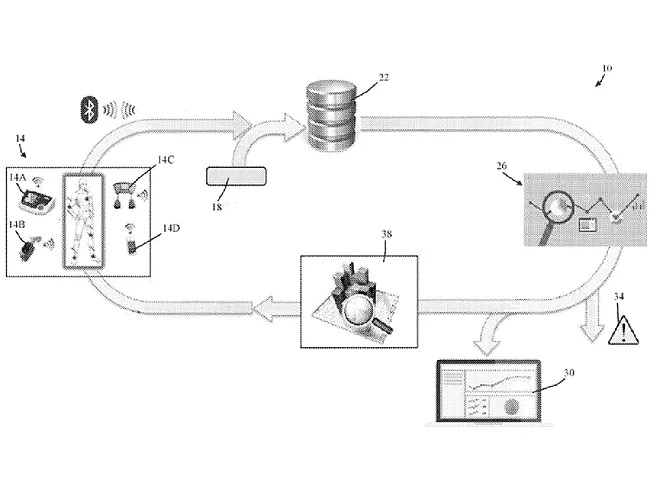
In what represents the first patenting from Immersive Reality Group LLC, the company’s co-founders describe their Intellighealth system for detecting the early onset of respiratory diseases using artificial intelligence and wearable remote health monitoring technologies.
When life-saving inhalers sell in Europe at 1.5% to about 8% of their list price in the U.S., they’re bound to attract scrutiny, especially in a time when inequities in prescription drug prices are fueling more and more legislation to reduce U.S. prices.
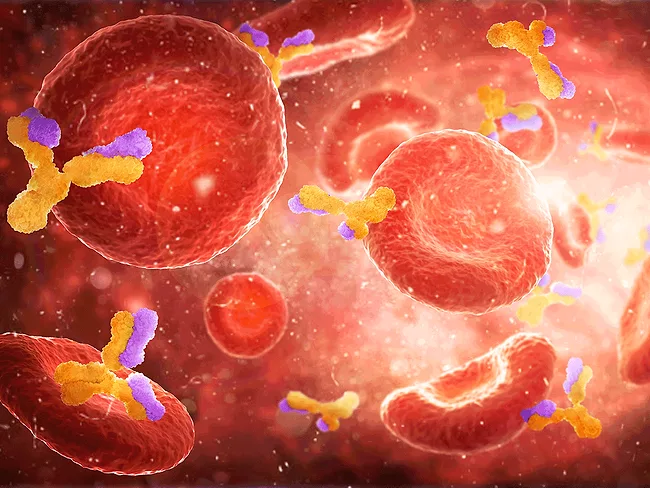
GSK plc is plunking down $1 billion cash to take over Aiolos Bio Inc., with the promise of as much as $400 million in regulatory milestone payments along with tiered royalties. The deal gives London-based GSK asthma candidate AIO-001, a phase II-ready, long-acting antibody that binds to the human thymic stromal lymphopoietin (TSLP) ligand to inhibit TSLP signaling and relieve inflammation. GSK said AIO-001 could redefine the standard of care in asthma via the prospect of dosing every six months.
Kymera Therapeutics Inc. has unveiled two new first-in-class oral degrader programs for immune-mediated diseases: KT-621, a STAT6 degrader, and KT-294, a TYK2 degrader.
Teva Pharmaceutical Industries Ltd. and Biolojic Design Ltd. have announced an exclusive license agreement to develop a potential novel antibody-based therapy for the treatment of atopic dermatitis and asthma.
Leukotriene B4 (LTB4) stimulates the release of cytokines and mediators that participate in tissue inflammation and acts as a chemoattractant for neutrophils, eosinophils and monocytes at the inflammation site.
Connect Biopharma Holdings Ltd. has been seeking a partner for its atopic dermatitis candidate rademikibart, and it appears to have found the perfect partner in Simcere Pharmaceutical Group, which gains exclusive rights to develop, manufacture and commercialize rademikibart in China in a deal worth $120 million plus royalties.
Connect Biopharma Holdings Ltd. has been seeking a partner for its atopic dermatitis candidate rademikibart, and it appears to have found the perfect partner in Simcere Pharmaceutical Group, which gains exclusive rights to develop, manufacture and commercialize rademikibart in China in a deal worth $120 million plus royalties.
With one of the higher series A rounds for 2023, the newly launched Aiolos Bio Inc. pulled in $245 million to advance its lead product, AIO-001, an anti-thymic stromal lymphopoietin monoclonal antibody set to enter a phase II trial for moderate to severe asthma.
Apogee Therapeutics Inc. recently presented preclinical data on its lead candidate, APG-777, a fully optimized and half-life extended antibody targeting IL-13 for the treatment of atopic dermatitis and asthma.