Samsung Bioepis Co. Ltd. announced positive top-line phase I and phase III data for SB-27, a proposed biosimilar to Merck & Co. Inc.’s blockbuster immunotherapy Keytruda (pembrolizumab). Preliminary analysis of parallel-run global phase I and phase III studies demonstrated SB-27’s clinical and pharmacokinetic (PK) equivalence to the reference product, according to a company announcement.
Samsung Bioepis Co. Ltd. announced positive top-line phase I and phase III data for SB-27, a proposed biosimilar to Merck & Co. Inc.’s blockbuster immunotherapy Keytruda (pembrolizumab). Preliminary analysis of parallel-run global phase I and phase III studies demonstrated SB-27’s clinical and pharmacokinetic (PK) equivalence to the reference product, according to a company announcement.
Multiple companies are chasing Akeso Inc. and Summit Therapeutics Inc. in the battle to potentially dethrone Keytruda (pembrolizumab, Merck & Co. Inc.) as the top cancer immunotherapy for patients with non-small-cell lung cancer with bispecific antibodies targeting PD-(L)1 and VEGF.
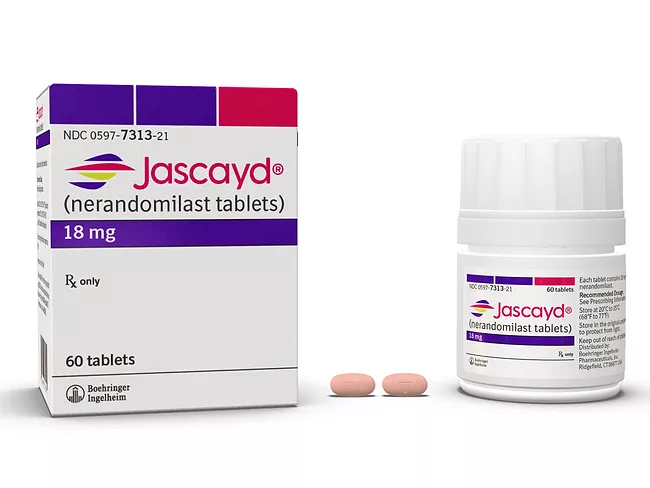
As generic versions of its blockbuster drug Ofev (nintedanib) start to hit the market, Boehringer Ingelheim GmbH looks to have swerved the patent cliff, with European and Japanese regulators both approving a potential replacement, Jascayd (nerandomilast), this week. At its monthly meeting, the EMA’s Committee for Medicinal Products for Human Use also recommended Novartis AG’s Vijoice (alpelisib) be given conditional approval in the treatment of PIK3CA-related overgrowth spectrum disorders.
Netris Pharma SA has delivered positive phase Ib data showing its first-in-class netrin-1 inhibitor NP-137 alleviates resistance to chemotherapy in pancreatic cancer. This could represent an important advance in treating these tumors, which are notoriously resistant to chemotherapy.
The pressure on U.S. drug prices continues, with the CMS lining up the drugs for round 3 of negotiations, which will set maximum fair prices to go into effect in 2028. The slate includes 15 drugs and, for the first time, opens the negotiations to Part B drugs, as well as Part D. Consequently, seven of the 15 selected drugs are biologics.
Speed and innovation from Asia Pacific’s (APAC) biotechnology sector had big pharma scouring the region for the next oncology heir to Keytruda (pembrolizumab), Merck & Co. Inc.’s reigning blockbuster cancer drug.
Merck & Co. Inc. is buying Cidara Therapeutics Inc. for $9.2 billion to acquire a late-stage flu candidate and also to outrace blockbuster Keytruda’s looming patent expiration. CD-388, Cidara’s lead candidate, is in a phase III study of adolescents and adults for preventing influenza A and B in those who are at a high risk of developing complications.
Oddsmakers placing their bets on which drugs will be in play for round 3 of the U.S. Inflation Reduction Act (IRA) price negotiations are doing some reshuffling, thanks to an orphan drug provision tucked into the Trump administration’s One Big Beautiful Bill Act (OBBBA) that was signed into law on the Fourth of July.
Exelixis Inc.’s positive phase III top-line data June 22 with zanzalintinib (zanza) in colorectal cancer had Wall Street speculating anew about the odds with the tyrosine kinase inhibitor in an important indication.