Eisai Co. Ltd. and Biogen Inc. presented the full data set for the Clarity Alzheimer’s disease trial of lecanemab at the 2022 Clinical Trials on Alzheimer’s Disease, which was simultaneously published in the New England Journal of Medicine. The data supported the top-line results released in September 2022.
Researchers have identified a link between amyloid plaques and dysfunctional neuronal conduction in animal models of Alzheimer’s disease (AD). Their study, which was published in the Dec. 1, 2022, issue of Nature, suggests new ways to think about AD, as well as badly needed potential alternatives to plaque removal to fight the disease.
Alzheimer’s disease (AD) is still the most prevalent neurodegenerative disorder, with few FDA-approved treatments and many that have failed; further understanding of AD’s disease mechanisms is required. Investigators from Gempharmatech Inc. have developed a novel AD murine model (FAD4T) in which APP (Swedish and Indiana mutations) and PSEN1 M146L/L286V mutations were inserted into the mice’s genome.
The shadow of two reported patients’ deaths hovers over Eisai Co Ltd. and Biogen Inc.’s Alzheimer’s disease treatment, lecanemab, as the companies prepare to present phase III study data on the drug later today at the 15th Clinical Trials on Alzheimer's Disease conference.
Cajal Neuroscience Inc., a startup seeking new targets to use in medicines for neurodegeneration, has launched with the completion of a $96 million series A financing led by The Column Group and Lux Capital. The company, inspired by the pioneering work of Santiago Ramón y Cajal, is focused on the "mechanistic, spatial and temporal complexity of neurodegeneration" to determine "how, where and when different mechanisms contribute to disease."
Axsome Therapeutics Inc.’s AXS-05 (dextromethorphan + bupropion) has notched another success by hitting its phase III primary endpoint in treating a notoriously difficult Alzheimer’s disease (AD) indication when compared to placebo. Newly released data from the Accord study showed AXS-05, an oral, NMDA receptor antagonist with multimodal activity, statistically significantly delayed time to relapse of AD agitation vs. placebo (p=0.014), which was the primary endpoint.
Brain insulin signaling is known to control peripheral energy metabolism and regulation of mood and cognition. Dysregulation in this signaling has been tied to brain pathological disorders such as Alzheimer’s disease (AD). Previous findings have reported a strong connection between type 2 diabetes (T2D) and AD, suggesting insulin resistance as a potential risk factor for AD pathology and other forms of dementia.
Mdoloris Medical Systems SAS and Pprs SAS reported a joint venture to launch ANI Guardian, a connected medical device that continuously and non-invasively tracks pain levels and well-being in a range of non-verbal or cognitively impaired people.
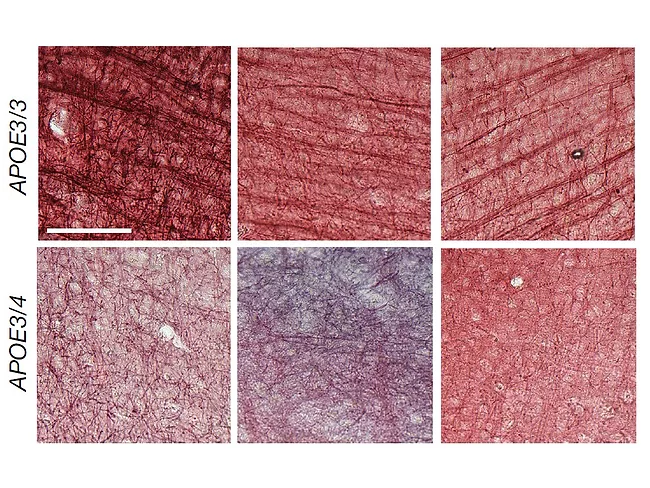
Carrying the apolipoprotein E4 allele (APOE4), and not the APOE3 variant, is the strongest risk factor for developing Alzheimer’s disease (AD). But the underlying mechanism has remained elusive. Now, researchers at MIT and Mount Sinai have found that in brains carrying the APOE4 allele, lipid and cholesterol processes were dysregulated in oligodendrocytes and that this effect reduced myelination.