Biogen Inc. has decided to advance diranersen (BIIB-080) into registrational trials for early Alzheimer’s disease, even though the antisense oligonucleotide therapy, originally discovered by Ionis Pharmaceuticals Inc., missed its phase II primary endpoint.
Shanghai Fosun Pharmaceutical (Group) Co. Ltd. is paying $60 million up front for an option to secure exclusive rights to Aribio Co. Ltd.’s oral phase III-stage Alzheimer’s disease (AD) therapy, AR-1001. The option fee plus license agreement has potential to tally $4.7 billion for Aribio, marking the largest deal for an AD asset inked by a Korean biotech company.
Roche Holding AG secured CE marking for the Elecsys plasma phosphorylated-tau 217 blood test designed to rule in and rule out amyloid pathology, a hallmark of Alzheimer's disease. Developed with Eli Lilly and Co., the test brings to the market another much-needed solution to help clinicians diagnose Alzheimer’s patients following the FDA approval of Fujirebio Diagnostics Inc.’s blood test last year.
Researchers at Daping Hospital in China have reported that liver-targeted delivery of the APOE3-Christchurch (APOE3Ch) variant, a rare protective form of apolipoprotein E, can indirectly reduce brain pathology, highlighting the therapeutic potential of peripheral approaches to Alzheimer’s disease.
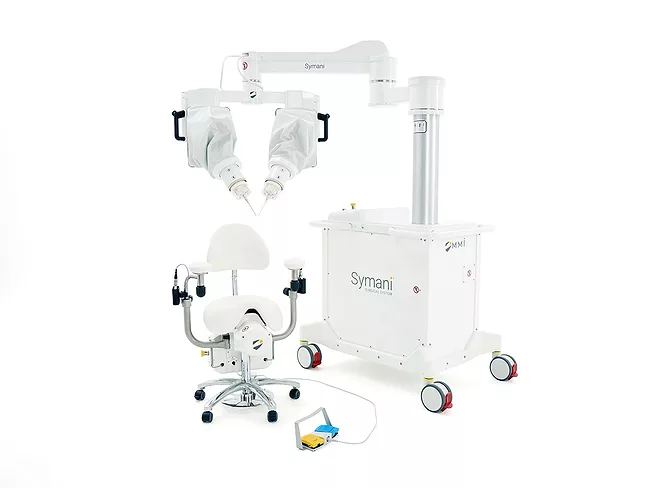
Medical Microinstruments Inc.’s (MMI) Symani surgical system was used to treat a patient with Alzheimer’s disease as part of a study evaluating robotic-enabled microsurgery for the condition. The procedure investigated whether restoring lymphatic drainage pathways in the deep cervical lymph nodes could improve the clearance of harmful neurotoxins believed to contribute to the progression of Alzheimer’s.
Chinese researchers have published data regarding phosphatidylserine (PS) derivatives acting as neuroprotective compounds for Alzheimer’s disease (AD) therapy.
Researchers from the Government College University Faisalabad reported the discovery and preclinical characterization of IMS-48, a benzimidazole analogue designed to inhibit both acetylcholinesterase (AChE) and butyrylcholinesterase (BChE).
The ongoing controversy over the effectiveness of anti-amyloid drugs is about to get more heated, after a review of clinical trials showed statistically significant results do not read across to clinical benefit for patients with Alzheimer’s disease.
Caspase-2-mediated cleavage of tau at Asp314 generates a neurotoxic fragment, Δtau314, that drives early synaptic dysfunction in Alzheimer’s disease (AD) and frontotemporal dementia (FTD). This fragment accumulates at synapses, disrupts glutamatergic signaling and contributes to cognitive impairment in vivo.
Kinase inhibitors have shown success in disease areas such as oncology, but their application in neurodegenerative diseases is still limited. This is mainly due to several challenges, such as the complexity of kinase networks, limited blood-brain barrier permeability and the lack of biomarkers.