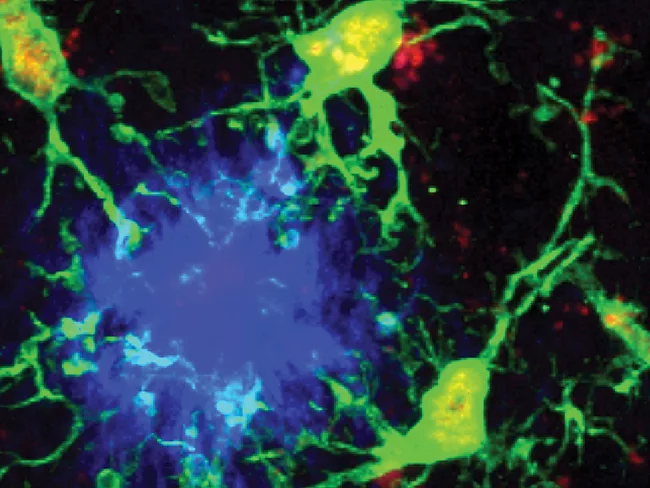
In Alzheimer’s disease, microglia act as a double-edged sword. They can either protect the brain or worsen the damage, depending on their activation state. Inflammatory activation harms healthy neurons. However, a study reveals that a special type of microglia expressing specific receptors and behaving like T cells may help mitigate this neurodegenerative condition.
Australian scientists have developed a simpler, less invasive way to detect Alzheimer’s disease that could make it easier for patients to access emerging disease-modifying therapies. Researchers from Australia’s Commonwealth Scientific and Industrial Research Organisation have identified blood-based biomarker tests capable of confirming amyloid plaque in the brain with accuracy comparable to the current gold standards using positron emission tomography scans and lumbar punctures.
Maplight Therapeutics Inc.’s pricing of a $258.9 million financing this week revived the debate over whether targeting the M1 as well as the M4 muscarinic receptor – as Bristol Myers Squibb Co. does with U.S. FDA-approved Cobenfy (xanomeline and trospium chloride) for schizophrenia – is a better strategy than going after M4 alone.
Researchers at Dankook University and Korea University Research & Business Foundation Sejong Campus have identified thiophene derivatives acting as lysine-specific demethylase 4C (KDM4C; GASC-1; JMJD2C) inhibitors reported to be useful for the treatment of Alzheimer’s disease.
Do men’s and women’s brains age equally? Women are more often diagnosed with Alzheimer’s disease (AD) than men. Age is the primary known risk factor for AD prevalence, and both aging and AD are associated with brain atrophy, but it is still not clear whether men and women differ regarding brain decline in aging.
Researchers at University of South China and collaborators have generated numerous carbamate-based N-benzoyl tryptamine derivatives for Alzheimer’s disease.
Do men’s and women’s brains age equally? Women are more often diagnosed with Alzheimer’s disease (AD) than men. Age is the primary known risk factor for AD prevalence, and both aging and AD are associated with brain atrophy, but it is still not clear whether men and women differ regarding brain decline in aging. There is mixed evidence regarding this topic, since most of the larger studies have shown an abrupt decay of total gray matter and hippocampal volume in men, but other studies have found steeper total gray matter decline in women.
Researchers at Indian Institute of Technology (BHU) Varanasi and collaborators have designed inhibitors of cholinesterase based on benzothiazole-phenylpiperizine as a potential treatment for Alzheimer’s disease.
Researchers at the Institute for Bioengineering of Catalonia (IBEC) and collaborators have introduced a novel therapeutic strategy for Alzheimer’s disease (AD) that leverages the multivalency of supramolecular nanomedicines to reprogram blood-brain barrier (BBB) function, facilitating efficient amyloid-β (Aβ) clearance and restoring cognitive function in animal models.
Mercury Bio Inc. has released promising results from a preclinical study that successfully utilized its extracellular vesicle (EV) drug encapsulation platform (yEV) to deliver proteins, in the form of nanobodies, into neurons across the blood-brain barrier. The yEV platform utilizes yeast-derived exosomes, a subtype of EV.