A new way of understanding Alzheimer’s disease, based on biological inflection points that mark decisive moments in the progression of the disorder, could change how new drugs are developed to achieve more effective therapies. This new perspective could rethink strategies that depend not so much on the target itself, but on the precise moment at which it is addressed.
A new way of understanding Alzheimer’s disease, based on biological inflection points that mark decisive moments in the progression of the disorder, could change how new drugs are developed to achieve more effective therapies. This new perspective could rethink strategies that depend not so much on the target itself, but on the precise moment at which it is addressed.
Neurodegenerative disease and cognitive decline cannot be explained by a single process. Beta-amyloid plaques, hyperphosphorylated tau, alpha-synuclein, activated microglia and astrocytes, altered receptors such as TREM2, mitochondrial dysfunction, epigenetic changes and cerebrovascular alterations all seem to contribute to the development of dementia in Alzheimer’s disease (AD). While scientists attempt to address each of these elements, prevention is growing as a primary goal.
Roche Holding AG received CE Mark approval for its Elecsys Apolipoprotein E4 (ApoE4) biomarker test, an in vitro diagnostic immunoassay to identify the ApoE4 gene variant from a blood sample. With APOE4 considered as the strongest genetic risk factor for developing Alzheimer’s disease, the test provides a fast, reliable way to determine whether an individual carries the genetic variant without the need for DNA‑based genotyping.
Acumen Pharmaceuticals Inc. has announced a $35.75 million private placement to advance molecules from its amyloid-β oligomer-selective Enhanced Brain Delivery (EBD) portfolio for the treatment of Alzheimer’s disease.
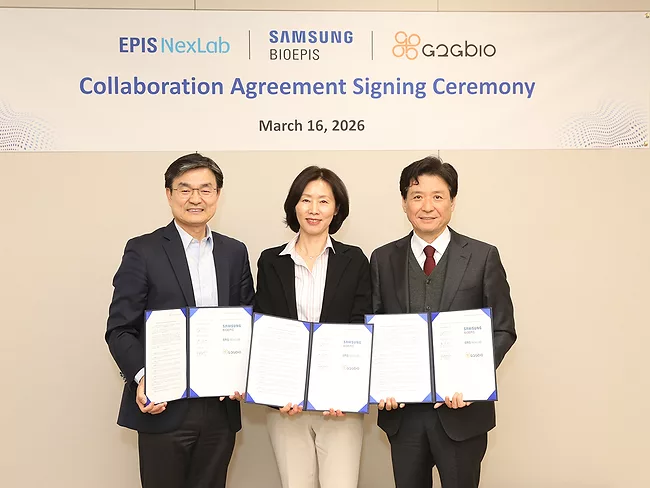
G2Gbio Inc. secured a ₩20 billion (US$13.35 million) investment from Samsung Epis Holdings Co. Ltd. and a joint research and license agreement for two assets, including a long-acting obesity treatment, with subsidiary Samsung Bioepis Co. Ltd. March 16.
G2Gbio Inc. secured a ₩20 billion (US$13.35 million) investment from Samsung Epis Holdings Co. Ltd. and a joint research and license agreement for two assets, including a long-acting obesity treatment, with subsidiary Samsung Bioepis Co. Ltd. March 16.
If one could sweep the brain clean and send the toxic substances that drive neurodegeneration to the recycling bin, perhaps one could treat Alzheimer’s disease. Researchers at the Chinese Academy of Sciences propose a new therapeutic strategy that uses synthetic peptides that bind to amyloid-β (Aβ) and direct it toward lysosomes. In addition, researchers at the Washington University School of Medicine in St. Louis have genetically modified astrocytes in vivo to express chimeric antigen receptors (CARs) that recognize and phagocytose Aβ plaques.
If one could sweep the brain clean and send the toxic substances that drive neurodegeneration to the recycling bin, perhaps one could treat Alzheimer’s disease (AD). Researchers at the Chinese Academy of Sciences propose a new therapeutic strategy that uses synthetic peptides that bind to amyloid-β (Aβ) and direct it toward lysosomes. In addition, researchers at the Washington University School of Medicine in St. Louis have genetically modified astrocytes in vivo to express chimeric antigen receptors (CARs) that recognize and phagocytose Aβ plaques.
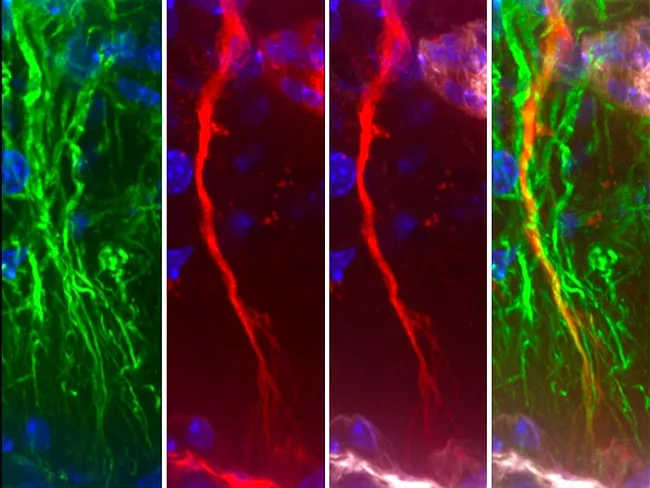
Researchers at INSERM and collaborators have identified hypothalamic tanycytes as mediators of tau clearance and shown that their structural and genetic disruption may drive Alzheimer’s disease pathology.

-biomarker-test.webp?height=488&t=1773783523&width=650 "Elecsys Apolipoprotein E4 (ApoE4) biomarker test")