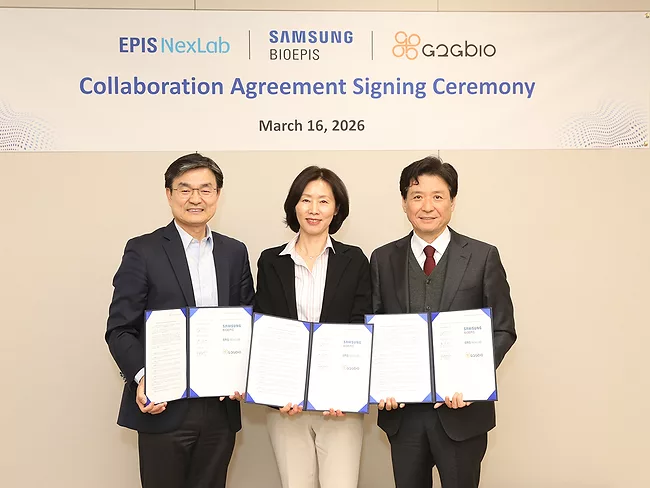
G2Gbio Inc. secured a ₩20 billion (US$13.35 million) investment from Samsung Epis Holdings Co. Ltd. and a joint research and license agreement for two assets, including a long-acting obesity treatment, with subsidiary Samsung Bioepis Co. Ltd. March 16.
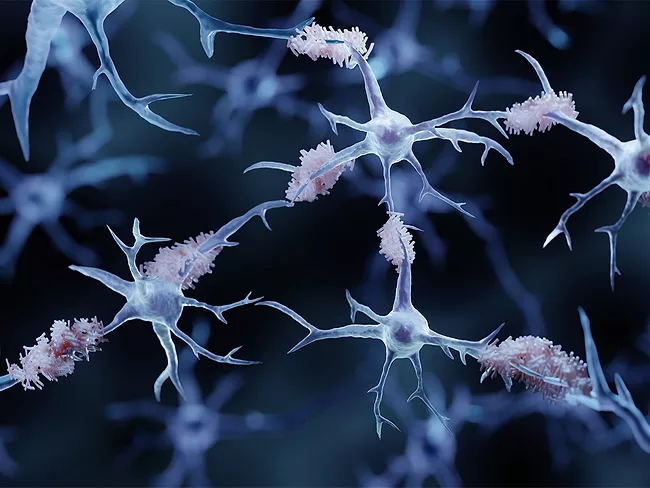
If one could sweep the brain clean and send the toxic substances that drive neurodegeneration to the recycling bin, perhaps one could treat Alzheimer’s disease. Researchers at the Chinese Academy of Sciences propose a new therapeutic strategy that uses synthetic peptides that bind to amyloid-β (Aβ) and direct it toward lysosomes. In addition, researchers at the Washington University School of Medicine in St. Louis have genetically modified astrocytes in vivo to express chimeric antigen receptors (CARs) that recognize and phagocytose Aβ plaques.
If one could sweep the brain clean and send the toxic substances that drive neurodegeneration to the recycling bin, perhaps one could treat Alzheimer’s disease (AD). Researchers at the Chinese Academy of Sciences propose a new therapeutic strategy that uses synthetic peptides that bind to amyloid-β (Aβ) and direct it toward lysosomes. In addition, researchers at the Washington University School of Medicine in St. Louis have genetically modified astrocytes in vivo to express chimeric antigen receptors (CARs) that recognize and phagocytose Aβ plaques.
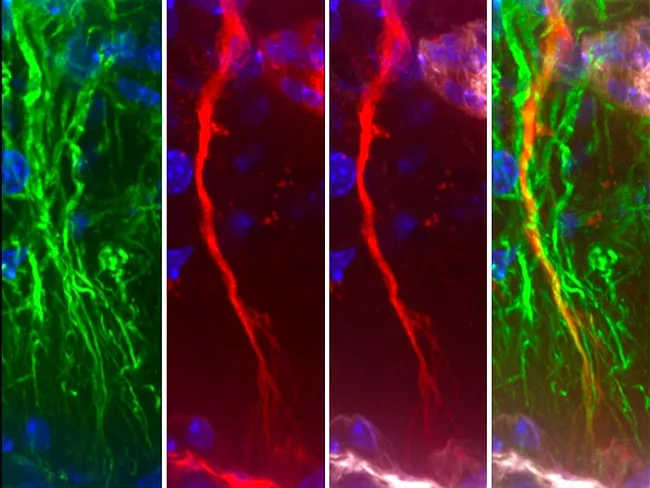
Researchers at INSERM and collaborators have identified hypothalamic tanycytes as mediators of tau clearance and shown that their structural and genetic disruption may drive Alzheimer’s disease pathology.
Researchers at INSERM and collaborators have identified hypothalamic tanycytes as mediators of tau clearance and shown that their structural and genetic disruption may drive Alzheimer’s disease (AD) pathology. AD is characterized by the buildup of extracellular amyloid-β plaques and intracellular tau tangles, protein aggregates that disrupt neuronal function and drive neurodegeneration.
Porosome Therapeutics Inc. has announced the development of novel first-in-class porosome-targeting small molecules and blood-brain barrier-traversing peptide drugs developed using the company’s Porosome.AI platform to treat various secretory disorders, such as Alzheimer’s disease and type 2 diabetes.
Korsana Biosciences Inc. has emerged from stealth, with its development of therapeutics to treat neurodegenerative diseases initially focused on Alzheimer’s disease.
Building on the foundation laid in 2020, researchers at the University of California, San Francisco (UCSF) have now shown that targeting the GPI-anchored vascular enzyme TNAP can reproduce the cognitive benefits previously attributed to the liver-derived exercise factor GLPD1.
Tau is an intrinsically disordered protein that regulates the stability and dynamics of microtubules in physiological conditions. Recent work has revealed the involvement of tau in various neuronal processes. Researchers from the University of California and collaborators aimed to systematically investigate the cellular factors that control the accumulation of tau aggregates in human neurons.
Aquinnah Pharmaceuticals Inc. has disclosed new microtubule-associated protein τ (PHF-τ; MAPT) aggregation inhibitors designed for use in the treatment of Alzheimer’s disease and frontotemporal dementia.