The good news is that the U.S. Congress is on track to pass a slate of fiscal 2026 spending bills before the current continuing resolution expires Jan. 30. So, barring any last-minute disputes or legislative hostage-taking, there should be no repeat of last year’s 43-day shutdown that impacted NIH grants and activities.
With rumors regarding a couple of potential mega-mergers making the rounds, the week of the annual J.P. Morgan Healthcare Conference kicked off with the official disclosure of some billion-dollar collaborations, leading with Abbvie Inc.’s exclusive licensing deal with Remegen Co. Ltd. for PD-1/VEGF-targeted bispecific antibody RC-148.
With rumors regarding a couple of potential mega-mergers making the rounds, the week of the annual J.P. Morgan Healthcare Conference kicked off with the official disclosure of some billion-dollar collaborations, leading with Abbvie Inc.’s exclusive licensing deal with Remegen Co. Ltd. for PD-1/VEGF-targeted bispecific antibody RC-148.
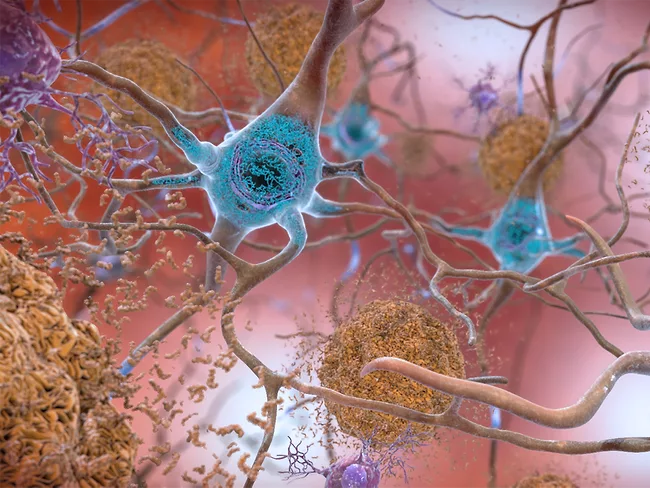
While Alzheimer’s disease is known for involving amyloid-b plaques and neurofibrillary tangles, it also involves metabolic dysfunction, further research into which could help scientists understand how the disease occurs and how it can be treated.
Pramana Pharmaceuticals Inc. has been awarded $1 million from the Alzheimer’s Association to support IND-enabling development of PRM-914, the company’s once-daily oral small-molecule therapeutic for Alzheimer’s disease. The funding will support final toxicology and translational studies required to advance PRM-914 into first-in-human evaluation.
Lysoway Therapeutics Inc. has completed IND-enabling studies for its lead TRPML1 agonist, LW-1017. A first-in-human study is planned in Australia, with dosing set to commence in May.
Researchers at Case Western Reserve University and their collaborators described the use of P7C3-A20, a compound that restores nicotinamide adenine dinucleotide (NAD+) homeostasis, as a potential strategy to reverse Alzheimer’s disease (AD) pathology in advanced Aβ- and tau-driven AD models.
A review of 2025's noteworthy advances in medical research, including GLP-1 receptor agonists as anti-aging drugs, tumor-agnostic therapies and xenotransplants.
A review of 2025's noteworthy advances in medical research, including GLP-1 receptor agonists as anti-aging drugs, tumor-agnostic therapies and xenotransplants.
Neushen Therapeutics Inc. has disclosed N-acetyl-β-D-glucosaminidase (O-GlcNAcase; OGA) inhibitors reported to be useful for the treatment of Alzheimer’s disease.