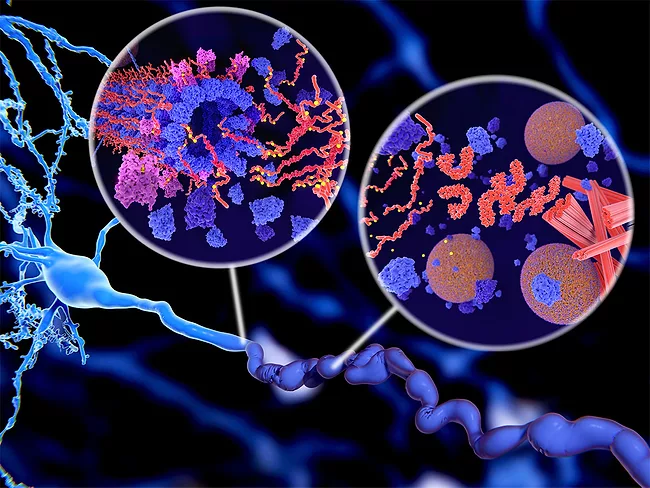
Despite the identification of the APOE gene as the strongest genetic link to late-onset Alzheimer's disease (AD) since 1993 and the subsequent advances in the understanding of AD pathogenesis, the development of effective consensus-directed treatment therapies has yet to be realized.
Even though the U.S. already has a National Plan to Address Alzheimer’s Disease, a bipartisan group of U.S. senators is adding its voice to that of nearly 200 national organizations and experts in calling for more. In a recent letter to Health and Human Services (HHS) Secretary Xavier Becerra, the 15 senators requested that he make reducing the prevalence of dementias a departmental priority.
Even though the U.S. already has a National Plan to Address Alzheimer’s Disease, a bipartisan group of U.S. senators is adding its voice to that of nearly 200 national organizations and experts in calling for more.
Just months after the controversial FDA approval of Alzheimer’s disease drug Aduhelm (aducanumab), partners on that medicine, Eisai Co. Ltd. and Biogen Inc., are advancing a BLA for another possible AD therapy, lecanemab. Formerly known as BAN-2401, the Bioarctic AB-originated antibody is designed to neutralize and eliminate soluble, toxic amyloid beta for the treatment of early AD. The rolling submission, in pursuit of an accelerated approval, was primarily based on data from a phase IIb trial in people with early AD and confirmed amyloid pathology.
Researchers at Curtin University in Perth, Australia, have discovered that leakage from blood into the brain of fat-carrying particles transporting toxic proteins are a possible cause of Alzheimer's disease.
DUBLIN – AC Immune SA and partner Genentech reported Aug. 31 that their Tau-targeting antibody, semorinemab, brought about a dramatic 43.6% reduction in cognitive decline vs. baseline in a phase II trial in patients with mild to moderate Alzheimer’s disease. The effect was statistically significant (p<0.0025) and is clinically meaningful. Indeed, it represents the biggest single treatment effect ever reported in a clinical trial in this population of Alzheimer’s patients and sets the stage for an extensive phase III program that could set the agenda for Alzheimer’s research for the foreseeable future.
In one of the biggest collaboration deals of the year, Shape Therapeutics Inc. entered a collaboration and license agreement with Roche Holding AG to develop gene therapies for targets in areas that include Alzheimer’s disease, Parkinson’s disease and rare diseases. Seattle-based Shape is eligible to receive an initial payment, development, regulatory and sales milestone payments that could exceed $3 billion in aggregate value.
Vigil Neuroscience Inc. CEO Ivana Magovčević-Liebisch said the just-raised $90 million in series B money will let the company reach “a lot of value-generating milestones,” having been “moving extremely fast” in the year since it was founded.
A less controversial option than aducanumab may be available soon to help individuals with mild to moderate Alzheimer’s disease-related dementia. Researchers at the Medical University of Vienna and the University of Toronto have developed a technique using ultrasound that reverses cognitive decline and they say it could be available for clinical use shortly.
Researchers from The Hong Kong University of Science and Technology (HKUST) have developed a blood test to detect Alzheimer’s disease (AD) early. They said the test has an accuracy level of over 96% and can also monitor disease progression. This is a new approach to detecting AD compared to the commonly used cognitive tests and invasive methods that detect changes in the brain caused by AD.