A deficiency in neurotrophic factor signaling has been shown to exacerbate environmental risk factors for the development of Alzheimer's disease pathogenesis in mice, according to a study reported in the June 22, 2021, online edition of the Proceedings of the National Academy of Sciences.
New FDA breakthrough therapy designations awarded for two investigational Alzheimer's disease (AD) candidates, Eli Lilly and Co.'s donanemab and the Bioarctic AB-Eisai Co. Ltd.-developed asset lecanemab (BAN-2401) underline ongoing willingness at the U.S. regulator to invest deeper attention in the potential of amyloid plaque reduction to slow progress of the disease, a critical and costly challenge estimated to affect more than 6 million Americans.
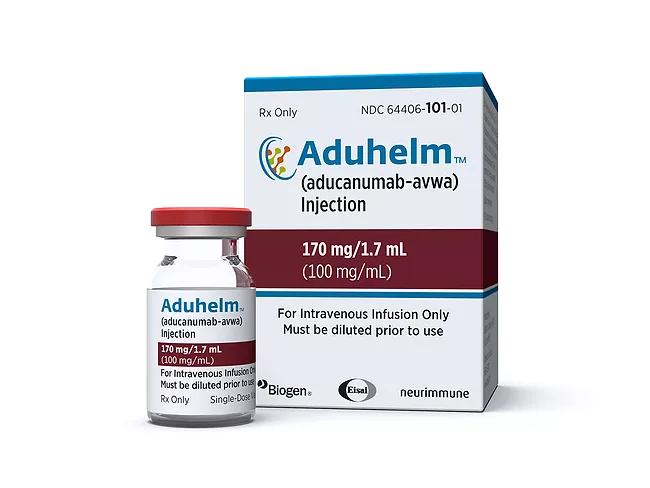
More than two weeks after the FDA gave its go-ahead to Biogen Inc.’s Aduhelm (aducanumab), controversy still rages over the accelerated approval as well as the price for the anti-amyloid beta monoclonal antibody for Alzheimer’s disease (AD). Embattled U.S. regulators made the uncommon move of releasing documents – with more due to be made public later – that show the internal deliberations that led to Aduhelm’s clearance.
Biogen Inc.’s $56,000-a-year list price for its newly approved Alzheimer’s drug, Aduhelm (aducanumab), is sending tremors through the prescription drug pricing debate that could shift the epicenter of those discussions to drugs granted accelerated approval based on surrogate endpoints.
PERTH, Australia – Digital cognitive assessment technology company Cogstate Ltd. saw its stock skyrocket 60% on the heels of FDA accelerated approval of Biogen Inc./Eisai Co. Ltd.’s Alzheimer’s disease drug Aduhelm (aducanumab). Cogstate and Eisai signed a deal in October 2020 that granted Eisai global development rights and exclusive commercialization rights of all cognitive function tests developed by Cogstate.
LONDON – The pioneers of gene therapy in Europe now aim to take the field to the next level, moving into the development of virally delivered antibodies in the treatment of central nervous system and muscular diseases, with Alzheimer’s disease one of the first targets.
LONDON – Controversy over the quality of the data supporting approval of Biogen Inc.’s Aduhelm (aducanumab), and FDA’s requirement for a phase IV study to demonstrate real-world evidence of the effectiveness of the drug, has put the spotlight on the need for better dementia diagnostics, both to stratify trials and to track any reduction in clinical decline.
Biogen Inc.’s pricing of its newly approved Alzheimer’s drug, Aduhelm (aducanumab), has made it the latest bull’s eye for lawmakers and advocacy groups targeting U.S. drug prices, especially given the controversy surrounding the drug’s approval, which has resulted in the resignation of three of the 11 members of the FDA’s Peripheral and Central Nervous System Drugs Advisory Committee.
Researchers have demonstrated that enhancing myelin renewal in the brains of transgenic APP/PS1 mouse models of Alzheimer's disease (AD) can improve their task-related hippocampal activity.
Developers of blood tests for the early diagnosis of Alzheimer’s disease (AD) are poised to see a spike in demand, following the FDA’s accelerated approval on Tuesday of Cambridge, Mass.-based Biogen Inc.’s AD drug treatment Aduhelm (aducanumab). The FDA’s decision paves the way for AD assays to move beyond aiding in drug development toward addressing ongoing issues with undiagnosed cases.