LONDON – Sosei Heptares is to get $100 million up front in a potential $2.6 billion deal with Neurocrine Biosciences Inc., in which the pair will develop muscarinic receptor agonists in the treatment of schizophrenia, dementia and other neuropsychiatric disorders. San Diego-based Neurocrine is taking rights to a portfolio of small molecules against specific subtypes of the muscarinic receptor family, targeting M1 and M4 alone, plus a dual M1/M4 agonist.
Fujirebio Europe NV launched two new cerebrospinal fluid (CSF)-based immunoassays for Alzheimer’s Disease (AD) on its Innotest platform. It’s the first product launch for the company following a collaboration agreement signed with Adx Neurosciences NV in September 2020. The assays will test for neuronal pentraxin-2 (NPTX2) and soluble triggering receptor expressed on myeloid cells 2 (STREM2). Both neurology biomarkers are linked to synaptic dysfunction and neuroinflammation which are considered core features of AD progression. Fujirebio said the new tests will support existing research for AD drug development.
LONDON – Sosei Heptares is to get $100 million up front in a potential $2.6 billion deal with Neurocrine Biosciences Inc., in which the pair will develop muscarinic receptor agonists in the treatment of schizophrenia, dementia and other neuropsychiatric disorders. San Diego-based Neurocrine is taking rights to a portfolio of small molecules against specific subtypes of the muscarinic receptor family, targeting M1 and M4 alone, plus a dual M1/M4 agonist.
A European approval for Alzheimer’s drug aducanumab by year-end looks even more in doubt. A week after being called in before the EMA’s Committee for Medicinal Products for Human Use (CHMP) for an oral explanation of the trial data, Biogen Inc. said it received a “negative trend vote” on the marketing authorization application. A formal opinion by the CHMP is expected at its December meeting, but analysts are not optimistic.
LONDON – There’s not yet proof of the pudding, but Omass Therapeutics Ltd.’s new structure-based technology has passed a key test, in enabling the discovery of orally available small molecules aimed at intractable and poorly drugged membrane and complex-bound protein targets. The targets, including G protein-coupled receptors (GPCRs), intracellular protein complexes and solute carriers, are relevant to immunology indications and rare diseases with high unmet need.
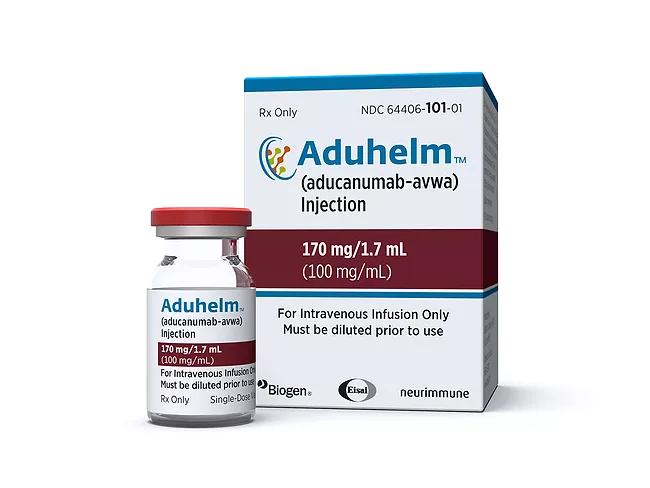
Technically speaking, the scientific community as a whole cannot say for sure whether and how well Aduhelm (aducanumab, Biogen Inc./Eisai, Co., Ltd.) works. After all, two years after the initial report of the Engage and Emerge data at the 2019 Clinical Trials in Alzheimer’s Disease (CTAD), the full trial data have still not been published in a peer-reviewed publication. Which, of course, is one of the problems with Aduhelm.
European regulators have put off a decision on Biogen Inc and Eisai, Co. Ltd.’s controversial Alzheimer’s drug, aducanumab, for likely another month, after the companies announced further supportive data from a follow-up under review by the FDA.
Vaxxinity Inc. priced its IPO below the targeted range, selling 6 million shares (NASDAQ:VAXX) at $13 each for proceeds of $78 million, but came out of the gate impressively, closing at $16.55, up $3.55, or 27%, after reaching $22.77 during the day.
Investors were thrilled when Roche Holding AG subsidiary Genentech Inc. and AC Immune SA reported top-line results from the Lauriet trial on Aug. 31, giving a positive jolt to AC Immune’s stock on the day of the announcement. At the Clinical Trials in Alzheimer’s Disease 2021 meeting, the reaction of the medical community was more skeptical.
As part of its pharmacovigilance program for Alzheimer’s drug Aduhelm (aducanumab), Biogen Inc. is evaluating a handful of reports published in the FDA Adverse Event Reporting System Public Dashboard, including the Aug. 18 death of a 75-year-old woman with Alzheimer’s and other co-morbidities.