Nextsense Inc. reported partnerships with global biopharma company UCB SA, Heraus Holding GmbH, the University of California San Diego and Emory University at its first public appearance at the American Epilepsy Society Annual Meeting in Chicago this past weekend. The Nextsense platform uses biosensing earbuds to perform ongoing electroencephalograms (EEGs).
The Tokyo University of Science (TUS) has developed a self-powered diaper biosensor that can monitor urine sugar levels, which could be a boon for both diabetic patients and their caregivers. Caregivers at nursing homes currently open patients’ diapers every few hours to check for urination, thus increasing the caregivers’ workload. The psychological impact on the patient is also increased, for example when their sleep is disturbed.
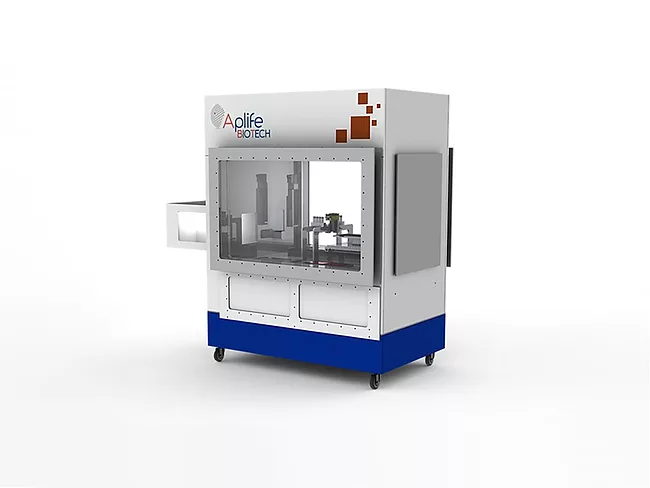
Startup Aplife Biotech is tapping into the rapidly growing market for biosensors that can expand the capacity of hand-held devices to screen for thousands of pathologies from a single drop of blood. Using technology developed in Argentina to print DNA structures on microchips, the company’s goal is to screen as many as 20 million probes with the potential to convert molecular interactions into electrical signals, opening a path for med-tech developers and manufacturers to explore new solutions for personalized health care.
LONDON – Startup company Glucomodicum Oy is preparing to commercialize a new technique for the needle-free monitoring of blood glucose levels, applying the principles of magnetohydrodynamics to noninvasively extract interstitial fluid through the skin.
HONG KONG – Singapore is Biofourmis Inc.’s latest destination for its Biovitals Sentinel platform to remotely monitor COVID-19 patients, with the country’s Ministry of Health (MOH) becoming the company’s latest customer.
PARIS – Grapheal SAS, of Grenoble, France, is developing a new generation of dressings integrating an embedded electronic biosensor. The Grapheal device consists of monolayer graphene on a polymer layer 0.3 nanometers thick. “This noninvasive embedded device collects data from the wound. The wireless e-health wound monitoring system, or smart patch, remotely reports the status of chronic wounds to the care team,” Vincent Bouchiat, co-founder and CEO at Grapheal, told BioWorld MedTech.