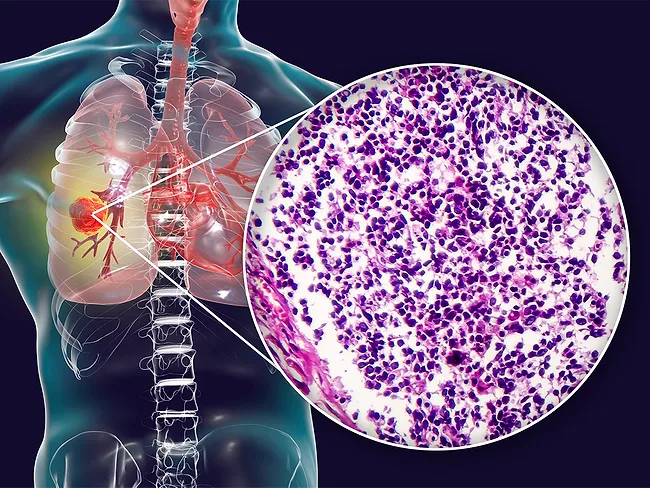
Bristol Myers Squibb Co. has described proteolysis targeting chimera (PROTAC) compounds comprising a E3 ubiquitin ligase-binding moiety coupled to a proto-oncogene tyrosine-protein kinase receptor Ret (RET; CDHF12; PTC) targeting moiety through a linker reported to be useful for the treatment of non-small-cell lung cancer.
Zymedi Co. Ltd. has disclosed lysyl-tRNA synthetase (KARS)/laminin receptor (LR) interaction inhibitors reported to be useful for the treatment of cancer metastasis, autoimmune disease, inflammatory disorders, fibrosis and cardiovascular disorders.
The National Medical Products Administration (NMPA) has approved Innovent Biologics Inc.’s Dupert (fulzerasib) as the first KRAS G12C inhibitor in China to treat select patients with non-small-cell lung cancer (NSCLC).
Researchers at F. Hoffmann-La Roche Ltd. and Hoffmann-La Roche Inc. have described GTPase KRAS mutant inhibitors, particularly KRAS G12C mutant, reported to be useful for the treatment of cancer.
Scisparc Ltd.’s Mitocarex Bio Ltd. venture has validated the potential significant involvement of its target SLC25 carrier protein, using non-small-cell lung cancer (NSCLC) cells with diverse genetic backgrounds. Mitocarex used genetic manipulations and 3D spheroid systems, mimicking the main features of human solid tumors, to demonstrate the discovery.
Lunglife AI Inc. is looking for a strategic partner to help get Lunglb — its non-invasive test for the early detection of lung cancer — into the market and to the patients who need it. The company’s artificial intelligence-supported blood-based test, which identifies indeterminate lung nodules, will be game changing for early lung cancer diagnosis, Paul Pagano, Lunglife CEO, told BioWorld.
Delta-like protein 3 (DLL3) is a transmembrane protein overexpressed in the majority of neuroendocrine carcinomas of the lung such as small-cell lung cancer (SCLC). The first DLL3-targeted antibody-drug conjugate (ADC), rovalpituzumab tesirine (Rova-T), led to serious adverse events in clinical testing and its development was discontinued.
Betta Pharmaceuticals Co. Ltd. has identified proteolysis targeting chimera (PROTAC) compounds comprising a Von Hippel-Lindau disease tumor suppressor (VHL) ligase binding moiety to pan GTPase KRAS (mutant) binding moiety through a linker reported to be useful for the treatment of cancer.
JS Innomed Holdings Ltd. has divulged transcriptional enhancer factor (TEAD) inhibitors reported to be useful for the treatment of cancer, neurodegeneration, renal and cardiovascular disorders.
Uppthera Inc. has described proteolysis targeting chimera (PROTAC) compounds comprising an E3 ubiquitin ligase-binding moiety coupled to a serine/threonine-protein kinase PLK1 (STPK13) targeting moiety through a linker. They are reported to be useful for the treatment of cancer and neurological disorders.