Colorectal cancer (CRC) is the second leading cause of cancer-related deaths globally. Oxaliplatin-based therapy remains the standard-of-care for advanced CRC, but is characterized by a drop in sensitivity, where patients develop resistance that leads to treatment failure and a 5-year survival rate of <10.5%. Understanding the molecular basis behind oxaliplatin resistance is crucial for improving patient outcomes.
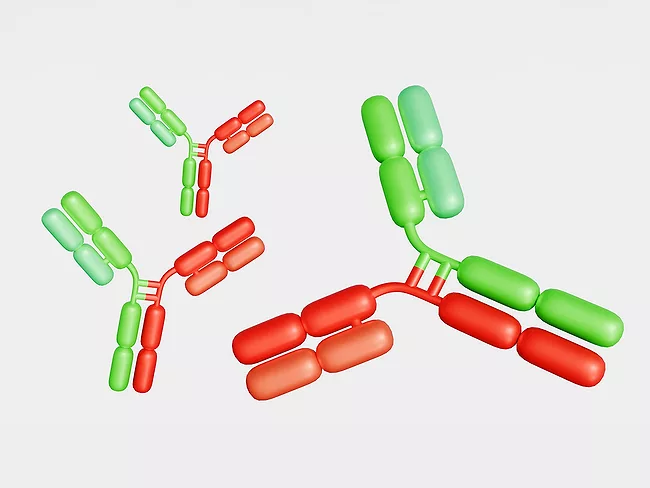
Nanjing Leads Biolabs Co. Ltd. has obtained IND approval from China’s National Medical Products Administration (NMPA) for a phase Ib/II trial of its proprietary PD-L1/4-1BB bispecific antibody, opamtistomig (LBL-024), in combination regimens for metastatic colorectal cancer.
Adlai Nortye Ltd. has submitted a clinical trial notification (CTN) to Australia’s Therapeutic Goods Administration (TGA) and received approval from the Human Research Ethics Committee (HREC) to initiate a phase I trial of AN-4035 in patients with CEACAM5-enriched RAS-addicted solid tumors.
Researchers from Jacobio Pharmaceuticals Co. Ltd. recently presented preclinical data on JAB-BX600, an EGFR-directed antibody-drug conjugate (ADC) that selectively delivers a KRAS G12D inhibitor to tumor cells, allowing dual inhibition of the EGFR-KRAS pathway.
Promatix Biosciences Ltd. has been awarded an Innovate UK Biomedical Catalyst grant to support development of its lead program, PBS-293-exatecan, a first-in-class EGFR x EphA2 cis-bispecific antibody-drug conjugate.
Researchers from Hainan Medical University and collaborators have demonstrated that PGE2-EP2/EP4-G α s-PKA signaling drove the expansion of immunosuppressive VSIG4-high macrophages and promoted immunotherapy resistance in colorectal cancer (CRC).
LTZ Therapeutics Inc.’s LTZ-232 has gained IND clearance from the FDA, enabling initiation of a phase I study in patients with advanced metastatic colorectal cancer and other solid tumors.
ATR is a key mediator of the cellular response to replication stress, helping maintain genome integrity during DNA replication. Inhibiting ATR compromises these protective mechanisms, creating a therapeutic vulnerability that is particularly pronounced in ATM-deficient tumors. Researchers at the Hefei Institute of Pharmaceutical Industry reported the identification of a novel series of proteolysis targeting chimeras (PROTACs) designed to induce ATR degradation.
Cytomx Therapeutics Inc. and Regeneron Pharmaceuticals Inc., which inked a bispecifics-focused collaboration worth up to $2 billion in 2022, agreed to broaden their efforts in an expanded deal that provides Cytomx with additional funding up front as it advances its promising colorectal cancer candidate, varsetatug masetecan (Varseta-M), and fills the gap left by the recently terminated agreement with Astellas Pharma Inc.
Iovance Biotherapeutics Inc. has received IND clearance from the FDA for IOV-5001, a next-generation interleukin-12 (IL-12)-tethered tumor-infiltrating lymphocyte (TIL) therapy.