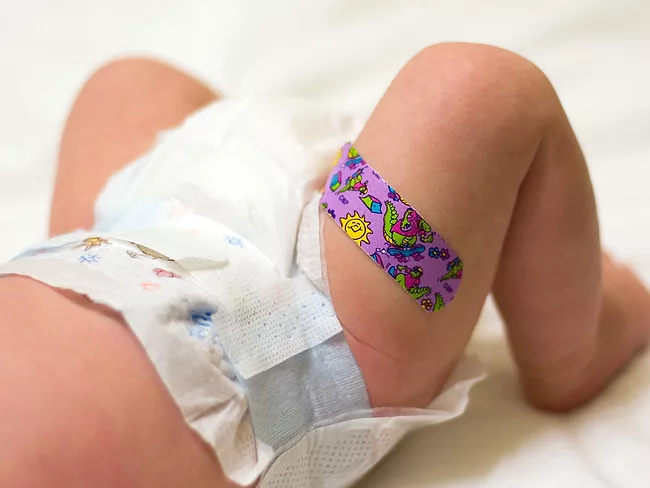
Instead of “Mother, may I” for COVID-19 vaccines for children 6 months through 5 years of age, the U.S. CDC is saying the correct response is “I should.” That was the recommendation June 18 from the CDC’s Advisory Committee on Immunization Practices. CDC Director Rochelle Walensky wasted no time in endorsing the recommendation, which came just a day after the FDA authorized the vaccines from Moderna Inc. and Pfizer Inc.-Biontech SE for babies, toddlers and preschoolers.
Just days after U.S. FDA advisors unanimously backed use of both the Moderna Inc. and Pfizer Inc.-Biontech SE COVID-19 vaccines in children 6 months and older, the FDA has expanded emergency use authorizations for the products. Availability could follow as soon as June 21, after a meeting of the CDC’s ongoing Advisory Committee on Immunization Practices, wraps up June 18.
After a two-day session of the FDA’s Vaccines and Related Biologic Products Advisory Committee, the U.S. is within days of a long-awaited milestone of having not just one but at least two vaccines available for nearly every American. The VRBPAC voted unanimously, 21-0, June 15 to support amending the emergency use authorizations for both the Moderna Inc. and Pfizer Inc.-Biontech SE COVID-19 mRNA vaccines to allow their use in children 6 months and older.
More than two years into the COVID-19 pandemic and nearly 18 months since a vaccine was first available for adults, the U.S. is on the cusp of having vaccines available to the youngest Americans.
Given the safety and efficacy data presented June 7 for Novavax Inc.’s COVID-19 vaccine, NVX-CoV2373, it came as no surprise when the U.S. FDA’s Vaccines and Related Biologic Products Advisory Committee voted 21-0, with one abstention, to support an emergency use authorization for the vaccine, which is already approved and being used in many other countries, including the EU and Canada.
Two days after the U.S. FDA authorized a single booster dose of the Pfizer Inc.-Biontech SE COVID-19 vaccine for children ages 5 to 11, the U.S. CDC’s Advisory Committee on Immunization Practices (ACIP) gave its blessing to the third dose.
The commercial success of COVID-19 mRNA vaccines has other companies in the space “looking in the attic, so to speak,” to see if they have any patents they can assert against components of the vaccines so they can get a percentage of the sales, Aziz Burgy, a patent attorney, told BioWorld. Given the global spread of the pandemic and how quickly it came on, the vaccines have generated billions of dollars in sales in a short period of time, and other companies want a share, he said. He compared today’s patent infringement cases against the vaccine producers to the litigation seen in the early days of the smartphone revolution when other high-tech companies scrambled for a piece of Apple’s and Samsung’s profits.
The U.S. FDA’s efficacy bar for COVID-19 vaccines for the youngest children may be lower than the 50% required for the adult vaccines, according to Peter Marks, director of the agency’s Center for Biologics Evaluation and Research.<
The U.S. COVID-19 vaccine program is at risk of “booster fatigue,” which will undermine public confidence in the vaccines, several members of the CDC’s Advisory Committee on Immunization Practices (ACIP) said April 20 as they met to discuss the future of the vaccines. Rather than relying on boosters, “we need to use our expertise to advocate for something that’s better,” something that resolves the ill effects of COVID-19, whether it’s mild or severe, said Lynn Bahta, an immunization program clinical consultant for the Minnesota Department of Health.
Citing the lack of clear evidence that vaccine protection against severe COVID-19 disease is substantially waning in the EU in people younger than 80, the European Centre for Disease Prevention and Control and the EMA’s COVID-19 task force concluded that it’s too early to consider using a fourth dose, or second booster, of mRNA COVID-19 vaccines in the general population.