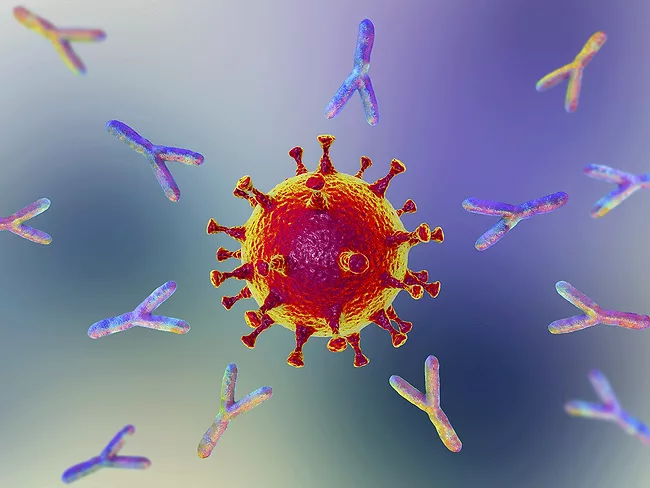
LONDON – Getting a handle on the specificity and sensitivity of rapid COVID-19 antibody tests, how they compare to each other and how they should be applied in population screening to understand who has had the virus and how it has spread, has been a source of difficulty and dispute between manufacturers, clinicians and public health experts.
Shares of Humanigen Inc. (NASDAQ:HGEN) leapt 54.5% to $21.61 March 29 on news that its monoclonal antibody, lenzilumab, improved the relative likelihood of survival without mechanical ventilation in hospitalized patients with COVID-19, setting the company up to submit an application for emergency use authorization (EUA) in the U.S. "as soon as possible," it said. Separately, a combination of two monoclonal antibodies, the Eli Lilly and Co.-Abcellera Biologics Inc.-developed therapy bamlanivimab and the Vir Biotechnology Inc.-Glaxosmithkline plc candidate VIR-7831, demonstrated a 70% relative reduction in persistently high SARS-CoV-2 viral load at day seven compared to placebo for low-risk adult patients with mild to moderate COVID-19, the companies reported.
Positive COVID-19 efficacy numbers from Vir Biotechnology Inc. and Glaxosmithkline plc (GSK) has prompted them to immediately seek an emergency use authorization (EUA) with the FDA and similar authorizations in other countries for their monoclonal antibody, VIR-7831. Meanwhile, the phase III Remdacta study of Actemra/RoActemra (tocilizumab) plus Veklury (remdesivir) vs. placebo plus Veklury, from Roche Holding AG and Gilead Sciences Inc., missed its primary endpoint in treating hospitalized patients with severe COVID-19 pneumonia receiving standard of care.
Diagnostic manufacturers are turning their attention to antibodies for those who have been vaccinated for the SARS-CoV-2 virus, and the U.S. FDA’s Tim Stenzel had some advice about this on the Feb. 10 testing town hall. Stenzel advised that developers think of such tests in the same vein as a companion diagnostic (CDx) in that these antibody test will have to be separately validated for each vaccine that is included in the test’s labeled claims.
HONG KONG – Xuanzhu Biopharmaceutical Co. Ltd., a subsidiary of Beijing-based Sihuan Pharmaceutical Holdings Group Ltd., has acquired antibody technology firm Beijing Combio Pharmaceutical for an undisclosed amount.
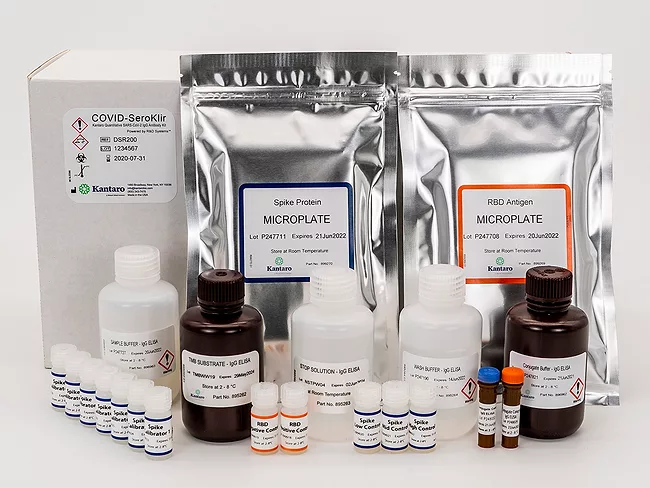
Kantaro Biosciences LLC, a joint venture between the Mount Sinai Health System and RenalytixAI, has received emergency use authorization from the U.S. FDA for its semi-quantitative SARS-CoV-2 IgG antibody test kit. Known as COVID-Seroklir, the test determines the presence and precise level of IgG antibodies. It has demonstrated 98.8% sensitivity and 99.6% specificity for detecting SARS-CoV-2 specific IgG antibodies against two virus antigens, the full-length spike protein and its receptor-binding domain.
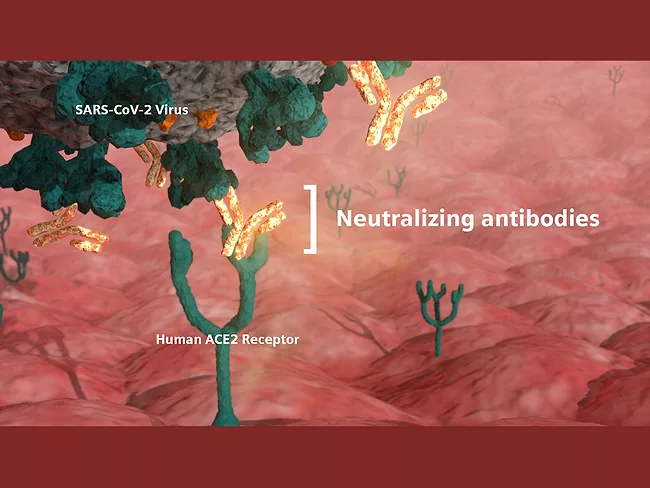
Hot on the heels of news that two vaccines for COVID-19 are nearing market readiness, two companies have broken away from the pack of assay manufacturers to offer quantitative antibody tests that can verify whether the vaccines provide effective, lasting protection. Siemens Healthineers and Imanis Life Sciences both claim to be first to develop scalable, quantitative neutralizing antibody tests.
PERTH, Australia – Gbs Inc. reported filing an initial public offering on the Nasdaq for $20 million, as the company looks to launch the first noninvasive SARS-Cov-2 test. A subsidiary of Sydney-based The Iq Group Ltd. (NSX:IQG), Delaware-based Gbs has developed a biosensor platform that enables real-time diagnostic point-of-care (POC) tests, and the funds raised will enable the company to launch its SARS- CoV-2 test and a saliva glucose test.
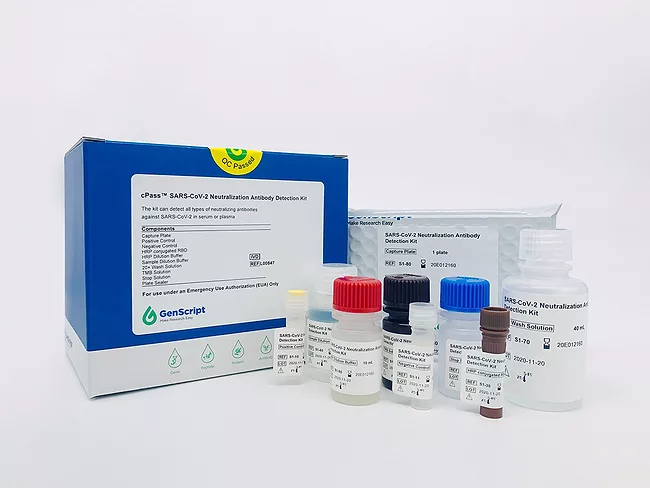
The U.S. FDA has granted emergency use authorization (EUA) to Genscript USA Inc. for its Cpass SARS-CoV-2 Neutralization Antibody Detection Kit, the first commercially available test to detect neutralizing antibodies in individuals previously infected with the novel coronavirus. The serology test measures levels of neutralizing antibodies in samples from patients recovering from COVID-19 as well as people vaccinated against the SARS-CoV-2 virus.
LONDON – People infected with COVID-19 are likely to have T-cell immunity six months after contracting the virus, according to a U.K. study of 100 subjects who had an asymptomatic or mild to moderate infection.