Etcembly emerged from stealth mode in August with something it regards as seemingly impossible: A machine learning platform that has the ability to predict and engineer – at never-seen-before scale and speed – T-cell receptors (TCR) that enable bispecific T-cell engager antibodies targeting cancer cells to be produced.
Etcembly emerged from stealth mode in August with something it regards as seemingly impossible: A machine learning platform that has the ability to predict and engineer – at never-seen-before scale and speed – T-cell receptors (TCR) that enable bispecific T-cell engager antibodies targeting cancer cells to be produced.
Abcam plc closed out a three-month whirlwind of activity on August 28 with an agreement to sell the medical consumables company to Danaher Corp. for a purchase price of $24 per share in cash, a 2.7% premium over the previous closing price, and assumption of approximately $200 million in debt. The deal, which has an enterprise value of $5.7 billion, is expected to close in mid-2024.
Precision medicine startup Solu Therapeutics has raised $31 million in an oversubscribed seed round to advance a therapeutic candidate based on technology that identifies cell surface, tumor-associated targets that antibodies alone fail to latch onto. The company was founded by venture capital firm Longwood Fund and has high hopes for its cytotoxicity targeting chimera platform. “[It] has the potential to unlock new tumor-associated antigens and develop molecules that deplete pathogenic immune cells and extend the half-life of small-molecule antagonists and agonists,” CEO and co-founder of Solu, David Donabedian, told BioWorld.
Alentis Therapeutics SA has closed a $105 million series C round which will fund simultaneous phase II and phase Ib trials of anti-Claudin-1 antibodies in the treatment of organ fibrosis and phase I development in fibrosis-associated cancers. At the same time, the company will extend the reach of its Claudin-1 biology into antibody-drug conjugates and bispecific constructs, to further exploit the role of the transmembrane protein in maintaining cellular integrity and controlling cell-to-cell signaling.
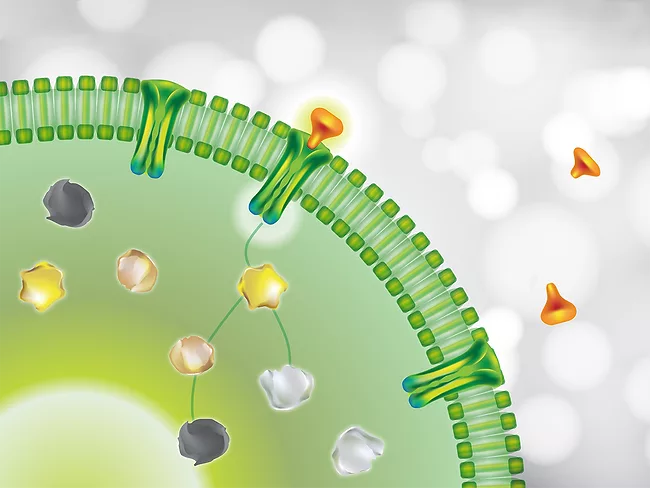
Maxion Therapeutics Ltd. has raised $16 million in a series A to take forward a new method for drugging G-protein coupled receptors (GPCRs) and ion channels with antibodies. The technology brings together naturally occurring knottin peptides that are derived from sources such as snake venom and which can engage GPCRs and ion channels, with antibodies that deliver them to these notoriously difficult, shape-shifting targets.
TVM Capital Life Science has invested $25 million in Lamab Biologics Inc., which is taking forward a new twist on an old story in tackling allergic conditions. The asset-centric virtual company is developing a novel monoclonal antibody directed at immunoglobulin E (IgE) antibodies, which are responsible for mediating allergic responses.
Aethon Therapeutics Inc. closed a $30 million series A round to develop a novel antibody-based therapeutic strategy for cancer, which relies on the concomitant use of small-molecule covalent inhibitors that form peptide-drug conjugates or beacons.
Both neutralizing antibodies and antibody effector functions are needed for protection against re-infection with respiratory syncytial virus (RSV), which may explain why it has been challenging to design an effective vaccine against the virus. As reported in the Dec. 12, 2022, issue of Cell, researchers carried out a human challenge study where volunteers were given a candidate vaccine for RSV, Ad26, or placebo.
Affimed NV said the latest data with its lead innate cell engager (ICE) known as AFM-13, disclosed at the American Society of Hematology (ASH) meeting, have caused the focus to shift from monotherapy to combination regimens.