The discovery of the ‘Warburg effect’ more than 80 years ago implied that inhibiting tumor cells’ ability to consume abnormally large amounts of glucose could prevent them from growing. Taking advantage of the fact that hexokinase-2 catalyzes the first step of glucose metabolism, researchers at Yıldız Teknik Üniversitesi and collaborators identified novel derivatives of the hexokinase-2 inhibitor lonidamine and identified at least one that was potentially more potent and less toxic.
Sorafenib is a widely used treatment for hepatocellular carcinoma that has advanced beyond surgical resection, but only 30% of patients respond and many develop resistance within half a year. The resistance has been linked to showing greater ‘stemness’ characteristics of tumor cells, such as activation of signaling pathways mediated by Wnt/b-catenin, Hedgehog and PI3K-Akt.
Pilatus Biosciences Inc. has announced a clinical trial collaboration with F. Hoffmann-La Roche Ltd. in support of Pilatus’ upcoming first-in-human phase I trial evaluating PLT-012 in combination with atezolizumab in patients with hepatocellular carcinoma (HCC).
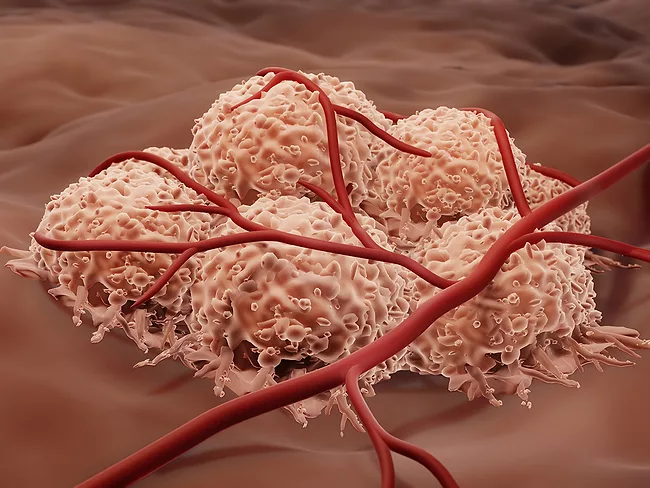
It is hardly news that tumor cells, compared to healthy ones, show metabolic reprogramming that accelerates the production of energy and biosynthetic precursors to support rapid growth. What is newly discovered, in contrast, is the possibility that hepatocellular carcinoma (HCC) tumors that are resistant to systemic therapies show further metabolic reprogramming beyond cells that are therapy sensitive, leading them to produce and store even greater amounts of energy.
Hepatocellular carcinomas (HCCs) are challenging to diagnose due to the tumor heterogeneity and unnoticeable early symptoms. Researchers from Anhui Medical University have developed a novel gallium 68 (68Ga)-labeled radiotracer, named [68Ga]DOTA-AngII, designed to improve the precision of HCC imaging.
Researchers from McMaster University and Espervita Therapeutics Inc. have identified the enzyme ATP citrate lyase (ACLY) as a key metabolic regulator of tumor-immune interactions in hepatocellular carcinoma (HCC) driven by metabolic dysfunction-associated steatohepatitis (MASH).
The U.S. FDA has cleared Zymeworks Inc.’s IND application for ZW-251, a novel glypican-3 (GPC3)-targeted antibody-drug conjugate (ADC) incorporating the company’s proprietary topoisomerase 1 (TOPO1) inhibitor payload, ZD-06519, for the treatment of hepatocellular carcinoma (HCC).
Splicing is a process necessary for the correct synthesis of proteins and an essential step in gene expression. An impaired minor splicing may lead to aberrant pre-mRNA transcripts and exon skipping, leading to premature stop codons and truncated synthesized proteins, resulting in severe consequences.
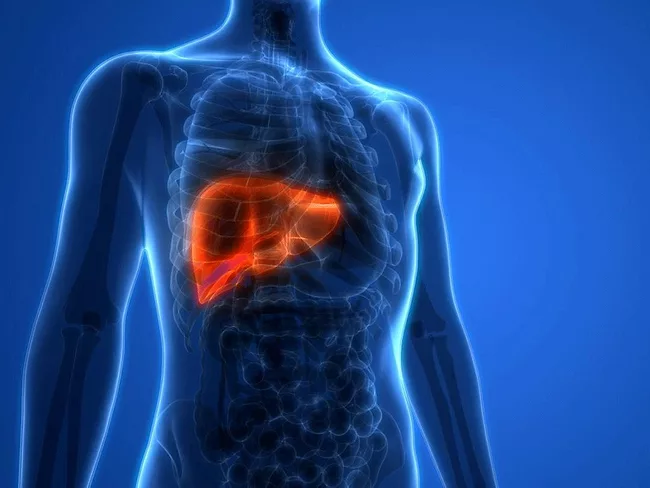
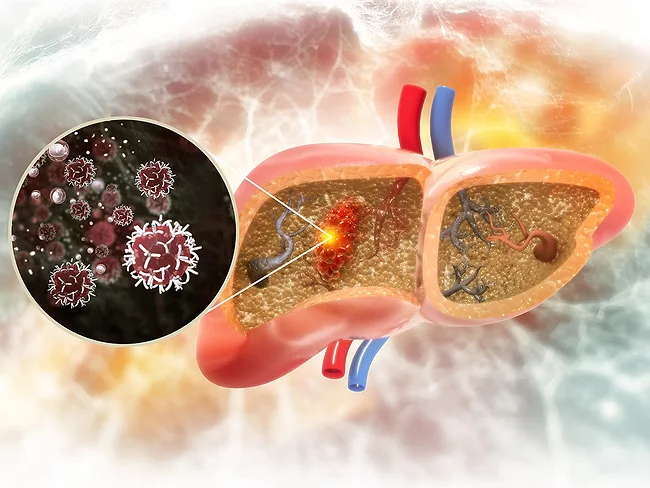
Hepatocellular carcinoma (HCC) is the third leading cause of cancer-related deaths worldwide, with few successful treatment options. HCC development is associated with established risk factors, including metabolic dysregulation, repeated insults by hepatotoxins or infection by hepatotropic viruses.
Naya Therapeutics Inc. is expanding its hepatocellular carcinoma pipeline with the addition of NY-700, a first-in-class GPC3-targeted Astatine-211 (211At) α radioimmunotherapy aiming to address residual disease, micro-metastasis and post-immunotherapy failures.