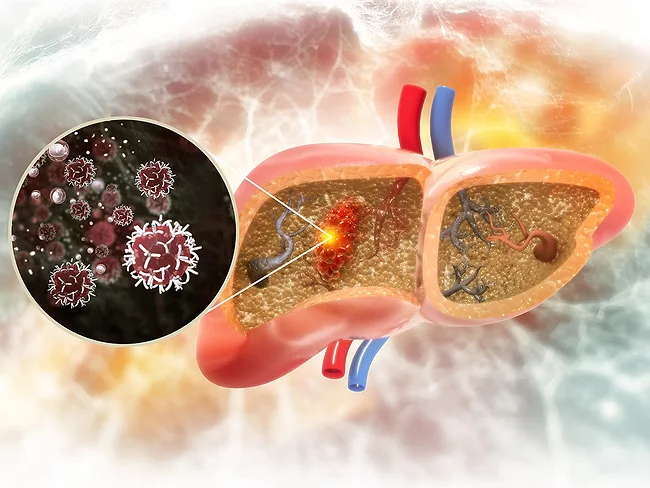
The treatment of hepatocellular carcinoma (HCC) has made progress due to immune checkpoint inhibitors (ICIs), but still many patients present innate or acquired resistance to ICIs, thus there is a need for the discovery of new therapeutic approaches for HCC treatment. Epigenetic alterations play a key role in liver cancer, so that they can suppress the expression of proteins involved in triggering the immune response against tumors. Spanish researchers have now identified a promising target for liver HCC treatment, named histone-lysine N-methyltransferase EHMT2, also known as protein G9a.
Hepatocellular carcinoma (HCC) is an aggressive disease that accounts for 80%-90% of all primary liver cancers. Previous findings have shown fibroblast growth factor 19 (FGF-19) to be overexpressed in up to 30% of HCC cases, exerting its oncogenic effect through its receptors fibroblast growth factor receptor 3 (FGFR3) and FGFR4.
Aligos Therapeutics Inc. has disclosed programmed cell death 1 (PDCD1; PD-1; CD279) and/or PD-1 ligand 1 (PD-L1; CD274) and/or PD-1/PD-L1 interaction inhibitors reported to be useful for the treatment of hepatocellular carcinoma and hepatitis B.
Naya Biosciences Inc. has expanded its bifunctional antibody pipeline to include NY-500, a novel PD-1 x VEGF tetravalent bifunctional antibody for the treatment of hepatocellular carcinoma (HCC) and other solid tumors.
Sunshine Biopharma Inc. has completed mouse model studies providing proof of concept for the company’s K1.1 mRNA product as a novel therapeutic agent for human hepatocellular carcinoma (HCC).
Researchers from Astrazeneca plc presented the discovery and preclinical characterization of AZD-9793, a novel CD8-guided T-cell engager (TCE) being developed for the treatment of hepatocellular carcinoma (HCC).
Hepatocellular carcinoma (HCC) is the most common type of liver cancer, with a 5-year survival rate of 18%. Glypican-3 (GPC3) is a protein with high expression in HCC but not in healthy tissue, making it an interesting target for therapy.
Researchers from Naya Biosciences Inc. and collaborators presented preclinical data on NY-303, a natural killer (NK) cell engager bispecific antibody targeting both GPC3 and NKp46. NKp46 is a cell surface receptor involved in NK cell activation and the elimination of target cancer cells.
Researchers from Qingdao University described the discovery and preclinical characterization of a novel series of tubulin polymerization inhibitors that led to the identification of [I] as the most potent compound.
Liver diseases are responsible for around two million deaths every year. Among them, hepatocellular carcinoma (HCC), particularly at late stages, presents limited therapeutic options and a dismal survival rate.