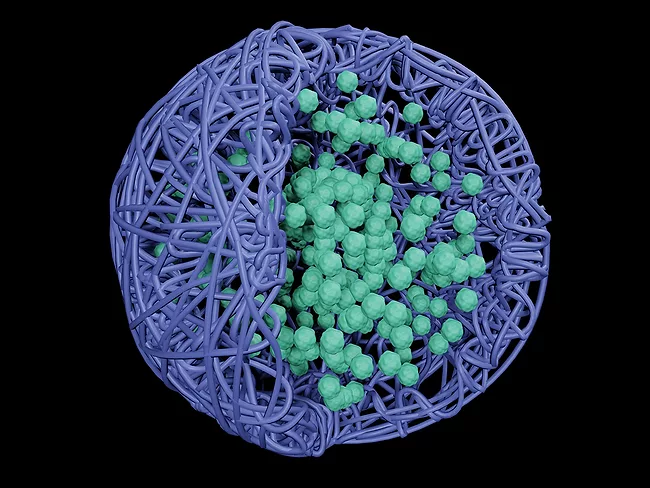
Researchers from Sirnaomics Inc. presented preclinical evaluation of novel intravenous polypeptide nanoparticle designed to simultaneously deliver two siRNAs, silencing TGF-β and COX-2.
Hepatocellular carcinoma (HCC) is characterized by a high rate of neovascularization, giving tumoral cells access to nutrients and contributing to disease progression and metastasis.
Therabionic GmbH received U.S. FDA humanitarian device exemption (HDE) for its P1 device for at-home treatment of hepatocellular carcinoma, which accounts for 80% of all liver cancers, in patients who have failed first- and second-line therapies.
Abbisko Therapeutics Co. Ltd. has received FDA clearance of its IND application for ABSK-012, a highly selective small-molecule inhibitor of fibroblast growth factor receptor 4 (FGFR4), for advanced solid tumors.
Duo Oncology Inc. has been awarded a Small Business Technology Transfer grant by the National Cancer Institute (NCI) to support the development of DUO-307, a combination nanomedicine that delivers cytotoxic polymer conjugated gemcitabine (PGEM) and an immune modulating chemokine receptor type 2 antagonist (CCR2a) to tumor tissue.
Abbisko Therapeutics Co. Ltd. announced positive first-in-human data for its highly selective fibroblast growth factor receptor (FGFR) 4 inhibitor, irpagratinib (ABSK-011), for treating advanced hepatocellular carcinoma with FGF19 overexpression, which is seen in roughly 30% of liver cancers.
Tempest Therapeutics Inc. has begun the hunt for a phase III partner to help reach the market with TPST-1120, the oral selective peroxisome-proliferator activated receptor-alpha (PPAR-alpha) antagonist that showed clinical superiority on multiple study endpoints in phase Ib/II as an add-on in first-line unresectable or metastatic hepatocellular carcinoma (HCC).
Researchers from Xiamen University and affiliated organizations have reported the discovery of nuclear hormone receptor NUR/77 (Nur77) modulators as potential candidates for the treatment of hepatocellular carcinoma (HCC).
It has been previously demonstrated that glypican-3 (GPC3) is differentially expressed in hepatocellular carcinomas (HCC), making it a promising target for radiopharmaceutical therapy to treat HCC. At the ongoing meeting of the European Association of Nuclear Medicine in Vienna, researchers from Rayzebio Inc. and Peptidream Inc. presented the preclinical characterization of a novel proprietary peptide binder of GPC3, RAYZ-8009.
Elevar Therapeutics Inc. said that the U.S. FDA accepted its NDA for oral tyrosine kinase inhibitor rivoceranib in combination with PD-1 inhibitor camrelizumab (Airuika) as a first-line treatment for liver cancer. The FDA stamped an official PDUFA target action date of May 16, 2024.