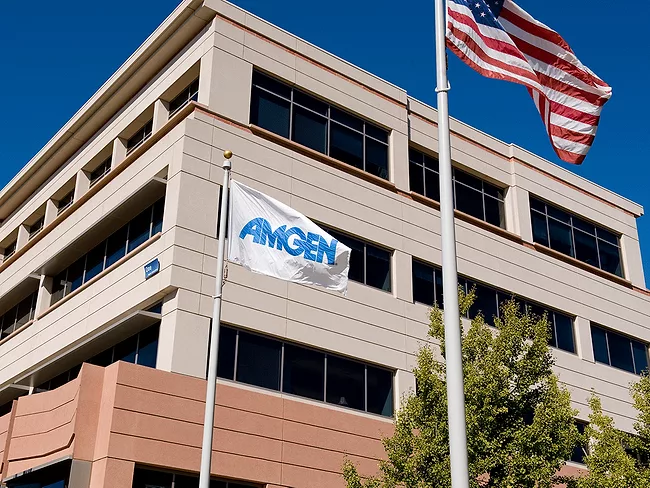
The U.S. FTC’s unprecedented antitrust challenge to Amgen Inc.’s $27.8 billion acquisition of Horizon Therapeutics plc, could be a disruptor to biotech investment if the agency is victorious, some analysts are warning. “With essentially zero commercial overlap [between the two companies], this deal would seem to be a slam dunk under long-established antitrust considerations,” said Christopher Raymond, a senior research analyst with Piper Sandler Research.
Taking aim at big pharma’s current penchant for acquisition over in-house innovation, Sen. Elizabeth Warren (D-Mass.) is asking the Federal Trade Commission (FTC) to consider the impact a biopharma merger, whether it’s proposed or a done deal, may have on future innovation.
Chatter about an impending acquisition of Horizon Therapeutics plc sent its shares soaring 61% throughout November, making it the best performing stock of the month among the 30 companies that are part of BioWorld’s Drug Developers Index (BDDI).
The successful suitor for Horizon Therapeutics plc has been revealed as Amgen Inc., which will buy the Dublin-based company for $27.8 billion in cash in what is by far the year’s biggest acquisition. The deal brings successful biologics into Amgen’s portfolio that include Tepezza (teprotumumab), a monoclonal antibody targeting insulin-like growth factor 1 for treating thyroid eye disease, Krystexxa (pegloticase), a pegylated uricase enzyme for treating chronic refractory gout, and Uplizna (inebilizumab), a monoclonal antibody targeting insulin-like growth factor 1 for treating thyroid eye disease.
Horizon Therapeutics plc shares (NASDAQ:HZNP) jumped 27.3% to $100.29 after the company disclosed being in "highly preliminary" discussions about takeover interests expressed by Amgen Inc., Janssen Global Services LLC and Sanofi SA. The companies have until Jan. 10, 2023, to report whether they intend to make an offer or not.
With enrollment set to finish any day in Selecta Biosciences Inc.’s Dissolve II study testing SEL-212 in chronic refractory gout (CRG), investor appetite runs high in the space, as contenders line up to take on Horizon Therapeutics plc’s Krystexxa (pegloticase), the only product approved for CRG.
The agreement between gout player Horizon plc and RNAi expert Arrowhead Pharmaceuticals Inc. could result in a subcutaneously given, infrequently dosed fix for the disease that takes aim at xanthine dehydrogenase. “They brought us the target – it wasn’t something we were developing,” said Arrowhead CEO Christopher Anzalone, but the Pasadena, Calif.-based firm’s research on hepatocyte-directed therapies provides confidence.
Seeking to accelerate the company's long-term growth through an expansion of its rare disease pipeline, Horizon Therapeutics plc said Feb. 1 it will buy Viela Bio Inc. for $3.05 billion, or $53 per share (NASDAQ:VIE). Once closed, the deal would add a new commercial-stage asset, Uplizna (inebilizumab), to Horizon's portfolio alongside its current lead products, Tepezza (teprotumumab) for the treatment of thyroid eye disease and Krystexxa (pegloticase) for uncontrolled gout. Dublin-based Horizon, which had $2.08 billion in cash at the end of 2020, borrowed $1.3 billion to help finance the transaction. Astrazeneca plc also enabled the deal by agreeing to divest its 26.7% share in Viela Bio for a profit of between $760 million and $780 million.
The latest global regulatory news, changes and updates affecting biopharma, including: Fed Circuit: Nonsensical claims indefinite; USPTO seeks more uniformity between PTAB, courts; EC investing in startups.
According to BioWorld, almost $85 billion was raised by public and private biopharma companies globally in the second and third quarters alone, bringing the dollars generated to date to more than $100 billion – a total that smashes the existing record of about $69 billion that was raised in 2015.