The Senate passed by a vote of 96-1 the spending bill for the outbreak of the new coronavirus (COVID-19), which will be on President Donald Trump’s desk by week’s end. The bill provides $7.8 billion in new funds to tackle the outbreak and another $490 million in existing funds for telehealth, all with the aim of speeding the response to the pathogen.
The March 4 congressional hearing on the budget for the NIH was peppered with questions about the COVID-19 outbreak, although the general sentiment is that the agency will receive yet another boost in appropriations in fiscal 2021.
The U.S. FDA has posted an immediately-in-effect policy document regarding clinical laboratory development of diagnostics for the pathogen responsible for COVID-19 disease. The agency said the policy allows a lab to use any diagnostic before the FDA has completed an exhaustive review of the test.
The latest mutation to the coronavirus, dubbed COVID-19, has sparked a reaction by many national governments, but the expense associated with development of vaccines and diagnostics is considerable. Ron Klain, who served as the Obama administration’s coordinator for the response to the Ebola virus, said during an Aspen Institute seminar that drug makers took a hit in their efforts to develop a vaccine for the Ebola virus, and thus there is a need to de-risk these and other development efforts in the private sector.
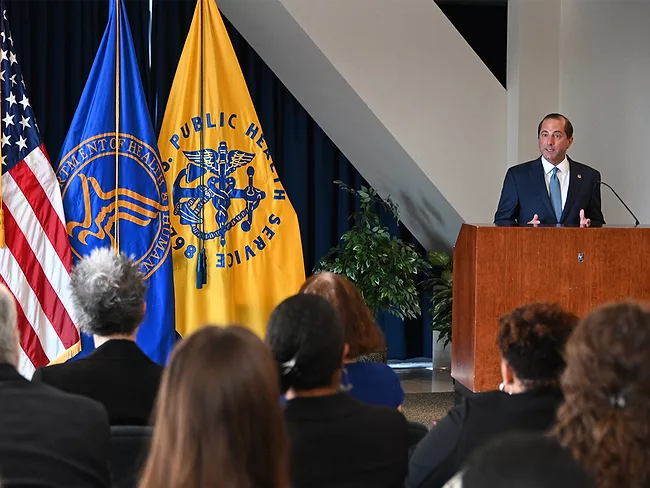
The U.S. Department of Health and Human Services has declared a public health emergency in the U.S. over the coronavirus in part because a government diagnostic for the virus yields inconsistent results, a fact that may spur the life sciences to provide a solution.