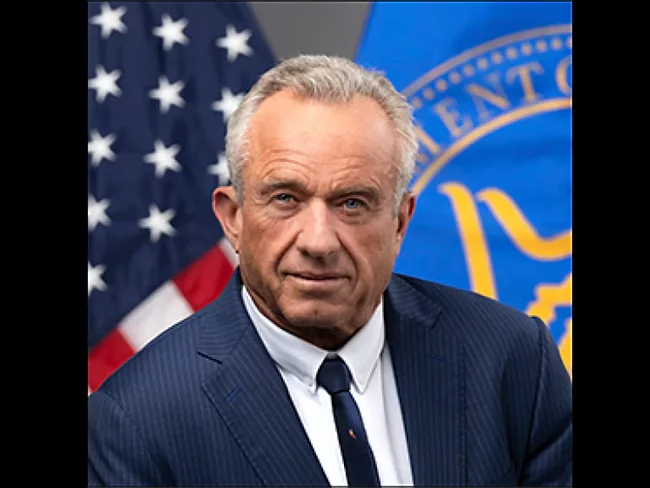
And then there were eight. That is, eight members of the U.S. CDC’s Advisory Committee for Immunization Practices (ACIP).Two days after dismissing the 17 members of the committee, Health and Human Services Secretary Robert Kennedy named eight new members to the panel. Eight is the minimum required for a quorum, which will be necessary for the June 25-27 ACIP meeting.
Despite the June 9 gutting of the U.S. CDC’s Advisory Committee for Immunization Practices, the Department of Health and Human Services said the committee’s June 25-27 meeting will continue as scheduled. But a new panel has yet to be named, and typically ACIP members have a lot of behind-the-scenes work to do before a meeting.
Without convening the U.S. CDC’s Advisory Committee on Immunization Practices, Health and Human Services Secretary Robert Kennedy decided to bring the government’s COVID-19 vaccine recommendations in line with the FDA’s new “evidence-based” approach to the shots.
The next major shock wave to hit the U.S. biopharma and med-tech industries could be the fiscal 2026 federal budget. Nearly one-third of the discretionary budget for the Department of Health and Human Services (HHS) could be wiped out, according to the White House Office of Management and Budget’s “pre-decisional” budget proposal, or passback, for HHS.
As the U.S. Department of Health and Human Services begins implementing its reorganization and reduction-in-force plan by sending out termination notices this week to 10,000 more employees across its agencies, top Democrats in Congress are demanding details about the plan.
Mehmet Oz, the Trump administration’s pick to lead the U.S. Centers for Medicare & Medicaid Services (CMS), appeared for a second time in the Senate for the CMS administrator’s job.
Breaking with a 30-year tradition, the U.S. FDA selected the strains for the next flu vaccine March 13 without convening its independent vaccine advisory committee. Instead, the agency brought together 15 scientific and public health experts from within the FDA, the CDC and the Department of Defense to make the recommendations for the next flu season. That group met the same day that the agency’s Vaccines and Related Biological Products Advisory Committee had been scheduled to make the selection.
Shortly before the Senate Health, Education, Labor and Pensions Committee was to hold the first ever confirmation hearing for a U.S. CDC director March 13, it issued a statement saying the hearing was canceled due to the White House withdrawing its nomination of Dave Weldon, a physician and former congressman from Florida.
Three public health experts have voiced concerns that the uncertainties sparked by the Trump administration’s moves to reduce federal spending could limit the U.S. CDC’s ability to track and respond to infectious disease outbreaks and will undermine the public health support system in the U.S.