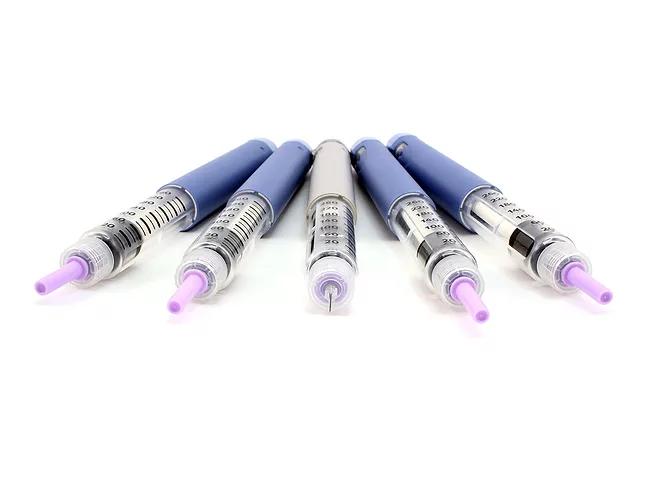
Now that the U.S. FDA has nearly 15 years of experience with developing and implementing a biosimilar pathway, it’s time for that regulatory path to catch up with the science, according to experts that have been involved in biosimilar development even before Congress passed the Biologics Price Competition and Innovation Act that created the framework for the U.S. biosimilar market.
Boehringer Ingelheim GmbH is the latest company to dive into the legal fray surrounding the federal government’s plan to change drug costs. The drug price negotiation program established by the Inflation Reduction Act is “unlawful,” according to the company’s brief, because it violates the due process clause and the just-compensation portion of the U.S. constitution’s Fifth Amendment.
One of the companies wanting to be part of the upcoming U.S. launch of Humira biosimilars is instead exploring options to raise additional capital so it can continue advancing its biosimilar pipeline in the near term. Alvotech Holdings SA, a pure-play biosimilars company based in Iceland, initially had hoped for FDA approval June 28 for AVT-02, developed as both an interchangeable and biosimilar to the high-concentration formulation (HCF) of Abbvie Inc.’s blockbuster autoimmune drug, Humira (adalimumab).
With the biggest biosimilar launch in the U.S. just days away, Humira’s (adalimumab) record-breaking ride is quickly slowing down, but the Abbvie Inc. mega-blockbuster immunology drug is nowhere near the end of its road. Meanwhile, the U.S. journey is just beginning for the eight adalimumab biosimilars that could come to market as early as July 1 through licensing agreements with Abbvie. Besides revving their engines against Humira, the new launches will be looking to overtake Amgen Inc.’s biosimilar, Amjevita, which got a five-month headstart in the U.S., thanks to the first-mover status Amgen earned for being the first to sign a licensing agreement with Abbvie.
University of Sydney spinout Kinoxis Therapeutics Pty announced a partnership and licensing agreement with Boehringer Ingelheim GmbH to develop first-in-class oxytocin-targeting precision psychiatry treatments to improve the quality of life of people living with neuropsychiatric disorders.
University of Sydney spinout Kinoxis Therapeutics Pty announced a partnership and licensing agreement with Boehringer Ingelheim GmbH to develop first-in-class oxytocin-targeting precision psychiatry treatments to improve the quality of life of people living with neuropsychiatric disorders. Under the terms of the agreement, Kinoxis will receive an up-front payment and research support payments and is eligible for research, preclinical, clinical, regulatory and commercial milestones of up to AU$266 million (US$181 million), in addition to sales-based royalties.
Boehringer Ingelheim GmbH has agreed to pay Covant Therapeutics Inc. $10 million for exclusive rights to the latter’s ADAR1-targeting immuno-oncology program. Under the terms of the exclusive research collaboration and worldwide licensing agreement, newly unveiled drug discovery company Covant will carry out the preclinical work in creating an ADAR1 small-molecule inhibitor, with Boehringer offering its scientific expertise to help advance the program into the clinic.
A lot of biosimilar sponsors and wannabes will be watching as the Humira biosimilar competition unfolds in the U.S. While the competition started Jan. 31 with the launch of Amgen Inc.’s Amjevita, the true test of the strength of the competition will come in five months when other adalimumab biosimilars, including Boehringer Ingelheim GmbH’s interchangeable, hit the market.
Selux Diagnostics Inc. received U.S. FDA 510(k) clearance for its next generation phenotyping (NGP) system, a rapid antibiotic susceptibility test (AST) platform that determines a bacteria’s susceptibility to 14 specific antimicrobial agents in less than six hours. Prompt identification of the narrowest effective antimicrobial for an infection is critical to the battle to preserve the efficacy of critical antibiotics and slow the development of ‘superbug’ infections.