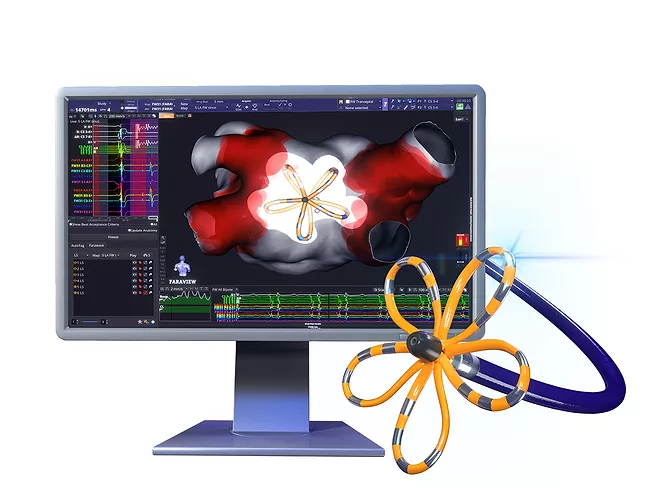
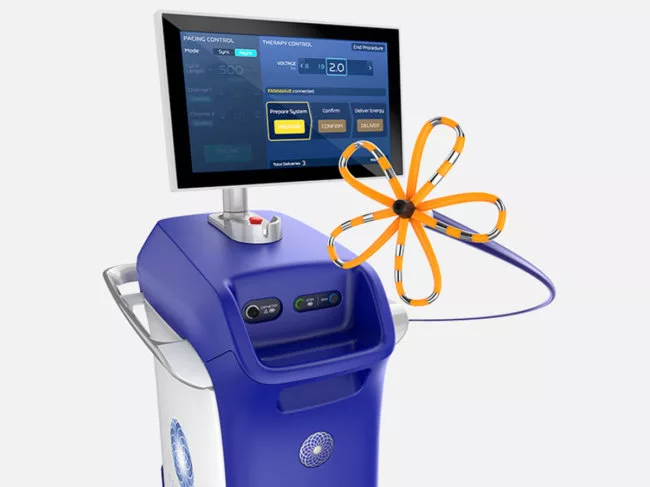
Boston Scientific Corp. recently received CE mark for its navigation-enabled Farawave Nav ablation catheter and Faraview mapping software to be used with its Farapulse pulsed field ablation (PFA) system. The technologies are expected to improve physicians’ understanding of patients’ atrial fibrillation to enable treatment using the Farapulse PFA system.
To say that European investors are optimistic about the outlook for the med-tech sector in 2025 is an understatement. A couple of companies are already listed on public markets, acquisitions have been undertaken and med-tech players with cash-rich balance sheets are on the hunt.
As pulsed field ablation transformed the electrophysiology market over the last year, Boston Scientific Corp. emerged as the biggest winner by far. In its fourth quarter earnings call on Wednesday, the company quantified just how successful its Farapulse PFA system has been.
With multiple large M&A deals already announced in January, CEOs of major med-tech companies outlining acquisition plans for 2025 and declining interest rates, the stage is set for a significantly more active year of M&A. Financings, too, have ticked up and analysts expect the trend to continue, offering hope for a positive year for the med-tech industry.
A pair of investor calls on Jan. 22 added clarity to the rapidly evolving cardiac ablation market with Abbott Laboratories and Johnson & Johnson providing updates on their pulsed field ablation programs. Both outlined challenges in the U.S. market that continue to place them at a disadvantage compared to current market leaders Boston Scientific Corp. and Medtronic plc, though bright spots also shone through.
Beta Bionics Inc. kicked off the new year with plans for an initial public offering of 7.5 million shares “as soon as practicable.” Expected to be priced at $14 to $16 per share, the IPO would gross $105 million to $120 million for the insulin delivery device maker.
Boston Scientific Corp. reported positive data for two key atrial fibrillation therapies at AF Symposium 2025 on January 17. In late-breaking data presentations, the ADVANTAGE AF trial for the Farapulse PFA system met its primary endpoints, showing a 2.3% safety event rate and 63.5% effectiveness rate in treating persistent atrial fibrillation (AF) patients, with an 85.3% symptomatic AF recurrence-free rate. Additionally, a sub-analysis of the OPTION trial demonstrated that the Watchman FLX device significantly reduced bleeding outcomes compared to oral anticoagulants.
At least half of women experience urinary incontinence at some point in their lives but few discuss the condition with their physicians. In part, that’s because most women believe few effective treatments exist for urinary leakage – and until recently, they were right. Several advances in 2024, however, offer new hope.
The sedate uptake of pulsed field ablation (PFA) in Europe failed to presage the enthusiasm that drove the technology’s extraordinarily rapid adoption in the U.S. in 2024. Used to treat atrial fibrillation, PFA received its first U.S. FDA approval in Dec. 2023. At the time, Clarivate estimated that PFA had 7% of the global cardiac ablation market. By year-end 2024, it had 20% and Boston Scientific Corp. projected that PFA would represent up to half of the market by the close of 2025.
Timing is everything. Just days after confirming a pause in the U.S. rollout of its Varipulse pulsed field ablation (PFA) catheter, Johnson & Johnson’s electrophysiology program received an epic reprieve from European regulators who granted the company’s dual-energy Thermacool Smarttouch SF catheter CE mark.