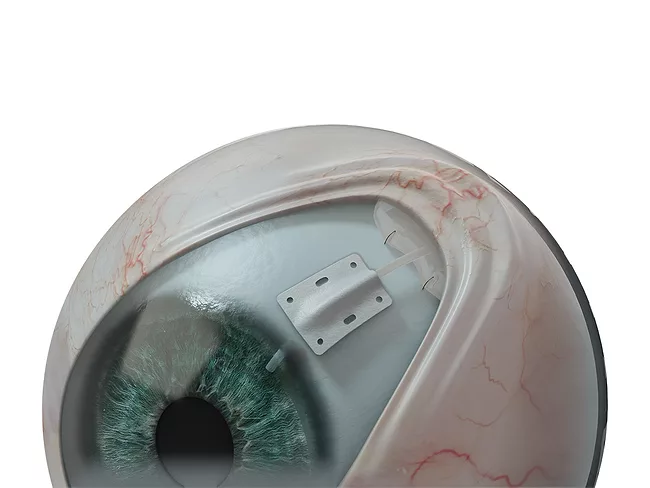
The U.S FDA 510(k) clearance for Corneat Vision Ltd.’s Everpatch is a “safety stamp” for the product, and the “first step’ in the deployment of Corneat’s synthetic tissue substitute technology, which could displace the use of donor and processed tissue, Almog Aley-Raz, CEO of Corneat, told BioWorld. The Corneat Everpatch, for use in ophthalmic surgeries, is the first non-degradable material that seamlessly embeds itself with surrounding tissue avoiding foreign body response often triggered by implanted devices, Aley-Raz claimed.
Beneficiaries in the U.S. Medicare program have access to several technologies and procedures for treatment of glaucoma, but Medicare administrative contractors (MACs) seem to be looking sideways at some of these offerings. Both Wisconsin Physician Services and Palmetto GBA have floated draft local coverage proposals that deem procedures such as goniotomy and the combination of canaloplasty and trabeculectomy to be investigational, suggesting that claims for these and other services and devices will not be paid by these MACs.
Coave Therapeutics aims to move its lead gene therapy program, CTx-PDE6b, for a form of retinitis pigmentosa (RP) into a pivotal trial in 2025 on the back of a phase I/II study, which uncovered a preliminary efficacy signal in one patient subgroup.
Centricity Vision Inc. received U.S. FDA clearance for technology designed to integrate with modern phacoemulsification or “phaco” systems that use ultrasound energy to emulsify the eye's native internal lens during cataract surgery. Centricity’s new Zeptolink interocular lens (IOL) positioning system is used in conjunction with phaco systems to surgically remove the natural lens of the eye as the first step in cataract surgery.
Mediwhale Inc. closed a $9 million series A round that will see the company take its artificial intelligence (AI)-powered retina scans to prevent heart and kidney diseases to the U.S. market.
Astellas Pharma Inc. announced it plans to acquire Iveric Bio Inc. in an all-cash deal in which it will pay $40 per Iveric share for a total equity value of roughly $5.9 billion. “Iveric Bio has promising programs including avacincaptad pegol (Zimura), an important program for geographic atrophy secondary to age-related macular degeneration, and capabilities across the entire value chain in the ophthalmology field,” said Naoki Okamura, Astellas’ president and CEO.
Astellas Pharma Inc. announced it plans to acquire Iveric Bio Inc. in an all-cash deal in which it will pay $40 per Iveric share for a total equity value of roughly $5.9 billion. “Iveric Bio has promising programs including avacincaptad pegol (Zimura), an important program for geographic atrophy secondary to age-related macular degeneration, and capabilities across the entire value chain in the ophthalmology field,” said Naoki Okamura, Astellas’ president and CEO.
Complement Therapeutics GmbH raised €72 million (US$79.4 million) in a series A round to move into the clinic a novel gene therapy for treating geographic atrophy secondary to dry age-related macular degeneration. It’s the largest series A round completed in Europe so far this year.
The granting of breakthrough device designation from the U.S. FDA to Pixium Vision SA for its Prima system was a boon for the company as its share price jumped more than 300% following the news. The price increase was “validation from the public market and investors” that the Prima system, for dry age-related macular degeneration (AMD), has the potential to get regulatory approval, Lloyd Diamond, CEO of Pixium, told BioWorld.
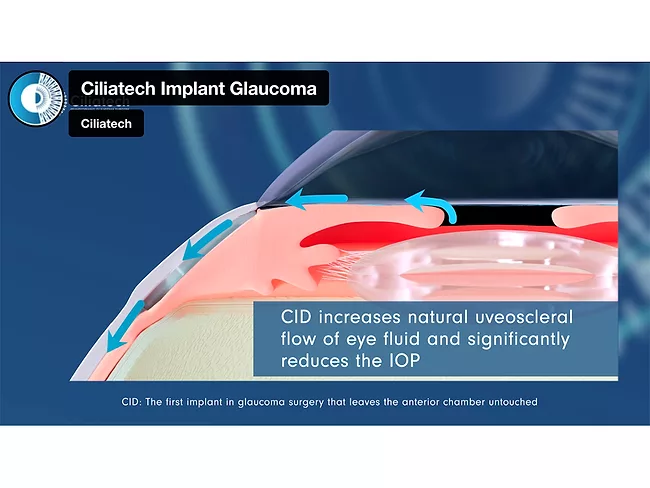
Ciliatech SAS reported positive news for people suffering from glaucoma who want to avoid the complications that come with using existing glaucoma procedures. Results from the SAFARI 1 clinical trial, using its first-generation cilio-scleral inter-positioning device (CID) implant in patients with open angle glaucoma, showed marked stability of intraocular pressure (IOP), along with a significantly reduced need for glaucoma medication 24 months on from surgery.