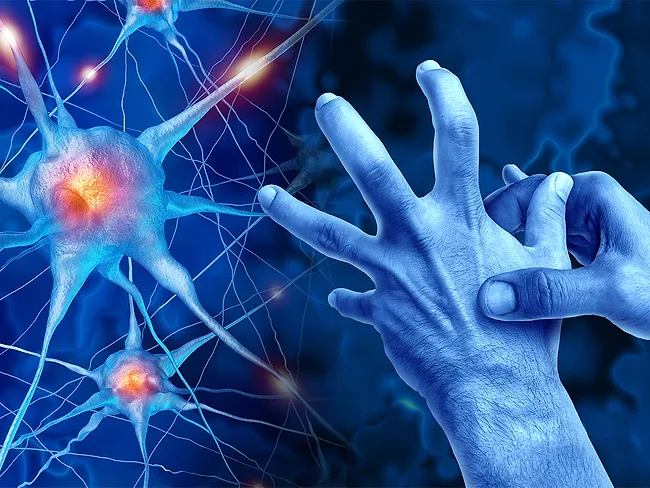
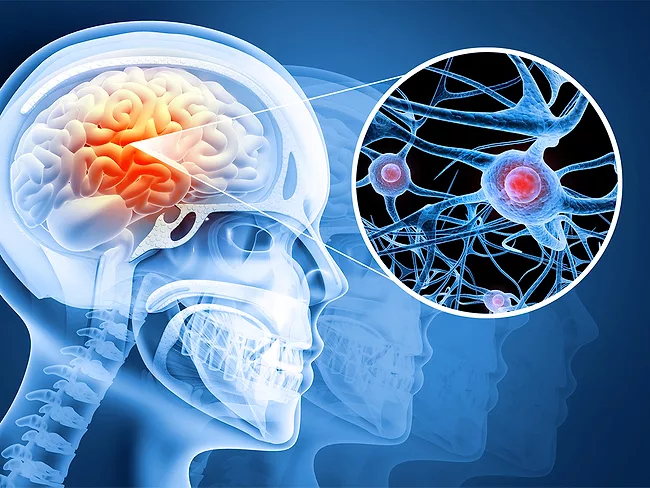
Parkinson’s disease (PD) involves the progressive loss of dopaminergic neurons, particularly in the substantia nigra. This neurodegeneration is linked to the abnormal accumulation of α-synuclein, a protein that forms toxic aggregates and spreads between cells, damaging them. At the 20th International Conference on Alzheimer’s and Parkinson’s Diseases (AD/PD), held from March 17 to 21, 2026, in Copenhagen, several strategies were presented that aim to modify the course of the disease and offer real alternatives to purely symptomatic treatments.
Researchers from University College London and collaborating institutions have recently published results from their study aiming to optimize gene therapy for CLN5 disease.
Two independent studies have linked neuronal injury, inside or outside the brain, to cancer progression and offer new biomarkers and strategies for prevention. While cerebral cancer cells damage axons and drive tumor development, in other types of cancer affecting other organs, nerve disruption caused by tumor proximity triggers inflammation and a suppressive environment that may also be associated with immunotherapy resistance.
Two independent studies have linked neuronal injury, inside or outside the brain, to cancer progression and offer new biomarkers and strategies for prevention. While cerebral cancer cells damage axons and drive tumor development, in other types of cancer affecting other organs, nerve disruption caused by tumor proximity triggers inflammation and a suppressive environment that may also be associated with immunotherapy resistance.
“Loss of synapses and dysfunctional synapses in a region-specific way is important in Alzheimer’s. It’s actually the strongest correlate of cognitive decline, far more so than plaques and tangles, which are the pathological hallmarks,” Soyon Hong told the audience at the XVII Meeting on Glial Cells in Health and Disease, which was held in Marseille last week.
Metabolic disorders such as argininosuccinic and glutaric aciduria, methylmalonic acidemia, homocystinuria or primary hyperoxaluria require specific diets to prevent the accumulation of substances that the body can’t process. Current treatments mainly focus on managing symptoms and metabolite levels, and do not always prevent the progressive deterioration caused by mutations associated with the condition. However, emerging gene therapies hold promise for transforming these diseases by targeting their underlying causes, as presented in the oral abstract session, “Gene and cell therapy for metabolic diseases” of the ongoing 28th Annual Meeting of the American Society of Gene & Cell Therapy (ASGCT) meeting in New Orleans.
Researchers in the U.K. have succeeded in reverse engineering the defective cryptic splicing that drives amyotrophic lateral sclerosis (ALS) and frontotemporal dementia (FTD) to enable precisely targeted delivery of transgenes and therapeutic protein expression in diseased neurons. The technique is compatible with conventional adeno-associated viral vectors that are approved for gene therapy, and can readily be adapted for different transgenes. ALS, FTD and other neurogenerative diseases are underpinned by loss of function of the RNA-binding protein TDP-43 (transactive response DNA-binding protein 43), that normally functions as a key regulator of splicing, protecting the transcriptome from toxic cryptic exons.
A collaborating team of researchers from the U.K.’s University College London and the Incliva Biomedical Research Institute in Valencia, Spain, filed for protection of a machine learning model called AMMON-OHE to predict occurrence of overt hepatic encephalopathy in patients with cirrhosis of the liver.
In cell and animal models of amyotrophic lateral sclerosis (ALS), the expression of toxic dipeptides in neurons led to changes in the extracellular matrix (ECM) as a protective response. The authors wrote that their findings, which appeared in Nature Neuroscience on Feb. 29, 2024, could suggest new strategies for how to approach ALS.