A week after generating buzz with its proposed Nasdaq listing and plans to raise about $200 million, Telix Pharmaceuticals Ltd. withdrew its U.S. IPO filing, citing market conditions. The Australian radiopharma firm’s shares continue trading on the Australian Securities Exchange (TLX), where they closed June 14 at AU$16.61 (US$10.98), up AU15 cents.
A week after generating buzz with its proposed Nasdaq listing and plans to raise about $200 million, Telix Pharmaceuticals Ltd. withdrew its U.S. IPO filing, citing market conditions. The Australian radiopharma firm’s shares continue trading on the Australian Securities Exchange (TLX), where they closed June 14 at AU$16.61 (US$10.98), up AU15 cents.
Australian radiopharmaceutical company Telix Pharmaceuticals Ltd. announced its IPO on the Nasdaq to raise $200 million to advance its late-stage radiopharma candidates. Headquartered in Melbourne, Telix has operations in the U.S., Europe (Belgium and Switzerland) and Japan with an extensive pipeline of theranostic radiopharmaceutical candidates.
Australian radiopharmaceutical company Telix Pharmaceuticals Ltd. announced its IPO on the Nasdaq to raise $200 million to advance its late-stage radiopharma candidates. Headquartered in Melbourne, Telix has operations in the U.S., Europe (Belgium and Switzerland) and Japan with an extensive pipeline of theranostic radiopharmaceutical candidates.
While Servier Pharmaceuticals LLC awaits this summer’s PDUFA date for the IDH-mutant glioma drug vorasidenib, acquired in the buyout of oncology assets from Agios Pharmaceuticals Inc., the latter unveiled positive data from a global phase III study with oral mitapivat in adults with transfusion-dependent alpha- or beta-thalassemia.
Vorasidenib, a glioma candidate under U.S. FDA review, may bring in additional cash for Agios Pharmaceuticals Inc., this time via a deal with Royalty Pharma, which agreed to pay $905 million to Agios in exchange for the 15% royalty arrangement stemming from an earlier collaboration with Servier Pharmaceuticals LLC.
Nectin Therapeutics Ltd. has divulged antibody-drug conjugates (ADCs) comprising a humanized monoclonal antibody targeting poliovirus receptors (PVR; CD155) linked to a cytotoxic drug through a linker. They are reported to be useful for the treatment of cancer.
CSPC Pharmaceutical Group Ltd. has received clearance from China’s National Medical Products Administration (NMPA) to conduct clinical trials in China with SYH-2039, a highly selective methionine adenosyltransferase 2A (MAT2A) inhibitor, for advanced malignant tumors.
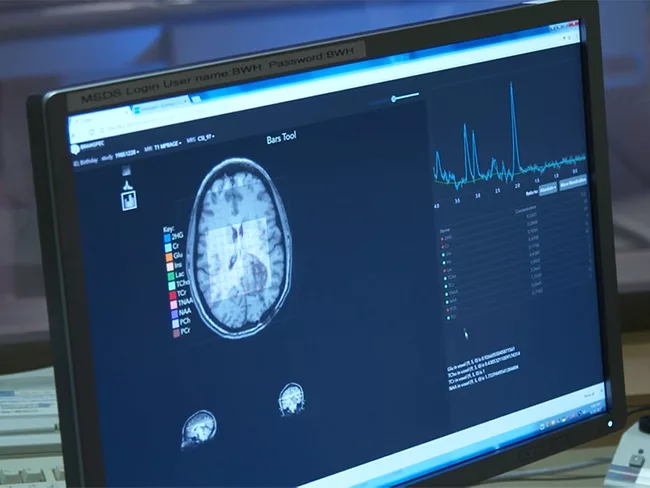
Brainspec Inc. received U.S. FDA 510(k) clearance for use of its artificial intelligence platform, Brainspec Core, in noninvasive measurement of brain chemistry using magnetic resonance spectroscopy (MRS).
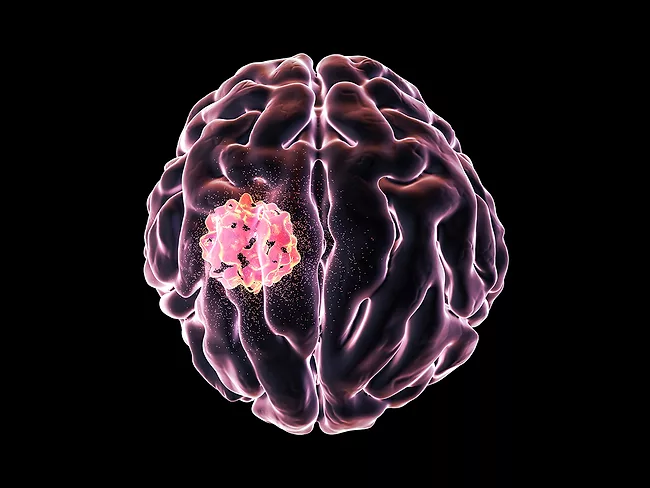
Gliomas are the most common brain tumors. Adult gliomas frequently present molecular alterations in the epidermal growth factor receptor (EGFR) and its associated signaling pathways. In recent work, researchers from the Centre de Biophysique Moléculaire (France) and collaborators demonstrated the role of the serotonin 5-HT7 receptor (5-HT7R) in a larval Drosophila model of glioma, showing that it may act as a tumor suppressor.