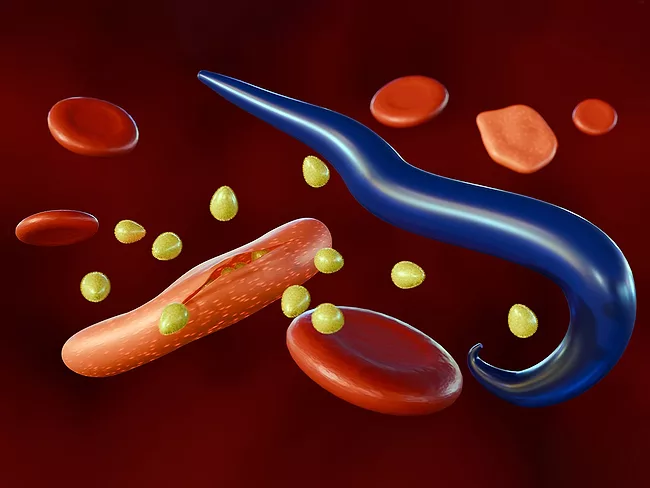
Novel antimalarials are urgently needed to face the challenge of increasing parasite resistance. The isoprenoid precursor biosynthesis pathway is an attractive target for developing novel antimalarial drugs, being an essential and specific pathway in apicomplexan parasites.
The Global Health Innovative Technology (GHIT) Fund has announced a total investment of approximately ¥1.64 billion (US$10.8 million) in four projects for the development of new drugs for malaria and neglected tropical diseases.
Vaccination with infectious Plasmodium falciparum sporozoites (PfSPZ) administered with antimalarial drugs (PfSPZ-CVac) is more effective than vaccination with replication-deficient, radiation-attenuated PfSPZ. However, the requirement for drug administration is a significant limitation of the PfSPZ-CVac strategy.
Because of increasing resistance to current antimalarial drugs, new agents with novel mechanisms of action are needed. Plasmepsins are a family of 10 Plasmodium falciparum aspartic proteases (PMI to PMX), among which plasmepsins IX and X (PMIX and PMX) have been identified as potential targets due to their involvement in egress, invasion and parasite development.
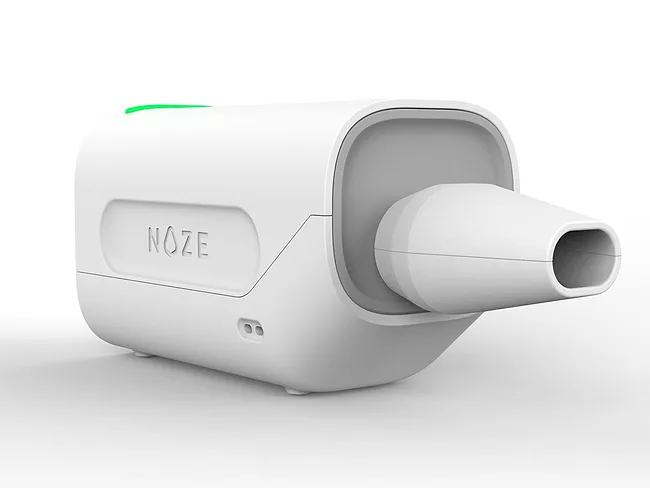
Noze Inc. is hot on the trail of tuberculosis with its Diagnoze hand-held system that can detect the disease by its smell. The company, formerly known as Stratuscent, received additional support from the Bill & Melinda Gates Foundation to fund a study evaluating a breathalyzer designed to detect tuberculosis in high-burden countries.
With its sights set on expanding the commercial launch of Xdemvy (lotilaner ophthalmic solution, 0.25%) to treat Demodex blepharitis in the U.S., Tarsus Pharmaceuticals Inc. has priced an underwritten public offering of common stock, selling 2.8 million shares for $32 each, taking the expected gross proceeds to about $100 million.
Baseimmune Ltd. has raised $11.3 million through a series A to accelerate the development of its deep learning AI technology for predicting future pathogen mutations to generate a series of longer-lasting, multistrain vaccines.
Neutrophils are the immune system’s most abundant effector cells, which play a defensive role of host cells and clear pathogens by phagocytosis, degranulation and neutrophil extracellular trap (NET) release.
Be it viral, nucleic acid or protein vaccines, recent efforts that led to the first regulatory approvals for not only COVID-19, but also for malaria and respiratory syncytial virus, positioned infectious diseases in the headlines for much of the last four years.