Calidi Biotherapeutics Inc. has received pre-IND regulatory feedback from the FDA on Calidi’s IND-enabling preclinical plans and clinical strategy for CLD-401. The parties agreed on key aspects of the CMC and nonclinical programs, as well as the overall design for the proposed first-in-human study.
Mekanistic Therapeutics Inc. has obtained IND clearance from the FDA for MTX-531, the company’s lead oncology candidate. A phase I study will be conducted in patients with advanced solid tumors characterized by dysregulated EGFR and/or PI3K signaling, including head and neck and endometrial cancers. Dosing is expected to begin in the third quarter.
Netris Pharma SA has delivered positive phase Ib data showing its first-in-class netrin-1 inhibitor NP-137 alleviates resistance to chemotherapy in pancreatic cancer. This could represent an important advance in treating these tumors, which are notoriously resistant to chemotherapy.
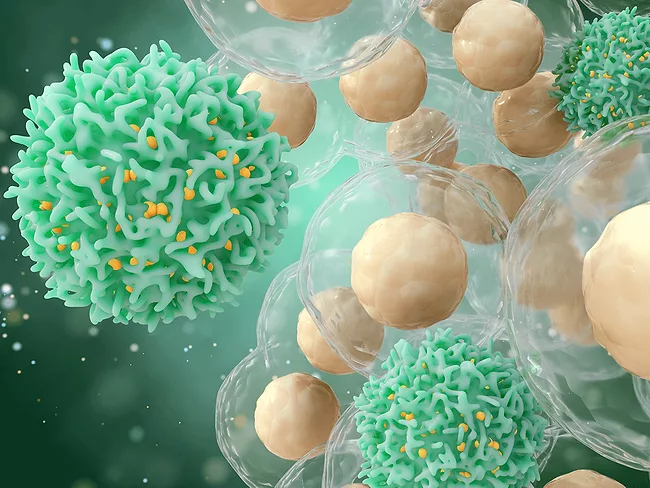
Zelluna ASA has received approvals from the U.K.’s Medicines and Healthcare products Regulatory Agency (MHRA) and research ethics committee for its clinical trial application (CTA) for ZI-MA4-1, Zelluna’s lead T-cell receptor-based natural killer (TCR-NK) product candidate.
Head and neck squamous cell carcinoma (HNSCC) accounts for high number of new diagnoses each year. Current management is based on surgery followed by radiotherapy or chemotherapy, where treatment-induced fibrosis is a common complication associated with therapy. Since fibrosis is mostly driven by dysregulation of the Rho-ROCK signaling axis, researchers from Australia have investigated the potential of modulating ROCK2 with the small-molecule inhibitor RX-10616 for its potential antifibrotic effect combined with radiotherapy in patient-derived murine models of HNSCC.
Onchilles Pharma Inc. has obtained IND approval from the FDA for N-17350, enabling initiation of first-in-human studies in patients with advanced solid tumors. The study will enroll patients in the U.S. and Australia with advanced solid tumors.
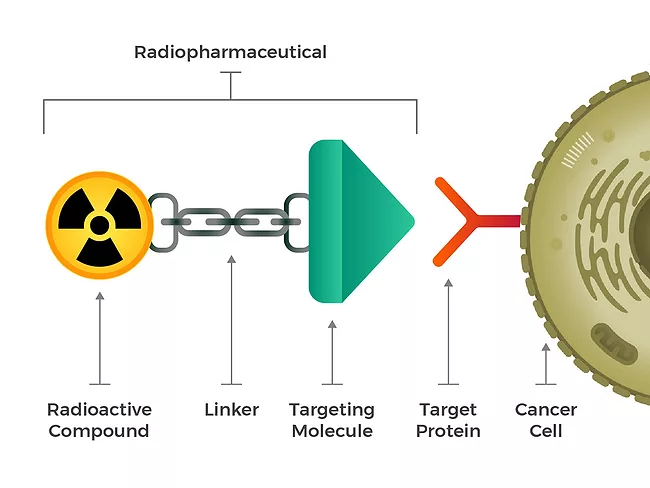
Peptidream Inc. has announced a new radiopharmaceutical candidate targeting cadherin-3 (CDH3) for the diagnosis and treatment of head and neck squamous cell carcinoma.
Zelluna ASA has submitted a clinical trial application (CTA) to the UK’s Medicines and Healthcare products Regulatory Agency (MHRA) for ZI-MA4-1 (ZIMA-101), the company’s lead candidate. ZI-MA4-1 is a novel MAGE-A4-targeting T-cell receptor-natural killer (TCR-NK) therapy.
Ideaya Biosciences Inc. has received IND clearance from the FDA for the initiation of a phase I trial to evaluate IDE-034, a bispecific B7H3/PTK7 TOP1 antibody-drug conjugate.
In non-small-cell lung cancer (NSCLC) and various other cancers, mutations in nuclear factor erythroid 2-related factor 2 (NRF2) cause aberrant activation of NRF2 transcriptional activity, resulting in therapeutic resistance and poor survival.