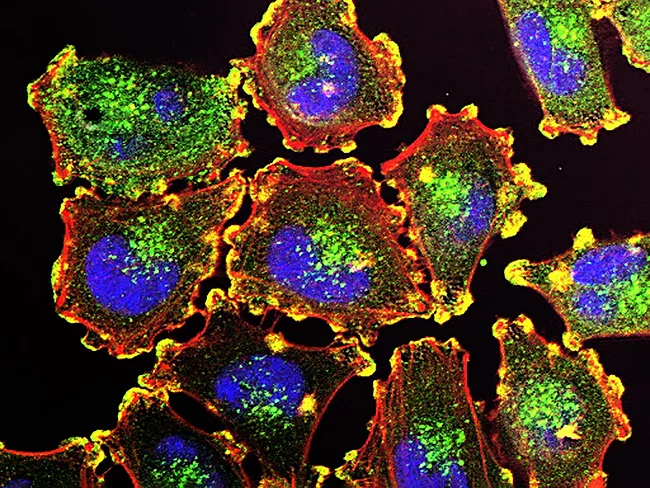
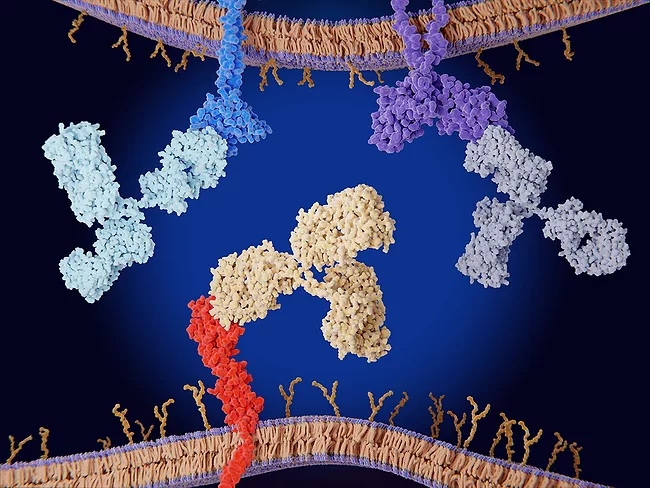
Although treatment outcomes have improved in metastatic melanoma since the use of immune checkpoint blockade (ICB), it still remains a medical challenge. Melanoma cells are thought to adapt several phenotypic states, such as mesenchymal-like state (MES), which may modulate their sensitivity to therapy. An international team of researchers has now investigated the mechanisms behind melanoma cells’ resistance to ICB.
Researchers from Hibercell Inc. recently presented preclinical data for HC-7366, a first-in-class direct activator of GCN2 (general control nonderepressible 2) currently in phase I development for the treatment of solid tumors (NCT05121948).
Researchers from Blueprint Medicines Corp. presented data from a study that aimed to assess the effects of combining cyclin-dependent kinase 2 (CDK2) inhibitor BLU-222 with CDK4/6 inhibitors, such as palbociclib or ribociclib, to overcome CDK4/6 inhibitor resistance in HR-positive/HER2-negative breast cancer.
The development of novel antimicrobial agents is crucial to combat the emergence of multidrug-resistant bacteria, which cause millions of deaths and high economic losses. Researchers from Shaanxi University of Science & Technology and colleagues reported on the design and optimization of new pleuromutilin derivatives intended for use as antibacterial drugs against multidrug-resistant gram-negative bacteria.
The mTORC2 complex plays an important role in the PI3K/AKT/mTOR pathway, allowing activation of AKT and contributing to the development of BRAF-mutated (BRAFm) melanomas and their resistance to treatments. Researchers from Inserm aimed to identify new candidates for targeting the mTORC2 complex in melanoma, with focus on one principal protein of this complex, MAPKAP1 (also known as SIN1).
TANK-binding kinase 1 (TBK1) is a multifunctional serine/threonine kinase with an established role coordinating innate immune responses, and it has been previously identified as a candidate immune evasion gene. Additionally, disrupting TBK1 signaling has shown potential for enhancing response to immunotherapy with immune checkpoint blockade (ICB) in murine tumor models.
Facing the global threat of antimicrobial resistance (AMR), the EMA issued a final revised guideline on the evaluation of new antibiotics. In accordance with an agreement with the U.S. FDA and Japan’s Pharmaceuticals and Medical Devices Agency, the EMA’s guideline aligns as much as possible with the data requirements of those regulators so drug developers can design clinical trials that meet the evidence needs of all three agencies, the EMA said.
Facing the global threat of antimicrobial resistance (AMR), the EMA issued a final revised guideline on the evaluation of new antibiotics. In accordance with an agreement with the U.S. FDA and Japan’s Pharmaceuticals and Medical Devices Agency, the EMA’s guideline aligns as much as possible with the data requirements of those regulators so drug developers can design clinical trials that meet the evidence needs of all three agencies, the EMA said.
The U.S. FDA’s approval, in recent years, of new medicines that can fight certain drug-resistant bugs makes it possible to conduct noninferiority trials of potential antibacterial therapies in patients with infections caused by those bugs since active controls are now available.
COVID-19 kept its grip on the world in 2021 as one new variant after another created new waves of infection, forcing regulatory officials to face ongoing political and logistical pressures in dealing with drug and vaccine approvals, mergers and acquisitions, manufacturing issues and demands for pricing reforms.