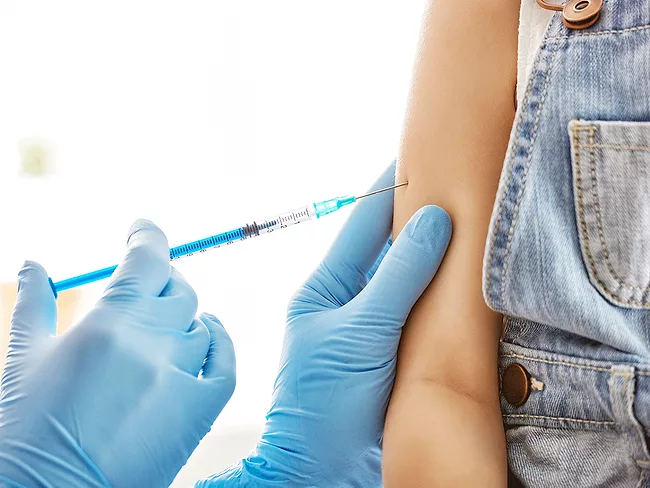
While children younger than 5 in the U.S. still have no vaccine protection against COVID-19, those 5 and older may be able to get a third jab. The FDA authorized, May 17, the use of a single booster dose of the Pfizer Inc.-Biontech SE vaccine for kids 5 through 11 years of age who completed the primary two-dose series at least five months earlier.
The U.S. FDA’s efficacy bar for COVID-19 vaccines for the youngest children may be lower than the 50% required for the adult vaccines, according to Peter Marks, director of the agency’s Center for Biologics Evaluation and Research.<
Sponsors developing PI3K inhibitors to treat hematologic malignancies in the U.S. may have to up their game if they want to get FDA approval. The Oncologic Drugs Advisory Committee voted 16-0, with one abstention, that future approvals of the drugs should be supported by randomized data. Given the FDA’s briefing document ahead of the April 21 meeting and its presentations to the committee, the agency is likely to follow that recommendation.
When the U.S. FDA convened its Vaccines and Related Biological Products Advisory Committee (VRBPAC) April 6 to advise on a path forward to the next generation of COVID-19 vaccines and boosters, there was a lot of talk about all the unknowns.
Unless the U.S. FDA once again overrides its Peripheral and Central Nervous System Drugs Advisory Committee, it looks like the ALS community will have a longer wait for an additional tool against the fatal, degenerative disease. After hearing from both Amylyx Pharmaceuticals Inc. and FDA reviewers, along with 26 people testifying during the open public hearing, the committee voted March 30 against approval of AMX-0035, a fixed-dose combination of sodium phenylbutyrate and taurursodiol, as a much-needed treatment for amyotrophic lateral sclerosis (ALS).
Investors didn’t respond well to the U.S. FDA’s briefing document for the March 30 advisory committee meeting on Amylyx Pharmaceuticals Inc.’s amyotrophic lateral sclerosis (ALS) candidate. Shortly after the materials for the adcom were posted Monday, Amylyx (NASDAQ:AMLX) dropped from a morning high of $25.68 per share to an all-time low of $10.49 in the heaviest trading since the company went public in January. With share volume exceeding 15 million, Amylyx rebounded somewhat, ending the day at $16.01, down nearly 36% from its March 25 close of $25.
"Now is the time to discuss the need for future boosters as we aim to move forward safely, with COVID-19 becoming a virus like others such as influenza that we prepare for, protect against and treat,” the FDA’s Peter Marks said in announcing an April 6 virtual meeting of the Vaccines and Related Biological Products Advisory Committee (VRBPAC).
Although diversity was front and center, it wasn’t the only reason the U.S. FDA’s Oncologic Drugs Advisory Committee voted 14-1 on Feb. 10 that additional clinical trials demonstrating applicability to the U.S. non-small-cell lung cancer population are needed before sintilimab, a PD-1 inhibitor partnered in the U.S. by Innovent Biologics Co. Ltd. and Eli Lilly and Co., is ready for approval.
Although diversity was front and center, it wasn’t the only reason the U.S. FDA’s Oncologic Drugs Advisory Committee voted 14-1 that additional clinical trials demonstrating applicability to the U.S. non-small-cell lung cancer population are needed before sintilimab, a PD-1 inhibitor partnered in the U.S. by Innovent Biologics Co. Ltd. and Eli Lilly and Co., is ready for approval.
The Feb. 10 meeting of the U.S. FDA’s Oncologic Drugs Advisory Committee (ODAC) is about far more than one biologic license application (BLA), as the single question the agency will put to the committee is whether data from a trial in one foreign country are sufficient to support approval in the U.S.